
Those of you who read my book Stories They Never Told Us may think you’ve heard (or read) all my stories and all the techniques and resources available for genealogical research. However, our lives are filled with stories. The minutia of daily life includes backstories, and then there are the fragments that get handed down from one generation to another. The stories themselves seem perfectly clear when we hear them for the first time and become imbedded in our memories with each subsequent telling. Until one day we look closer and realize we may not know the full story after all, and there’s no one left to ask.
My aunt and uncle were married for 66 years.
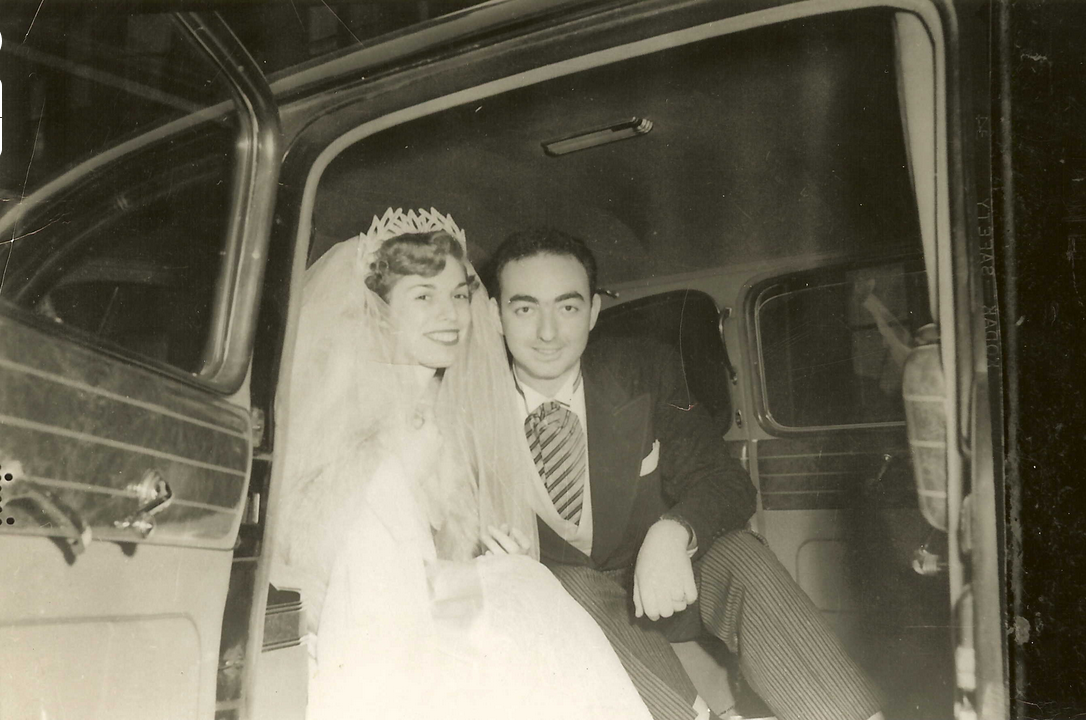
We have many photographs of their wedding day in January 1951. BUT they celebrated two anniversaries. As a genealogist, I thought nothing of the two dates. Research into marriage records in New York City (where my aunt and uncle married) frequently turns up two marriage records. One is a civil marriage at a courthouse or similar locale, officiated at by a judge or civil servant. The other record is always a religious marriage, most often the religious ones I have found are for Jewish weddings, but I have, on occasion, also found ones performed by a Catholic priest.
Locating the marriage record in this case, was easy – the Marriage License Index which I found on Ancestry.com identified the 18 December 1950 date of their license. Because access is still restricted under New York City privacy laws, I thought that was the end of it. My cousin (their daughter) searched through piles of papers and found the marriage record with the county clerk’s seal, attesting to their marriage on 19 December 1950. I searched for a second license that would match their January 1951 second marriage with no success.
Back to the drawing board, or in this case, boxes and stacks of papers. Success! A ketubah, the Jewish marriage contract was found for the couple dated January 1951.
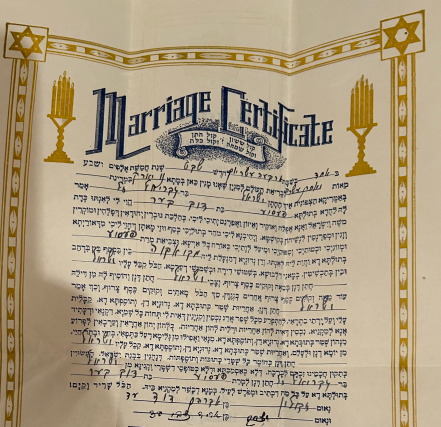
So, this called for a slight revision of the original story. The revision isn’t for the story itself but, rather, for our understanding of it. The story as we all remember it was that my uncle served in the military in World War II. He enlisted in 1946 and was discharged in 1948. Then came the Korean Conflict. New draft registration was required. His widowed mother was partially dependent on him for support, but he thought it would strengthen the case for an exemption if he was married. He and my aunt already had marriage plans, but they quickly made some changes, and in mid-December 1950 got a marriage license and a civil marriage. The big celebration was scheduled several weeks later accompanied by a marriage according to Jewish law. The ketubah is part of that. So, unlike other marriages I had researched with two marriage records, this one only had one record filed with New York City. The second marriage was just within the Jewish community. My uncle celebrated the first anniversary every December, the January anniversary was my aunt’s!
What happened to the draft registration? In 1954 my uncle received a 5-A classification. That classification was for people who aged out of the system. The drat required that men up to age 26 register. In 1954, he turned 26 and aged out of the system! There may be a stash of the registration cards for men who aged out somewhere, but from what I read, the draft registrations for men with this classification who registered during the Korean conflict may have been destroyed. Like so much else ostensibly destroyed, there may come a time when these will surface. Until then, I will be content with the story we’ve pieced together.
Are you going to be in Fort Wayne, Indiana for the IAJGS conference in August? If so, come see me. If you bring your copy of Stories They Never Told Us I’ll be happy to sign it.
 RelativaTree