
Last night I was lulled to sleep by the musicians playing on the street outside the hotel – accordions, guitars, I think I saw a violinist when I was outside, too. This morning, I woke up early and was lulled back to sleep by the rain. Although by the time I woke up and went outside, it had stopped, but it was cold and windy. Yesterday’s late afternoon purchase of something warm to wear was definitely welcome. Suddenly (of course) the wind stopped, it rained for a bit (grateful for the small umbrella I brought with me) and then warmed up. Back I scurried to the hotel to divest myself of the warm outerwear and with that done, and several email answered, I went out again, to wander streets I haven’t been on for several years.
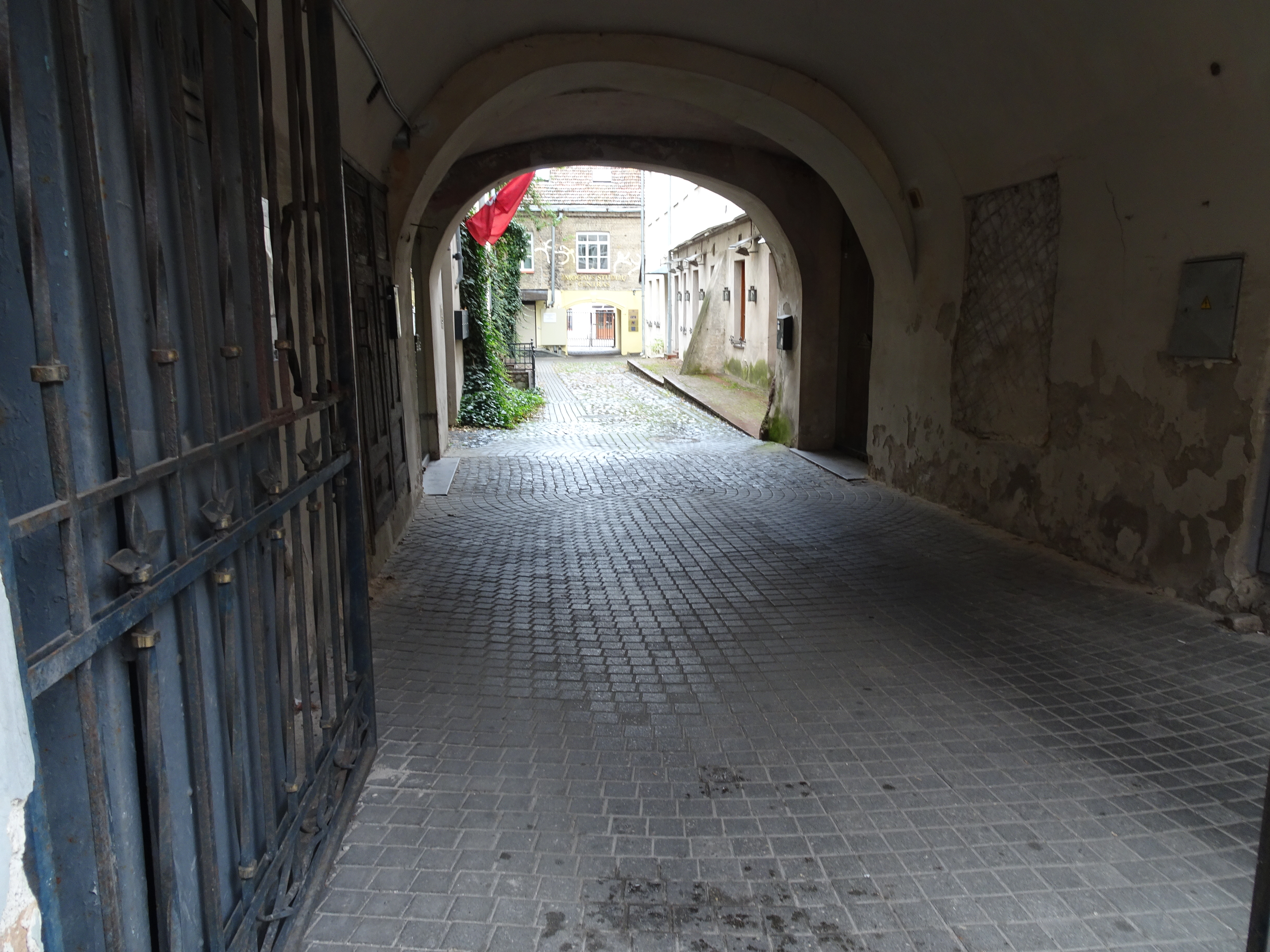
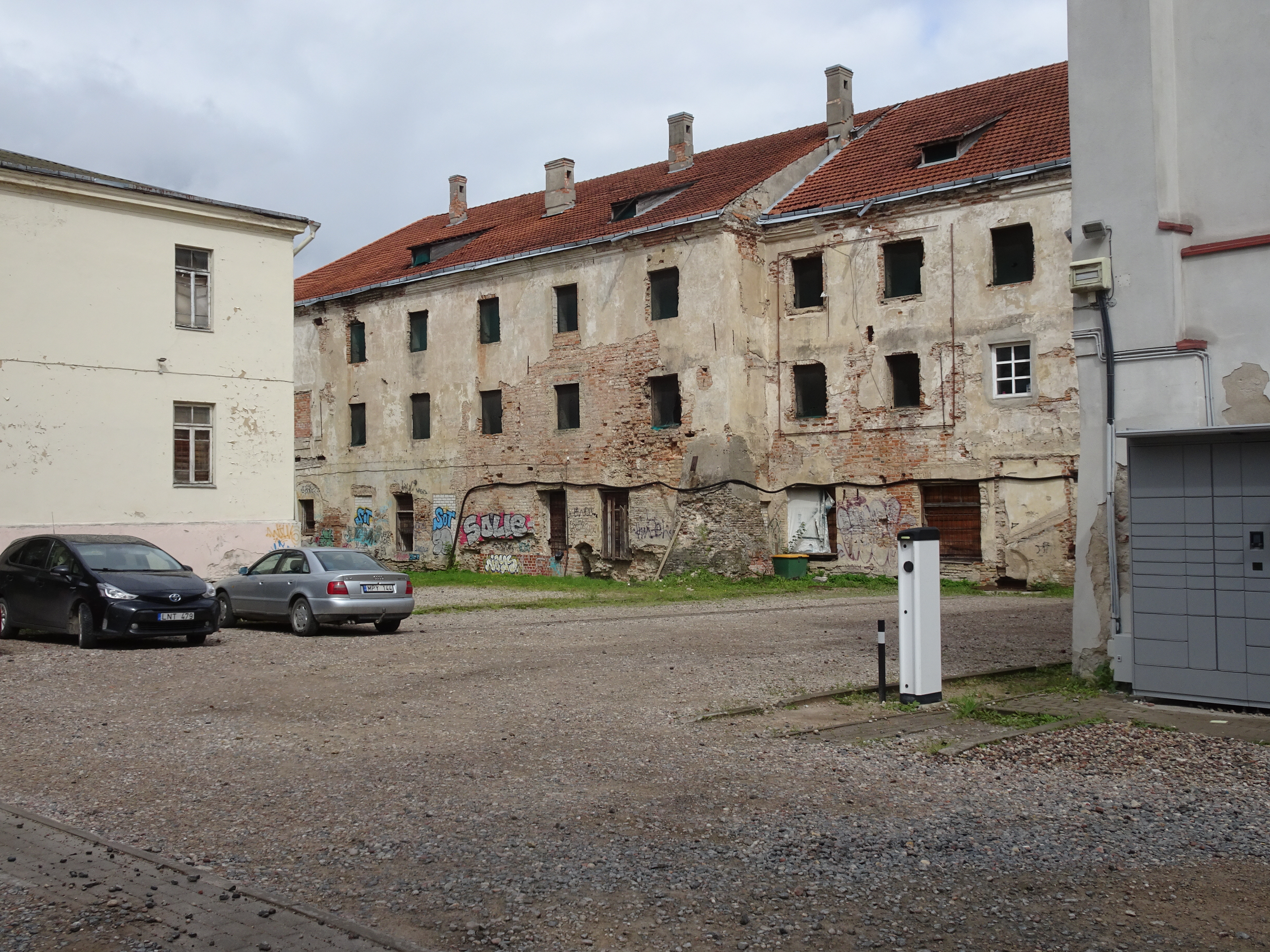
I found myself fascinated by the same things that always draw my eye – the alleys, old buildings, and remnants of a time gone by. I know that Vilnius is a modern city – the restaurants, ice cream and coffee shops, cars, and people will all attest to that. Coming from the U.S. though, it’s really nice to see a place where the old is valued and not destroyed to make way for everything new. That isn’t to say that there aren’t new office buildings, hotels, apartments, but there is still much here that is either original or has been reconstructed to appear so.
The day alternated between rain and not rain.

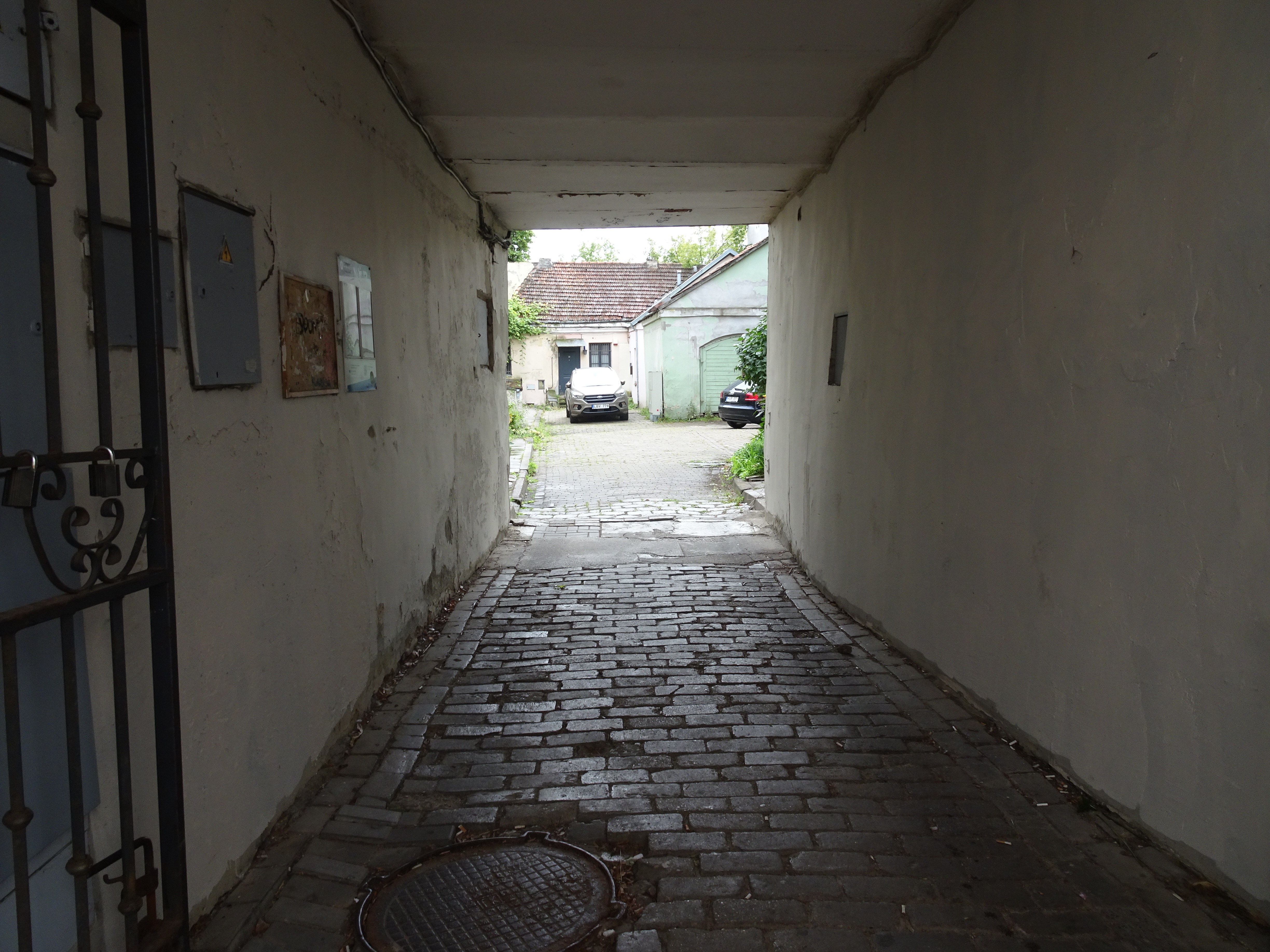
I kept walking, as much to see and hear as to get the kinks out of my backs and legs from sitting so much in airports and on planes.
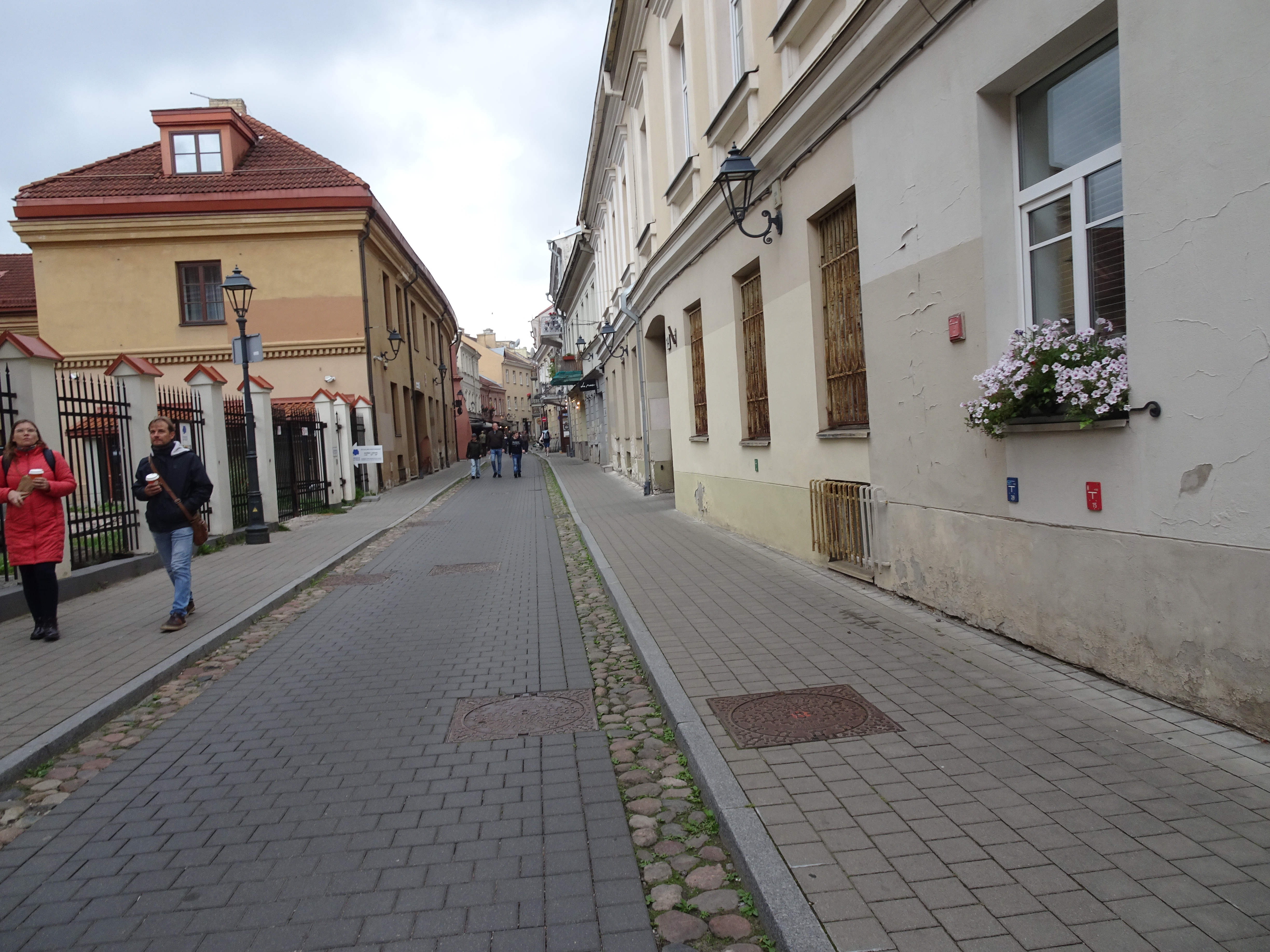
Although you can’t tell from most of these photos, the streets were crowded with people walking and shopping, eating in outdoor cafés, going into churches (it’s Sunday), and not being deterred by a little water falling from the sky.
The people may be interesting, but I find the streets more so. Tomorrow we’re off on an adventure – we’ll be driving to Plungė, about 180 miles from Vilnius. It’s a small city with about 17,000 residents. Two parts of the city are separated by the Babrungas River and two bridges are built over it.
LitvakSIG has a chapter from a book by Sir Antony Sher about his family and a visit to Plungė in 1992, called “The Last Jew in Plunge” from his book “Beside Myself.” The town had about 1,800 Jews there in 1923, today it has none. All the buildings that at one time housed Jewish families, schools, shops, community activities were destroyed during World War II. One building remains. Tomorrow we will see that, the Holocaust memorial, and a memorial to Dr. Borisas Efrosas who was a pioneer of esophageal and pulmonary surgery and in 1958 performed the first successful heart surgery in Lithuania.
We’ve been to other places in Poland and Lithuania where there were vibrant Jewish communities, once upon a time, and looked for the signs alerting people to what once was and is no more. Every once in a while we find something behind a building, hidden from view, or in a museum or other repository, where (in theory anyway) nothing should be found. We’ll see what tomorrow brings.
 RelativaTree