Avoidance

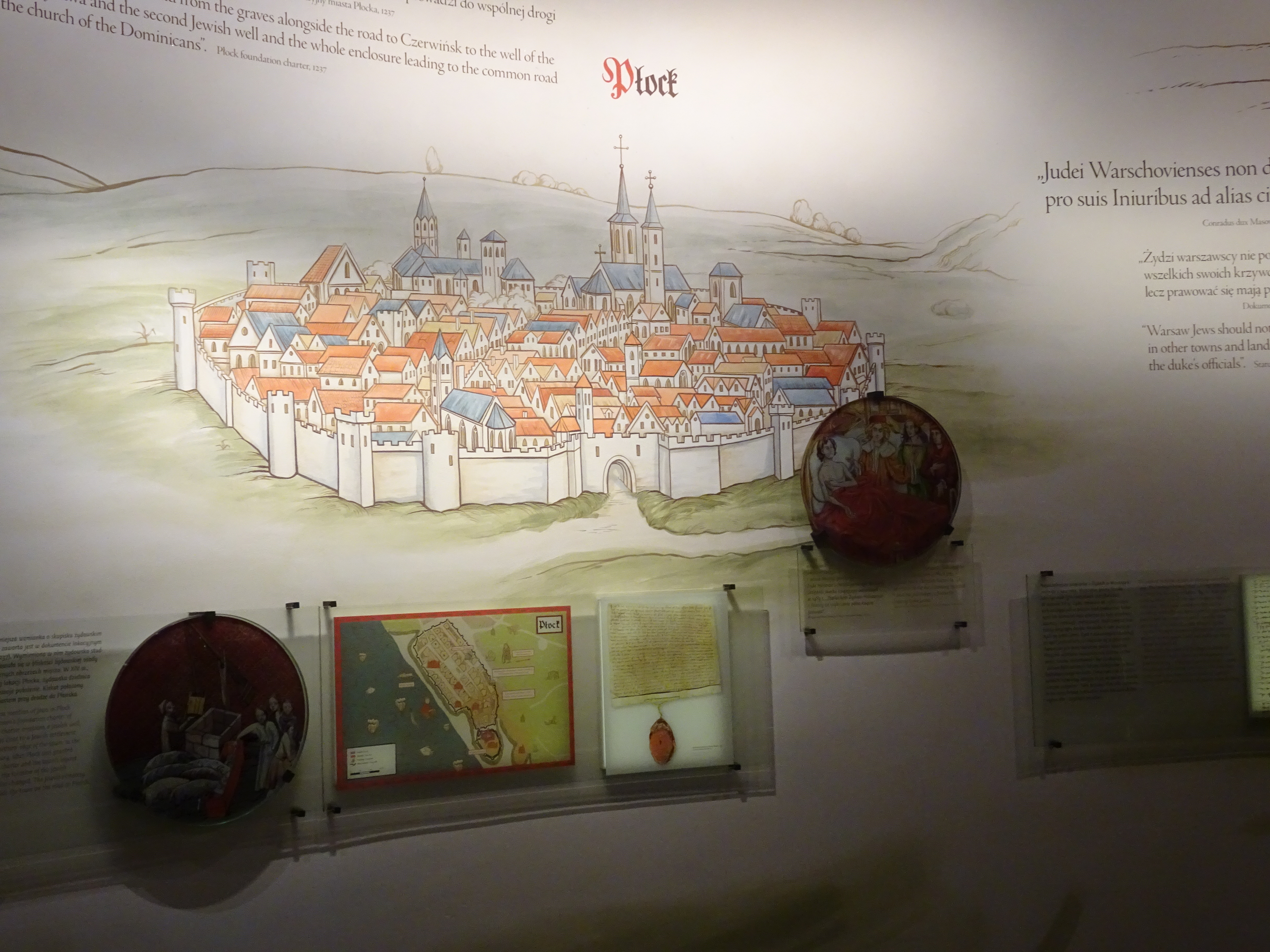
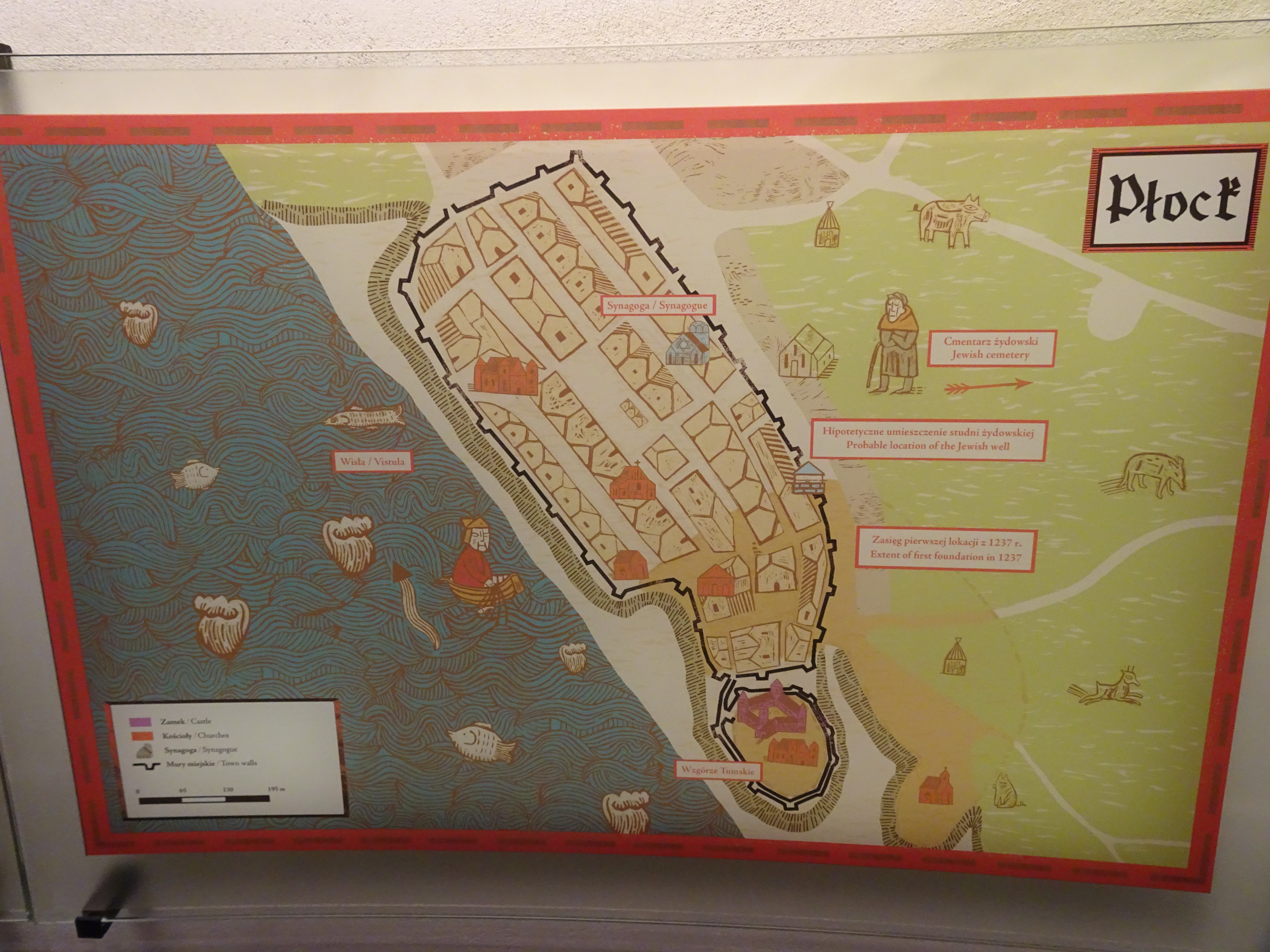
Today we visited one of the most amazing museums – Polin. The museum is about 10 years old, and is absolutely incredible. I’ve been here before and I’m always finding something new, something to marvel at, and something to capture my imagination. The maps and storyboards take you traveling from the time Jews were first in Poland, more than 1,000 years ago up to the end of the war.
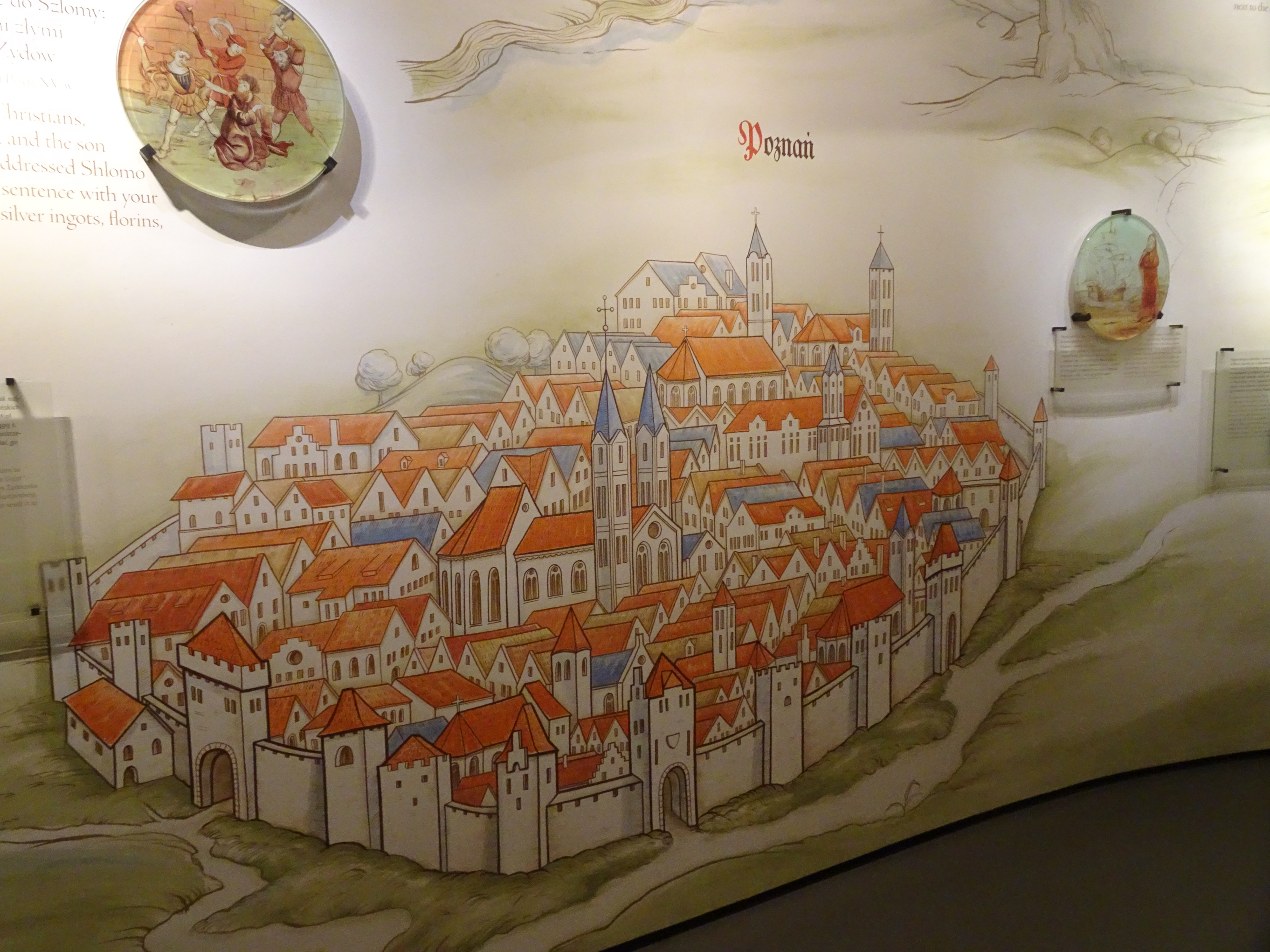
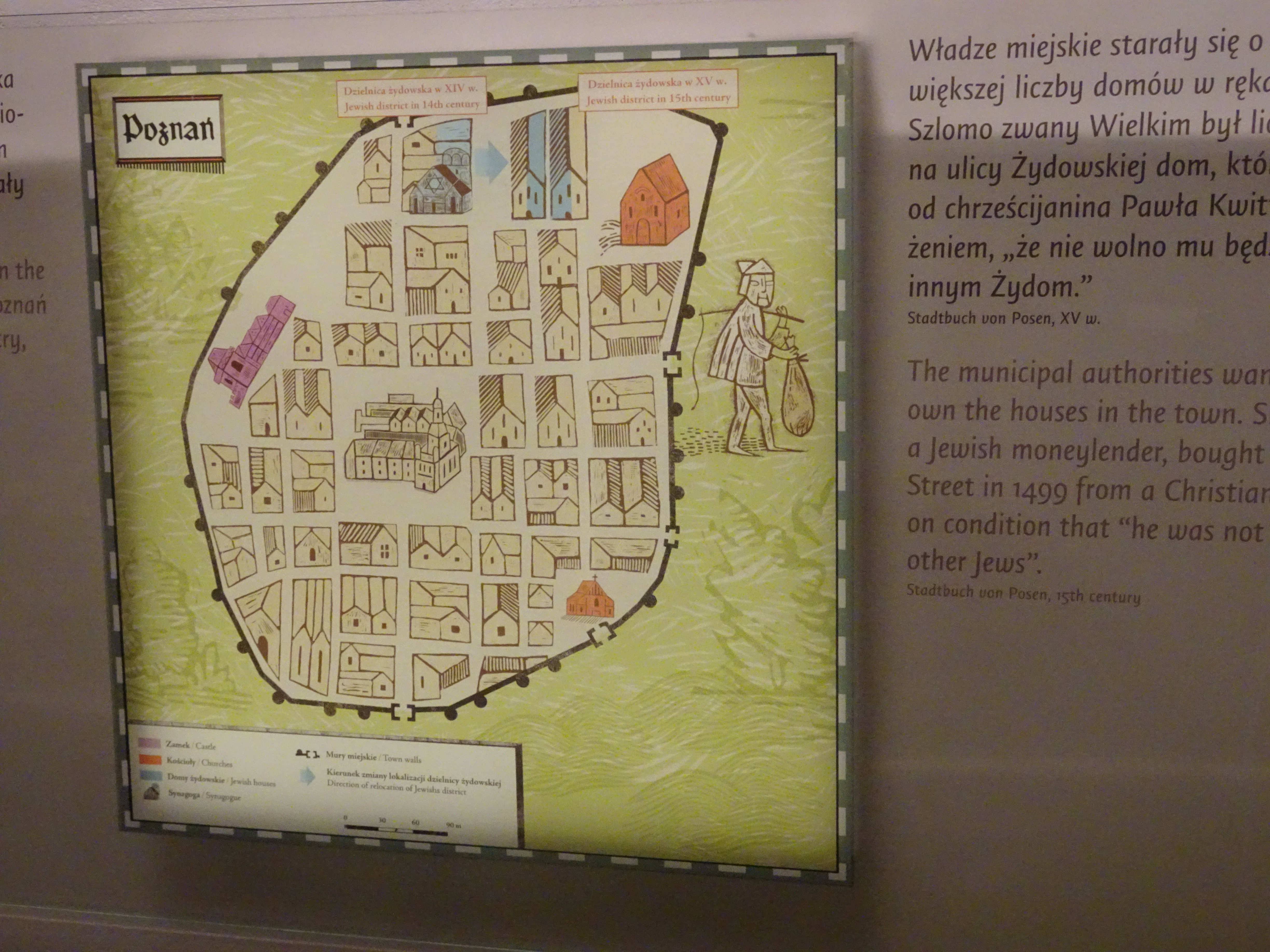
Seeing the maps, looking at the way the towns and villages grew differently, realizing how vital Jews were to the economy, the social, and political structures and development of the country, fills me with pride and also sadness, knowing what happened.

We had a marvelous private guide, as we did for each place we visited. Our guides are always very knowledgeable and charismatic, and provide incredible information. Before we start at any of the Jewish venues, I make sure to introduce myself and tell them my background and make sure they don’t mind if I provide some additional information. None of the guides on this trip, or previous ones, was Jewish and they seem to be grateful to learn. I had just finished adding something, when a woman approached me and said “Are you Janette Silverman?” Even if I had been so inclined, it would have been pointless to deny it. It turned out that she and her husband are friends with my sister and brother-in-law who when they mentioned their trip to my sister, she told them I would be in Warsaw at the same time!

By now you may be asking what I was avoiding, since that’s the title of today’s musings. I’m avoiding discussing the rest of the museum’s exhibit, and my own feelings. Warsaw as it was, the Warsaw Ghetto, the uprising, the Camps. The whole thing.
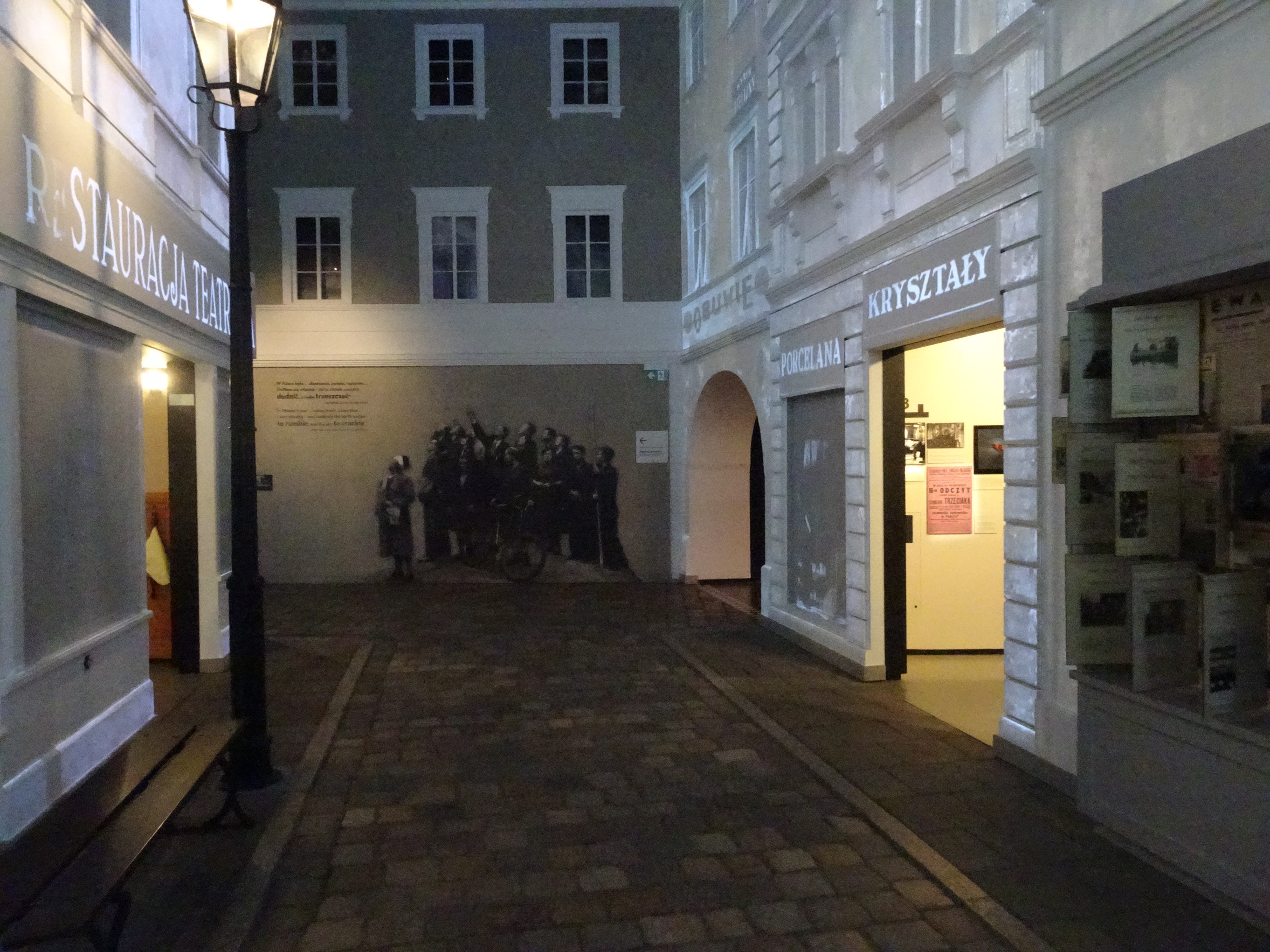
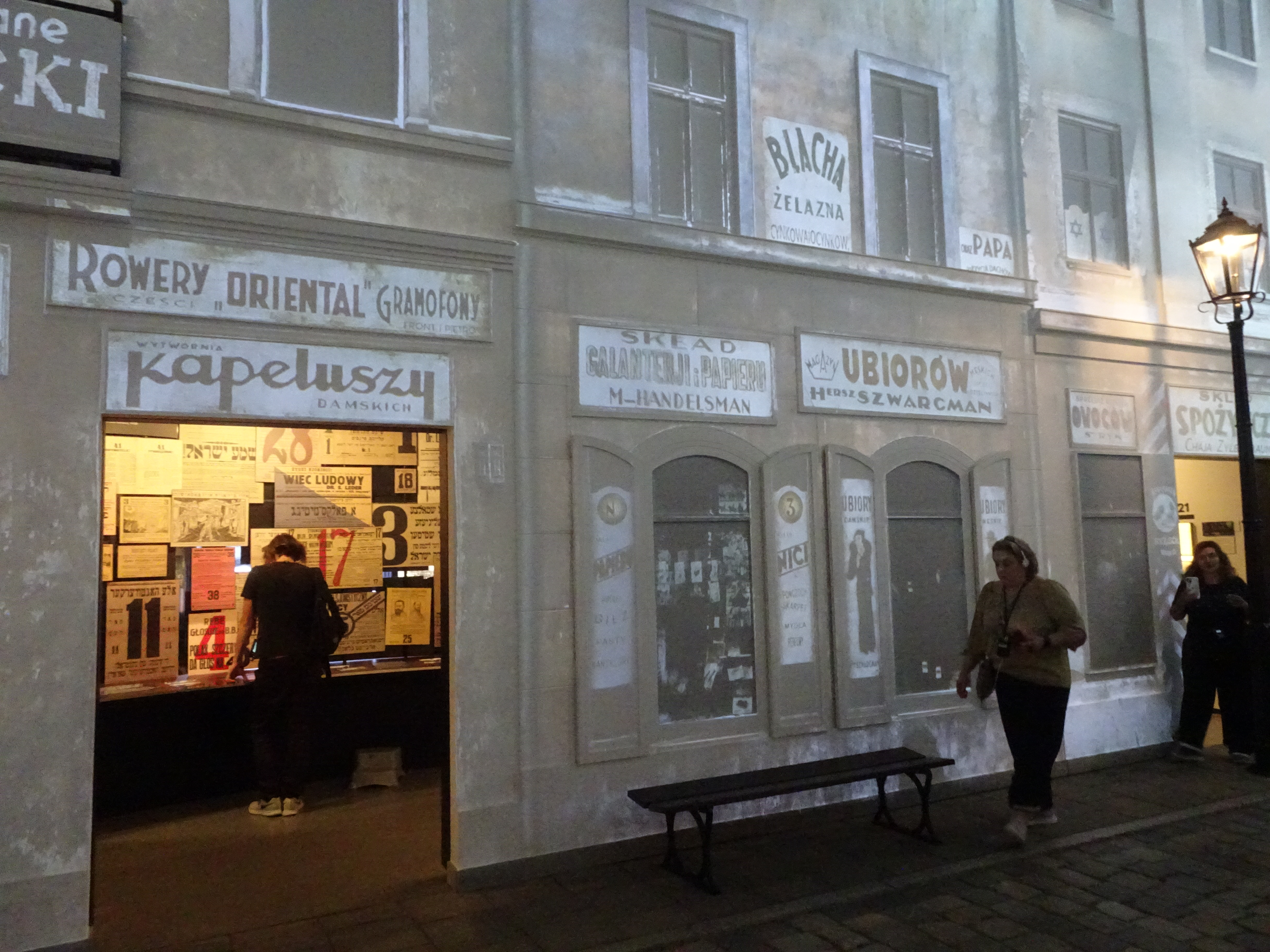
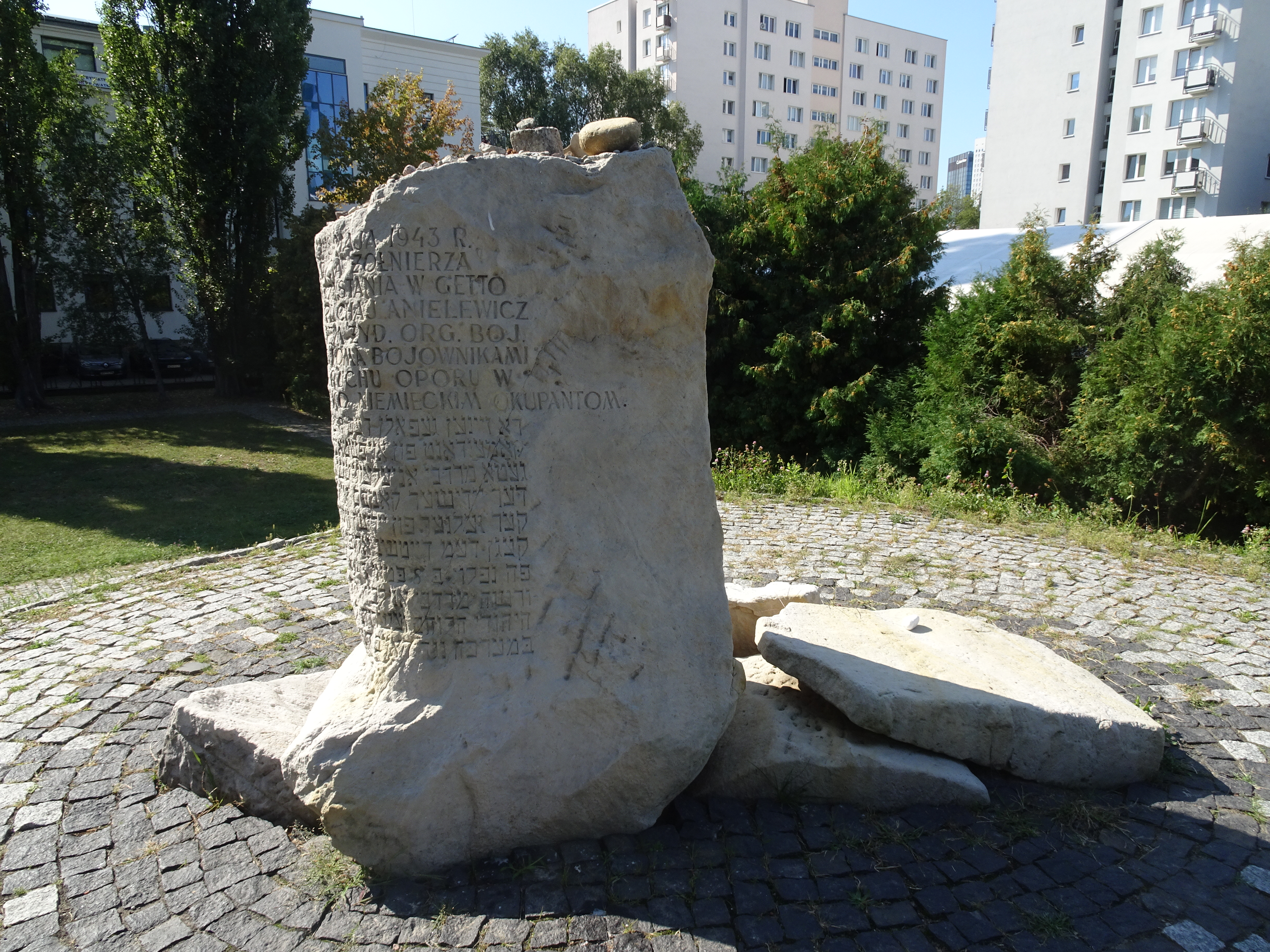
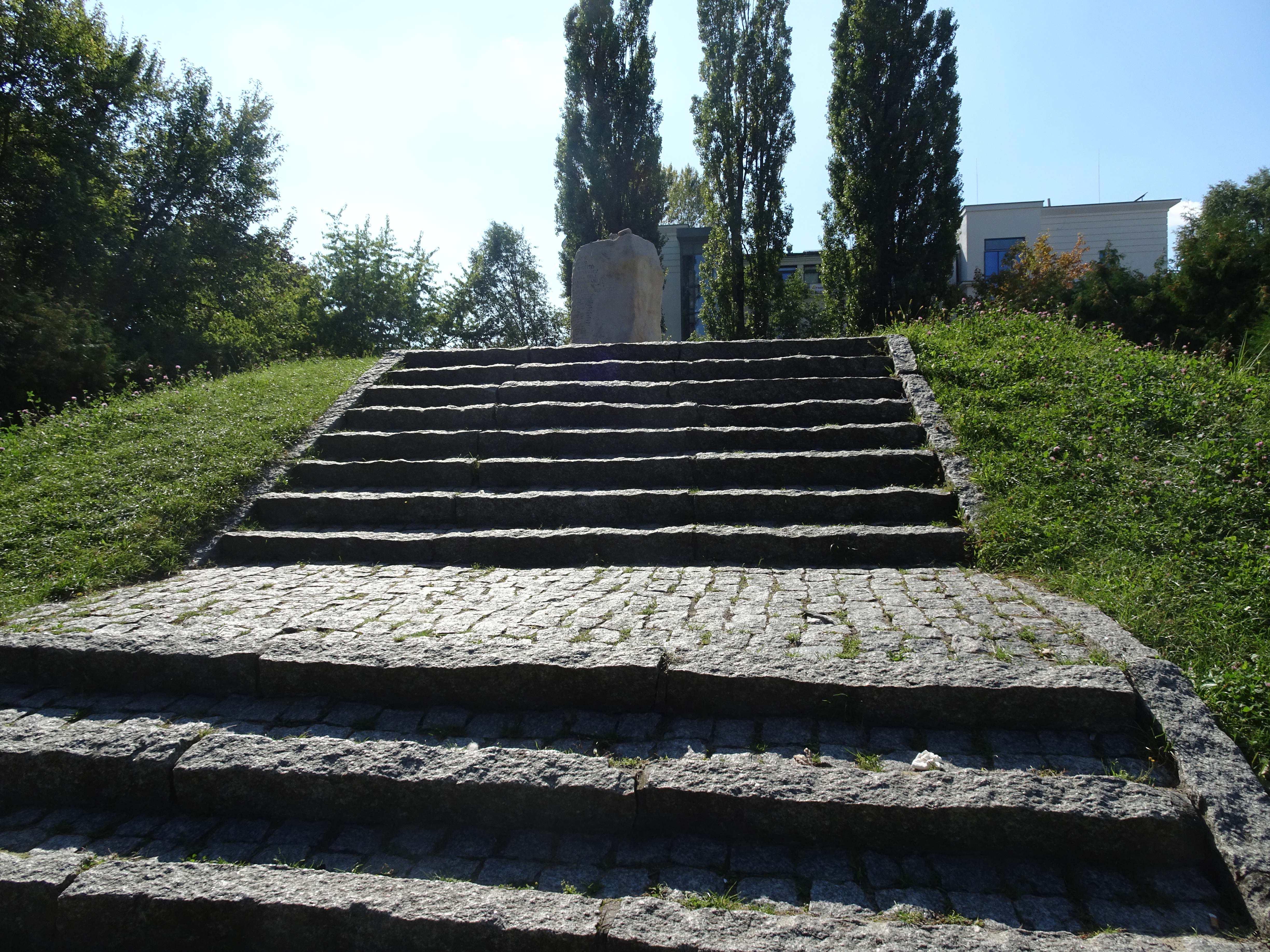
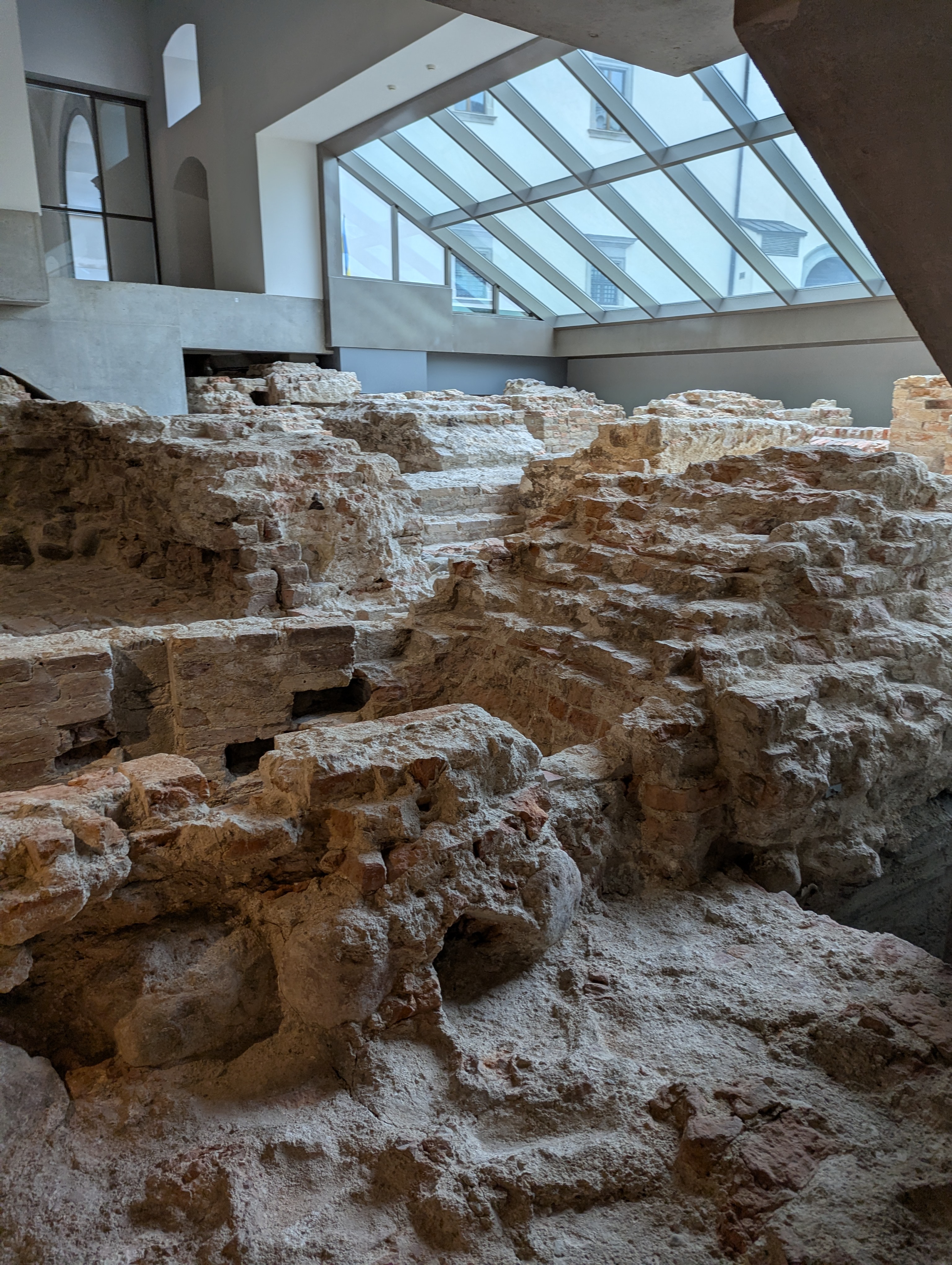
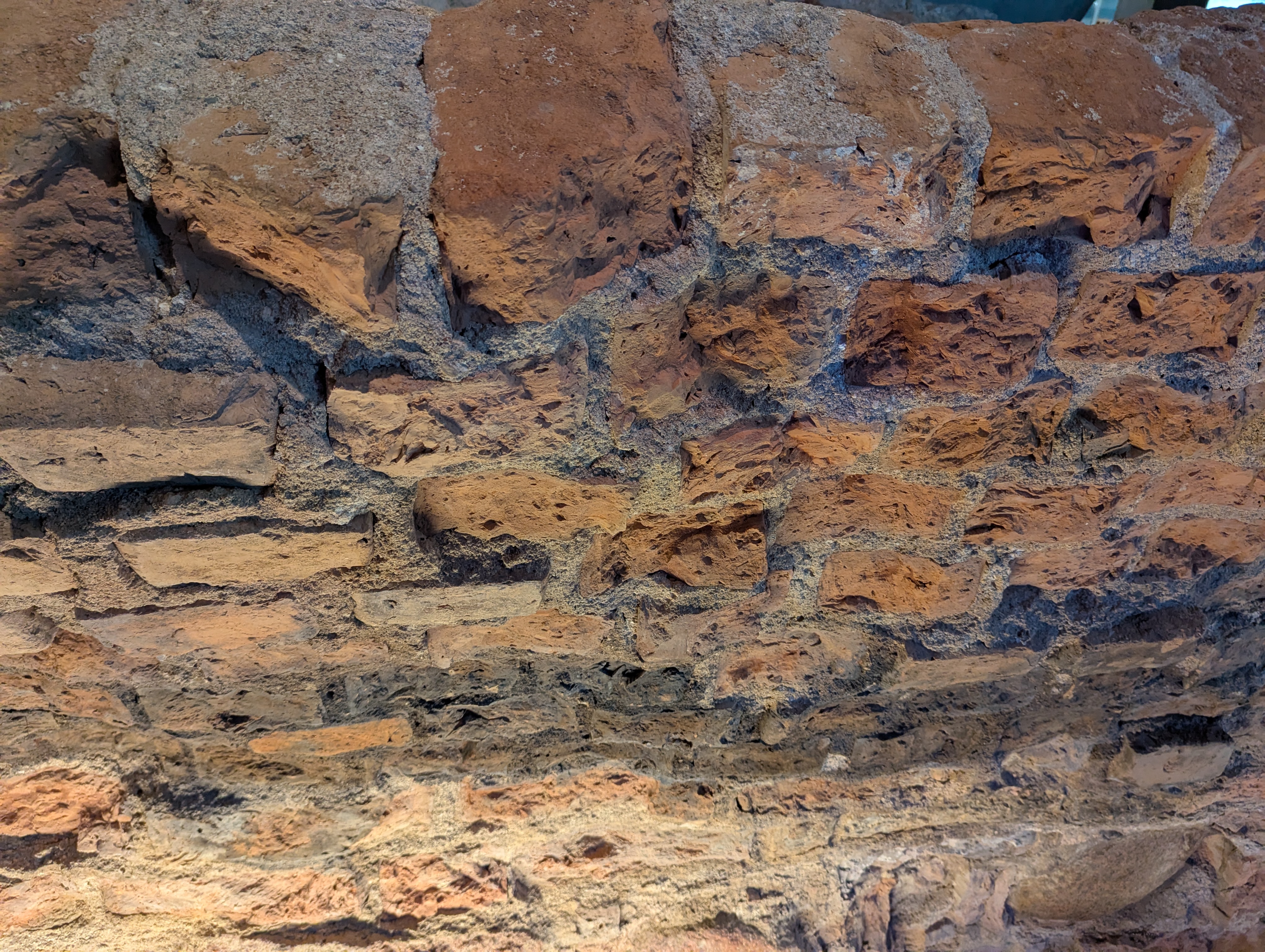
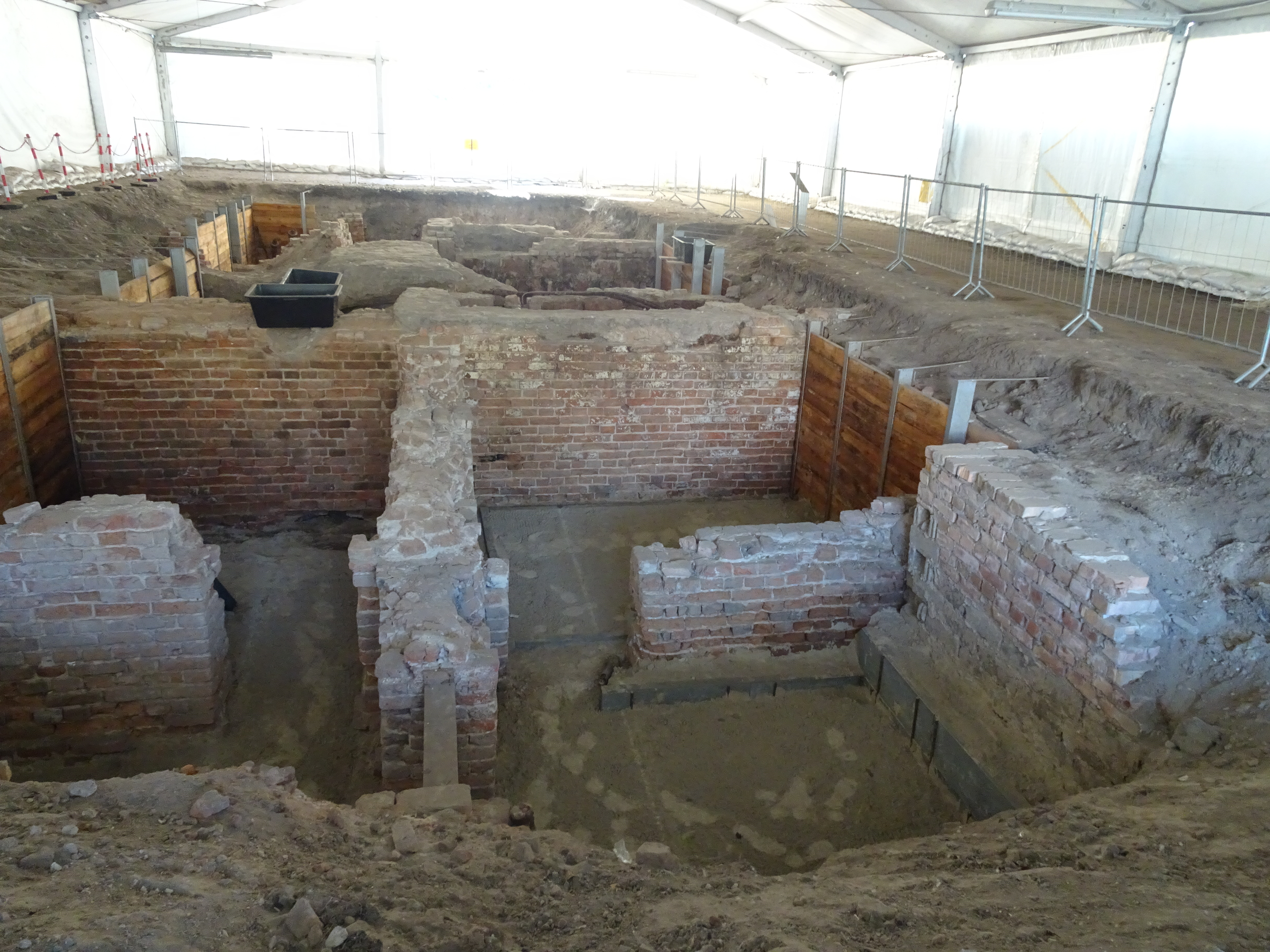
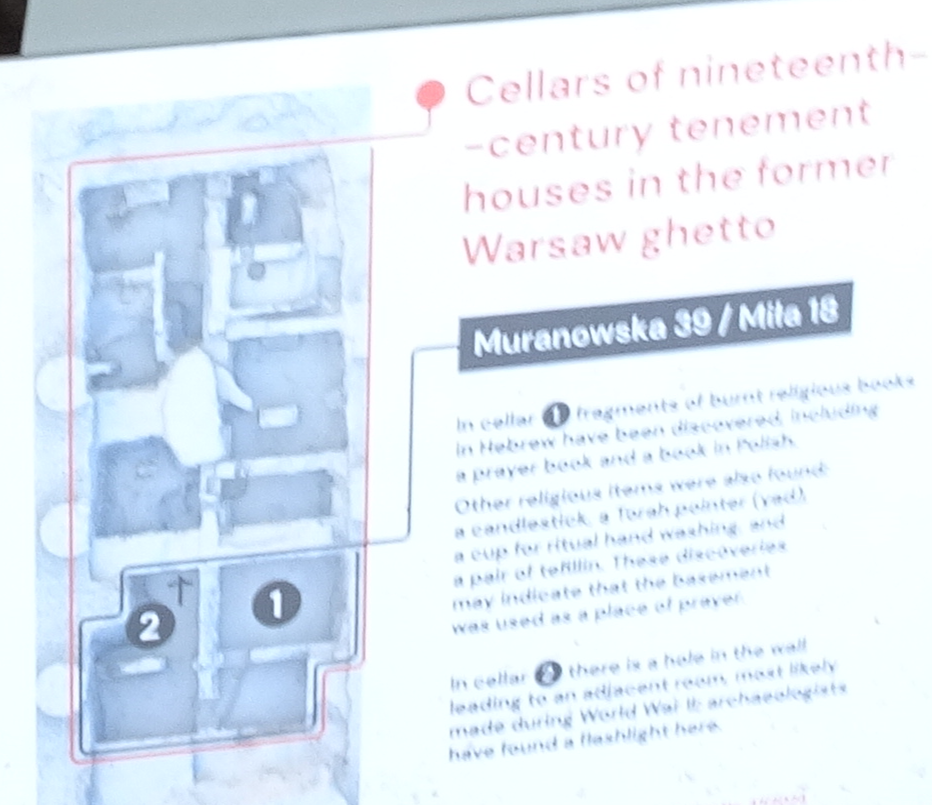
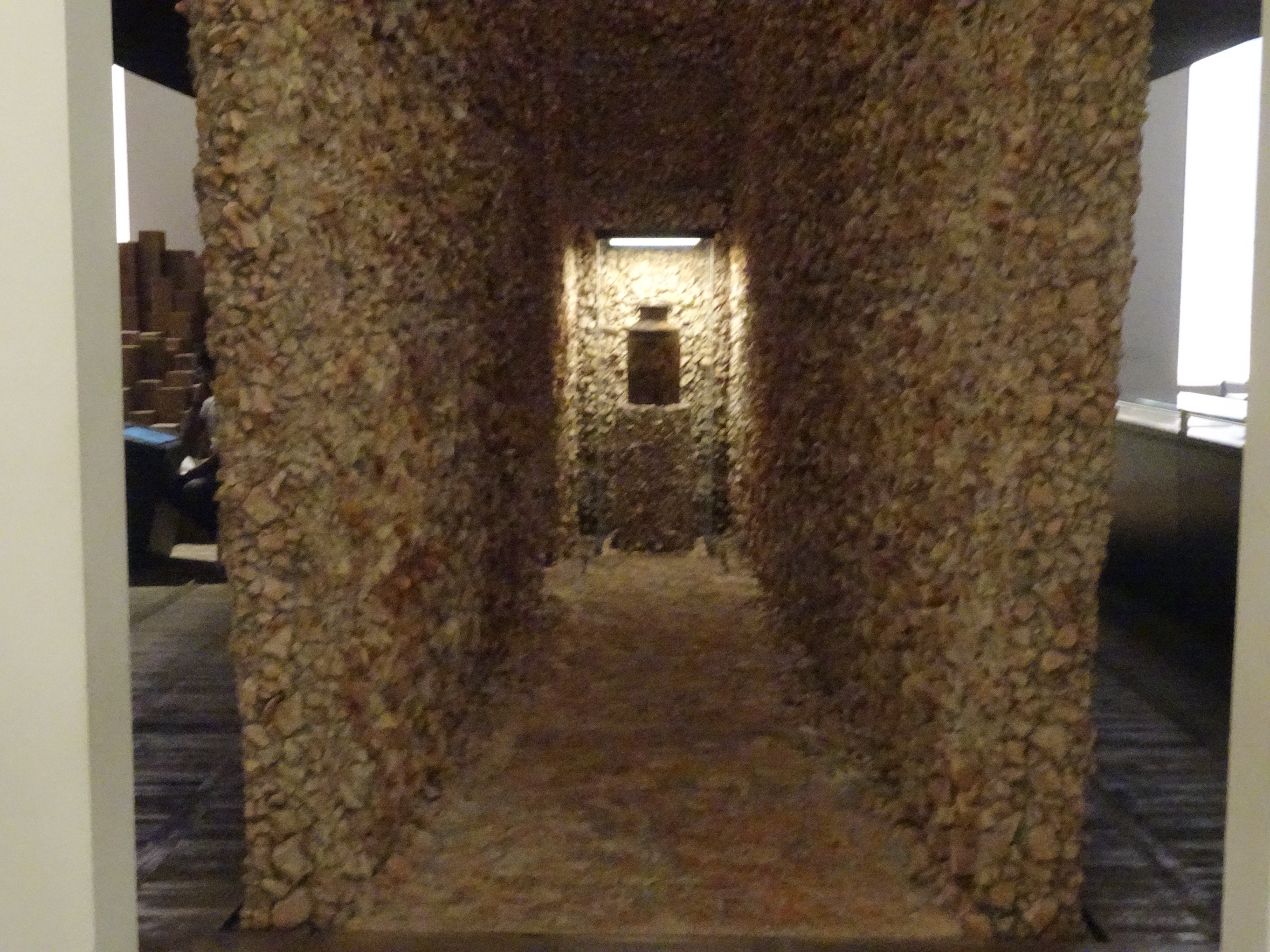
There will be a new museum opening in a couple of years devoted to the ghetto. This photo is of an excavation underneath what was Mila 18.
Then, a stop at the Ringelblum Jewish Historical Institute and one of the cans that held Ringelblum’s papers.
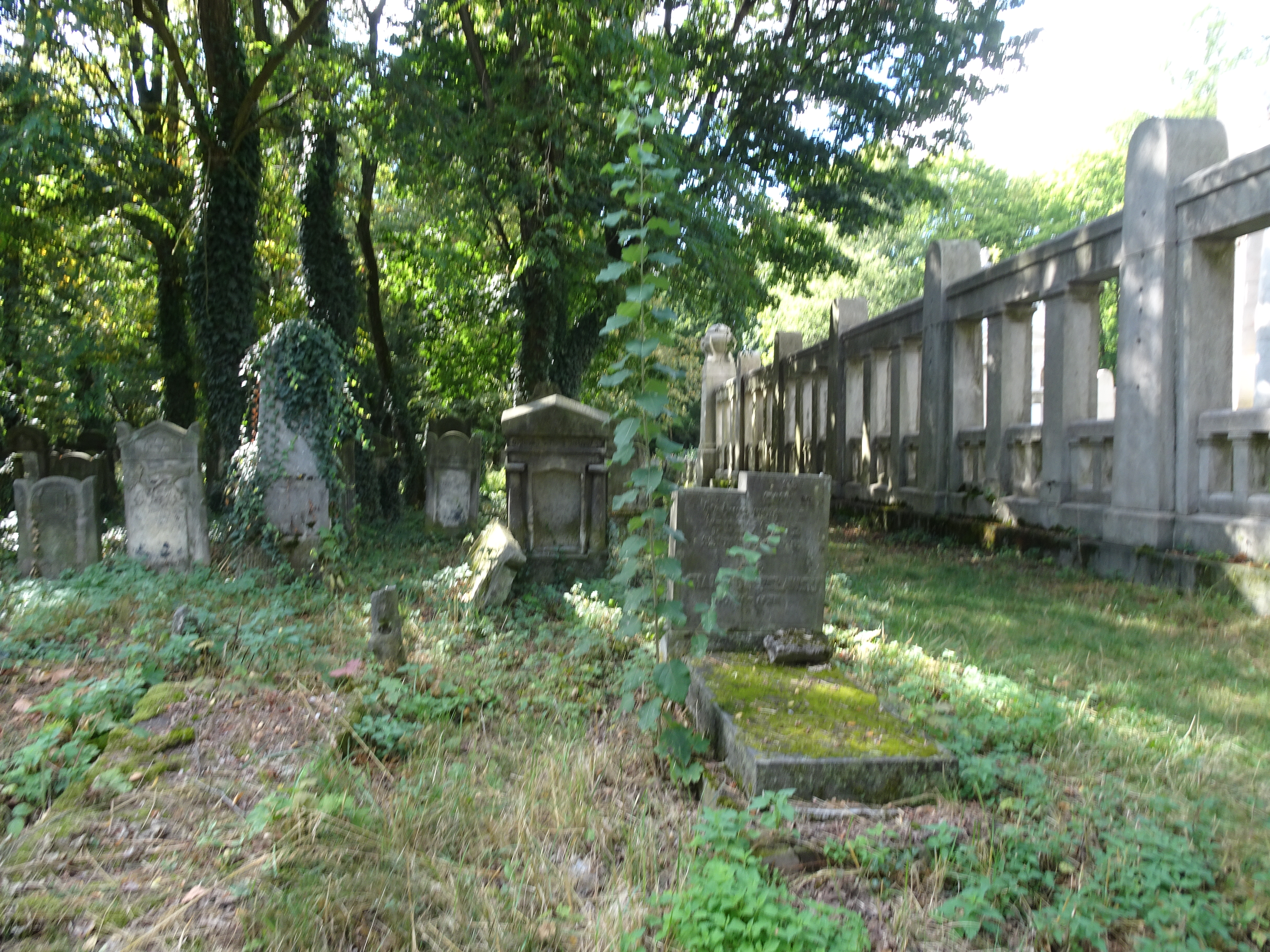
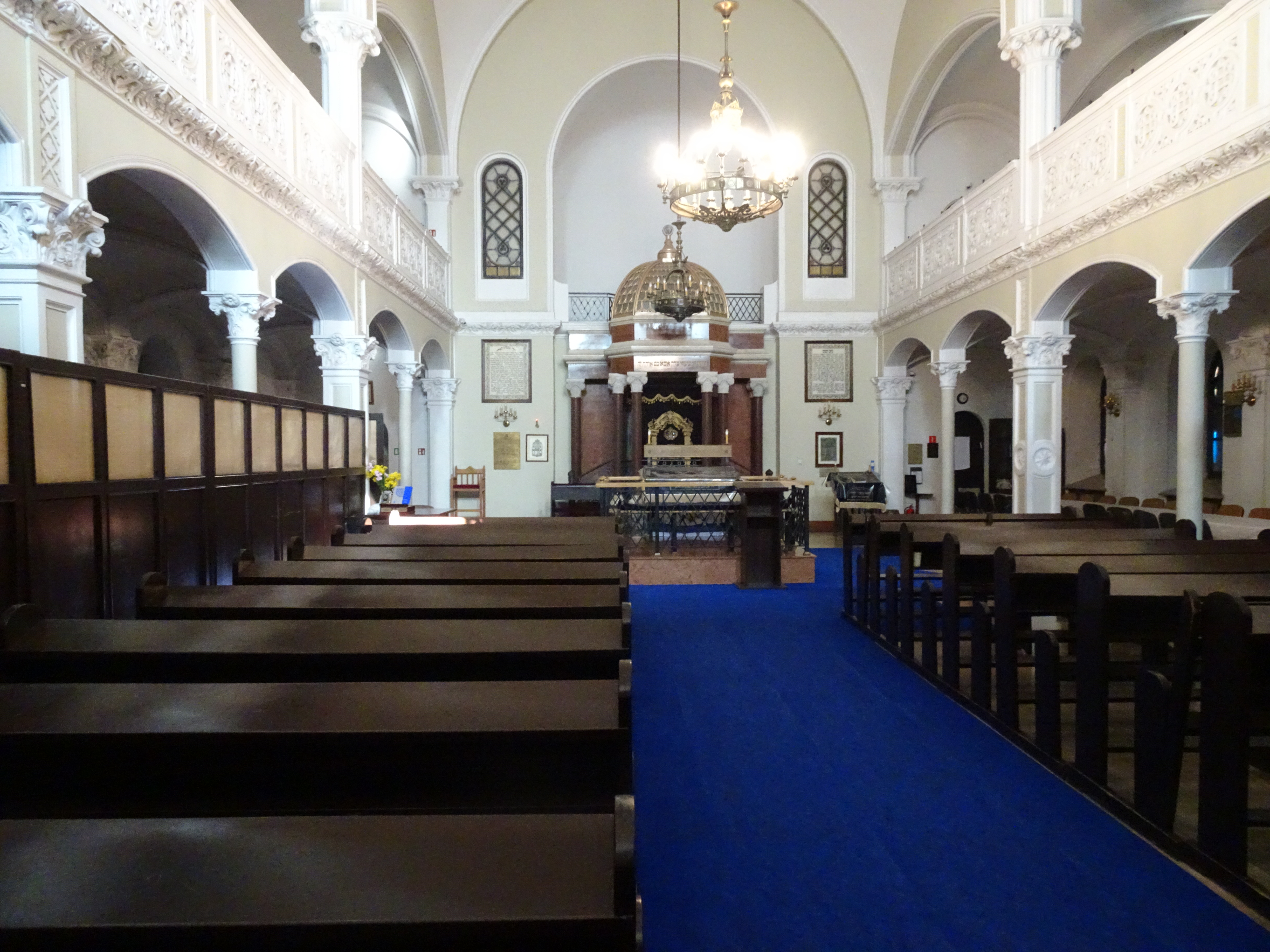
Finally a stop at the only synagogue still standing in Warsaw
There was one thing I really wanted to do in Warsaw, and that was the last place we visited today – a tiny place called Mi Polin – it’s a mezuzah museum. But, a museum like no other.
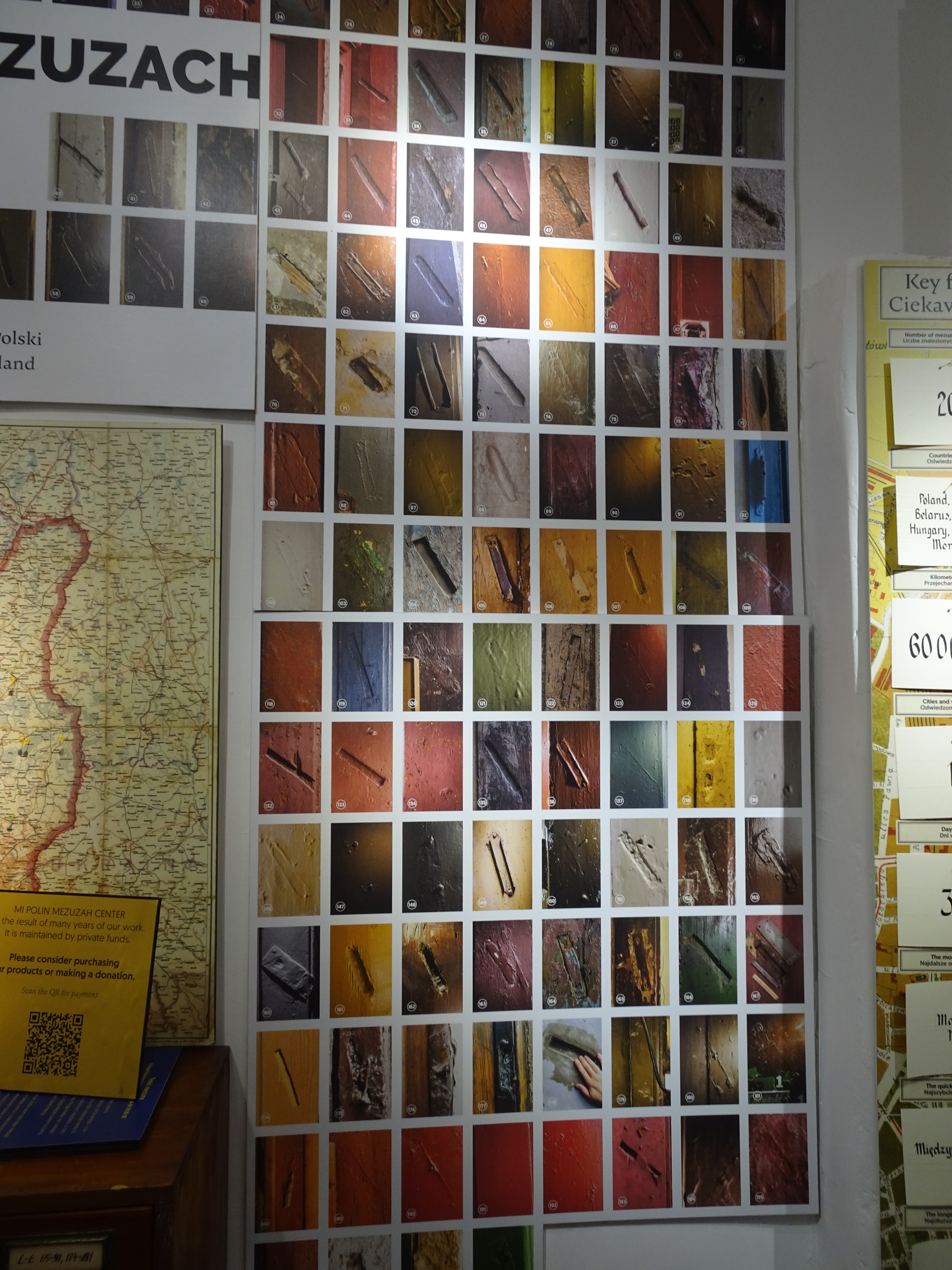
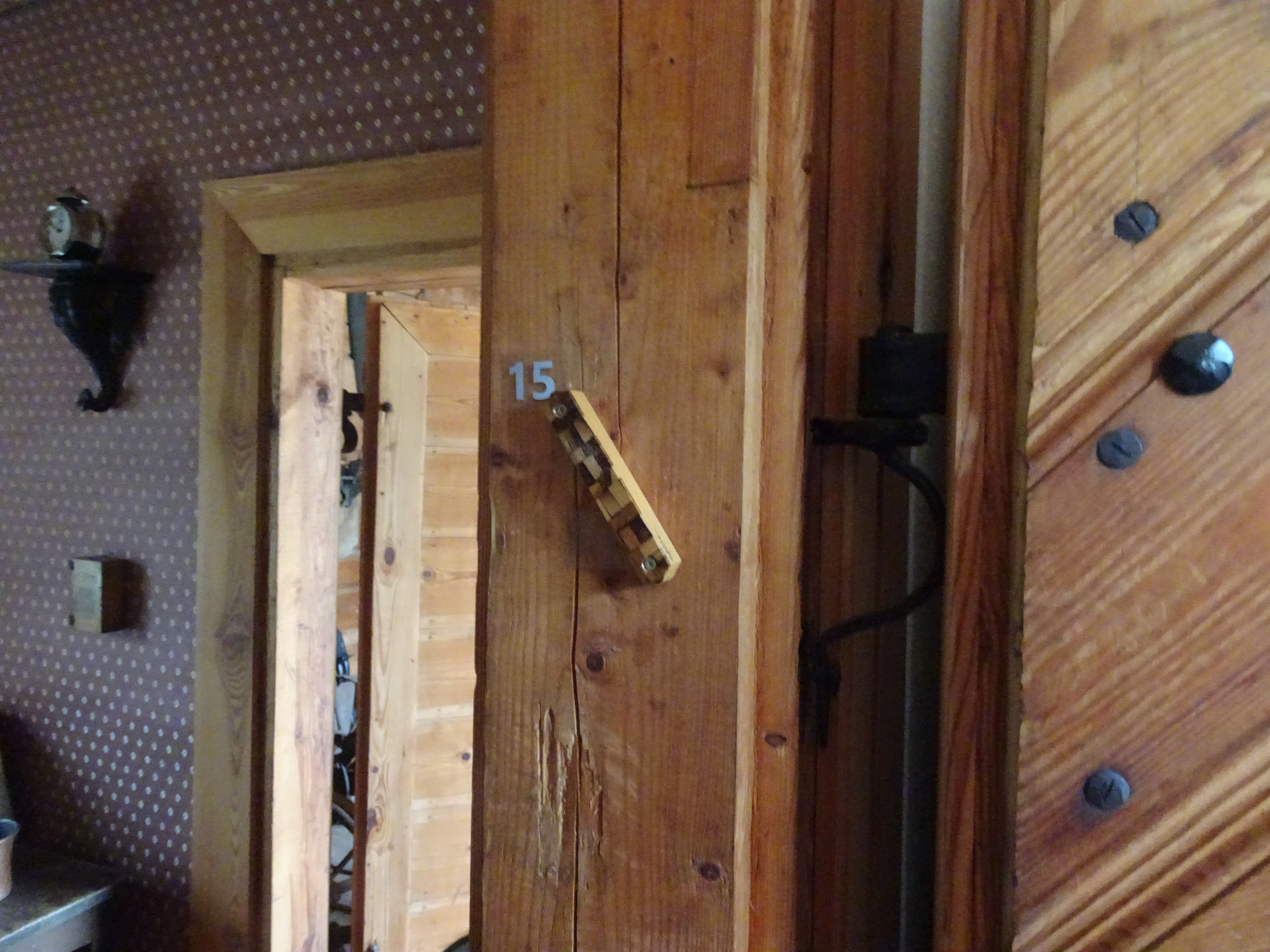
The creative forces behind this museum travel to various towns where there were once Jewish communities, looking for traces of mezuzot and then they recreate a mezuzah. They had one they found in Ivano-Frankivsk – my ancestral family’s town of Stanisławów. It’s not from the address at which my great-grandparents lived – that building no longer exists. However, I ordered a copy of that Stanisławów mezuzah. Just one more thing to help me think they are still close. I never knew them. My great-grandfather, Zelig, died in January 1921. My family was murdered there in October 1941. My great-grandmother, Chana Yetta, her sister, Devora, my grandmother’s siblings Clara and her husband Zygmunt with their children Zelig and Yaaov; Mojzesz and his wife Anna and their son Zelig; Penina and her husband Isak-Wolf and their daughter Silvia; Rachel, Oscar, Sara all murdered. Devora’s children Avraham and his wife Lea and their daughter Tzila; Khava and her husband Israel; Genia – all murdered. I keep saying – don’t forget the names. Say the names on gravestones, say the names of people who have no stones, don’t let them be forgotten. Don’t let the names escape from living memory.

Tomorrow on to Krakow and more emotions.
Posted in Uncategorized | Tagged , , , , , , , , | Leave a comment

Strange Days

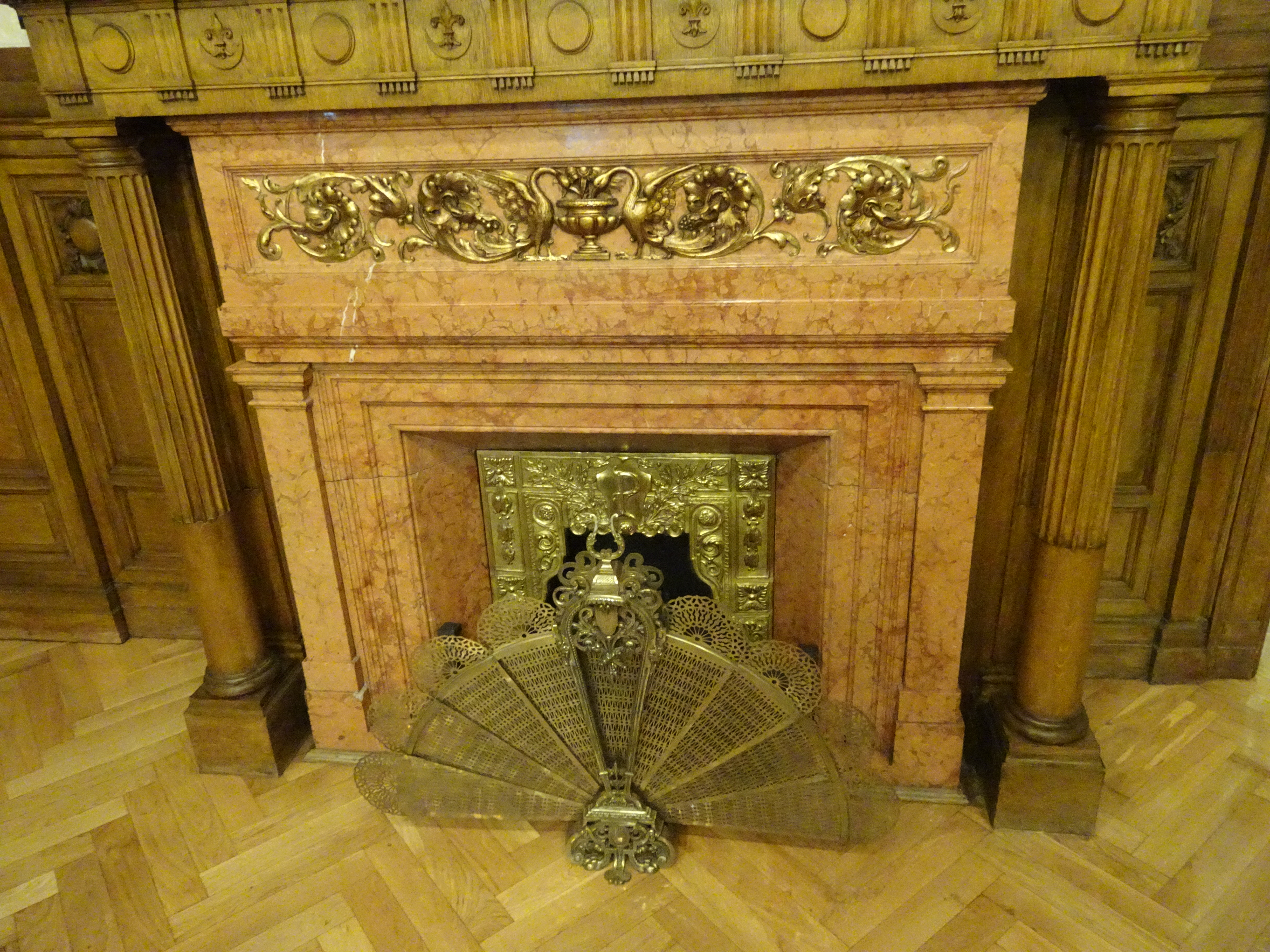
I really don’t know where to start. I’ve been thinking about this for hours, and processing today is taking a lot of energy, and I’m exhausted. The contrast of what we did and where we went in Łódź is remarkable. There was the opulence of the lifestyle of the Poznanski family.

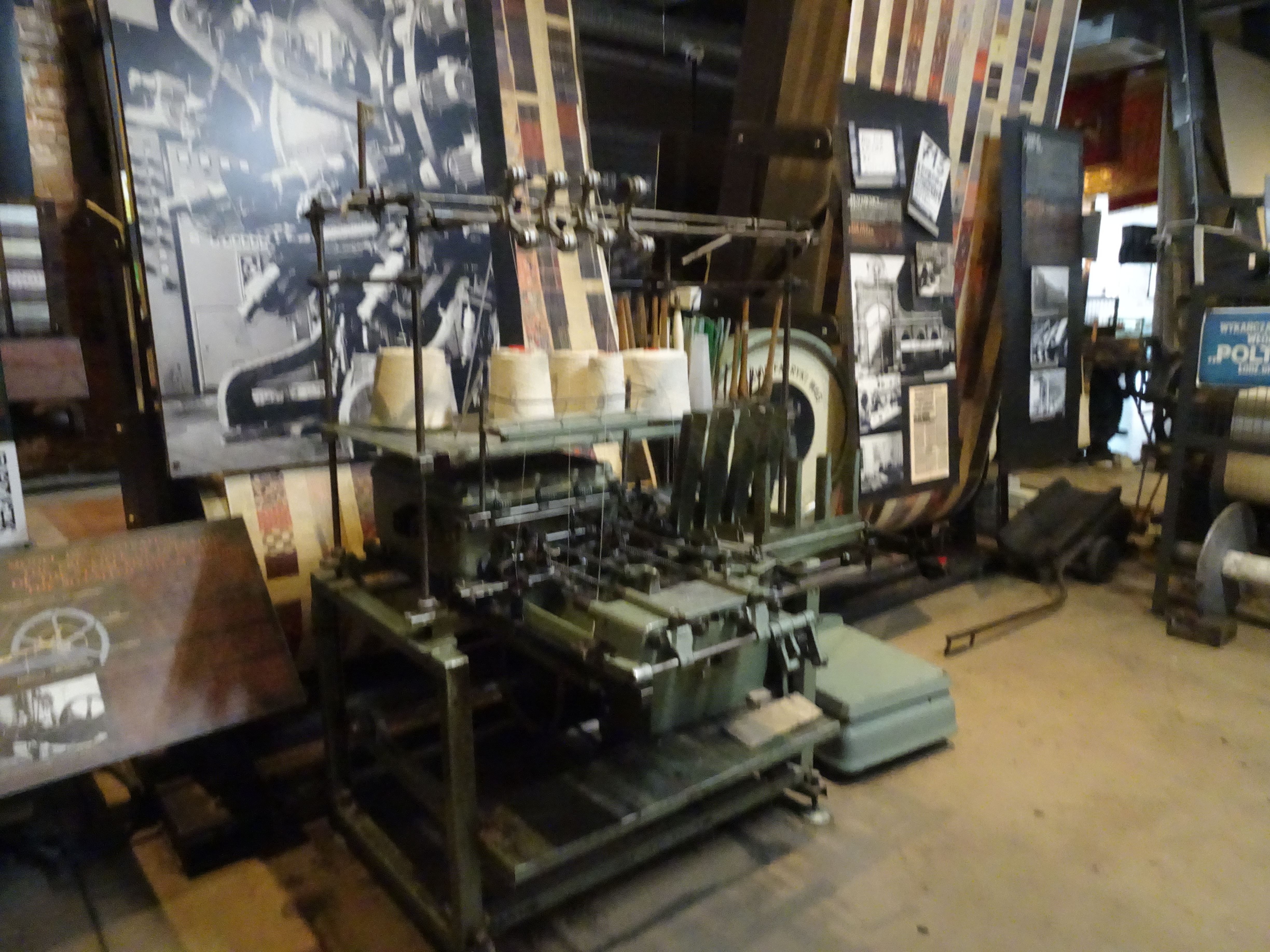
They had an amazing lifestyle but it was offset by their philanthropy, their generosity to their workers with healthcare, precautions in their textile factories in case of fire, and more. If you haven’t yet read Singer’s book “The Brothers Ashkenaz” you should consider it to learn about the lifestyle. economics, and challenges about the people who turned Łódź from a sleepy little agricultural village into a thriving metropolis1

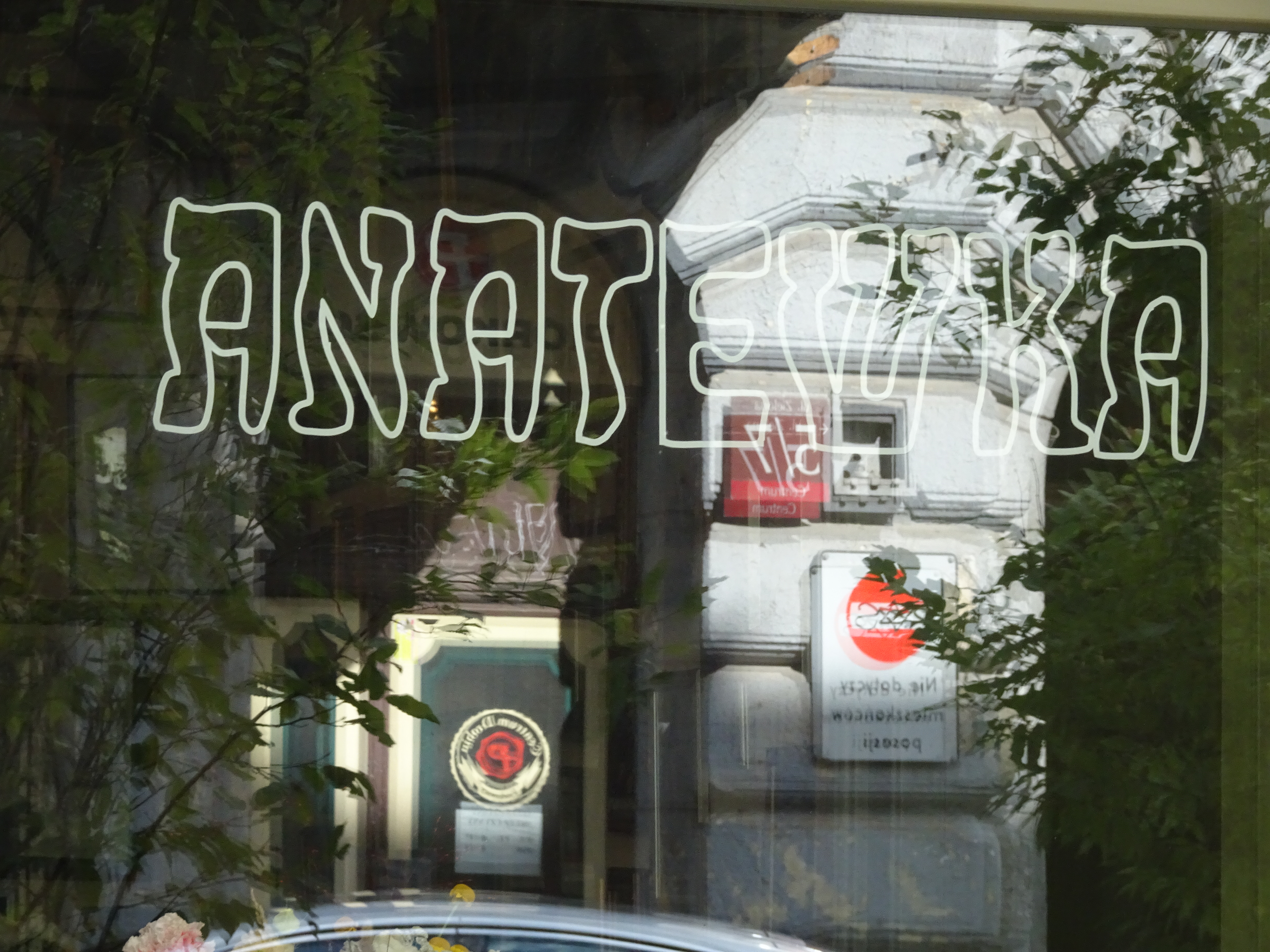
There was lunch at the amazing restaurant, Anatevka, where the wine was Israeli wine, and the menu, while not kosher, highlighted some of the food served in Jewish homes.

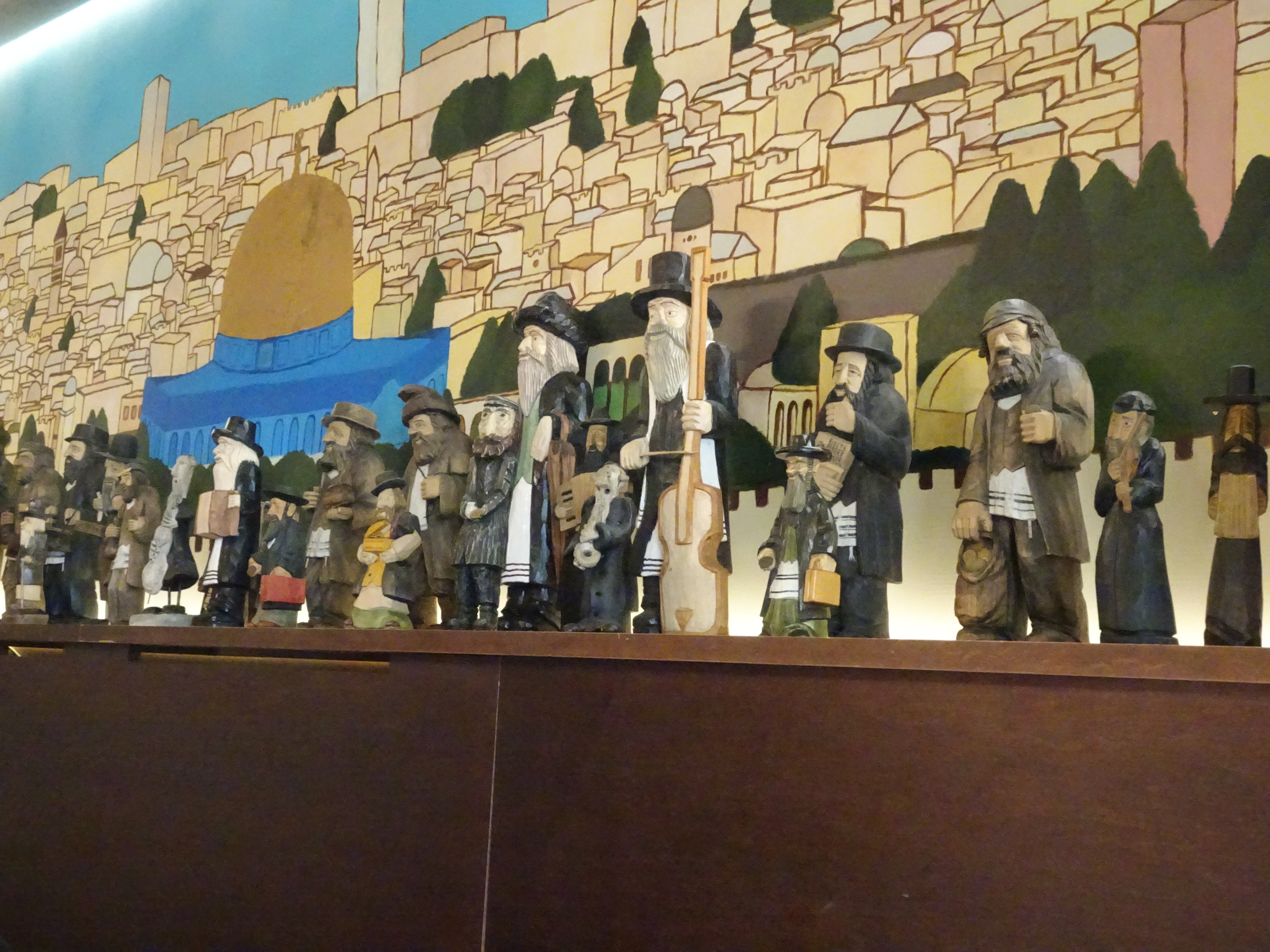
Yiddish and Klezmer music was playing, the walls were filled with memorabilia from Jewish homes. So far, so good, right?

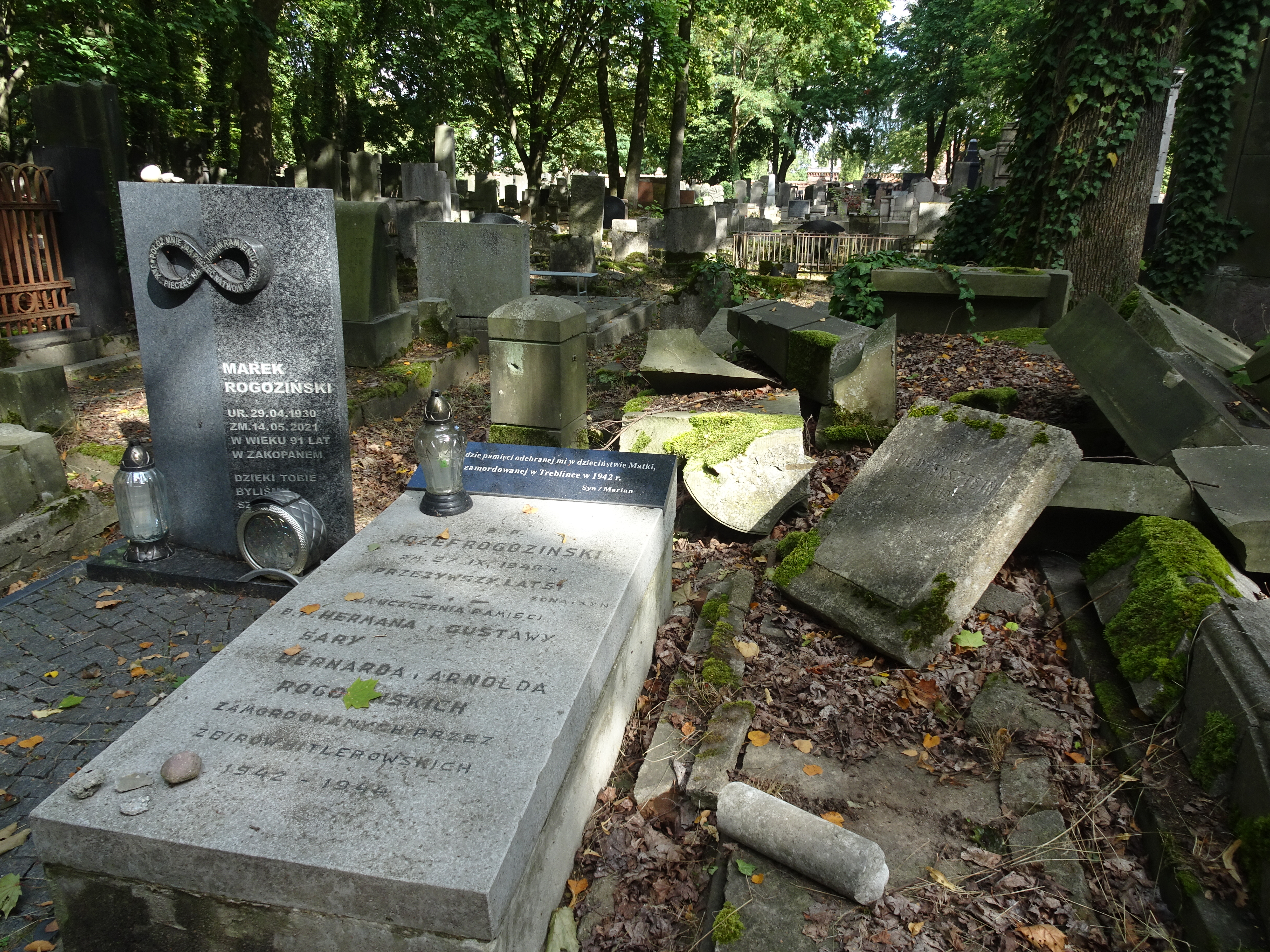
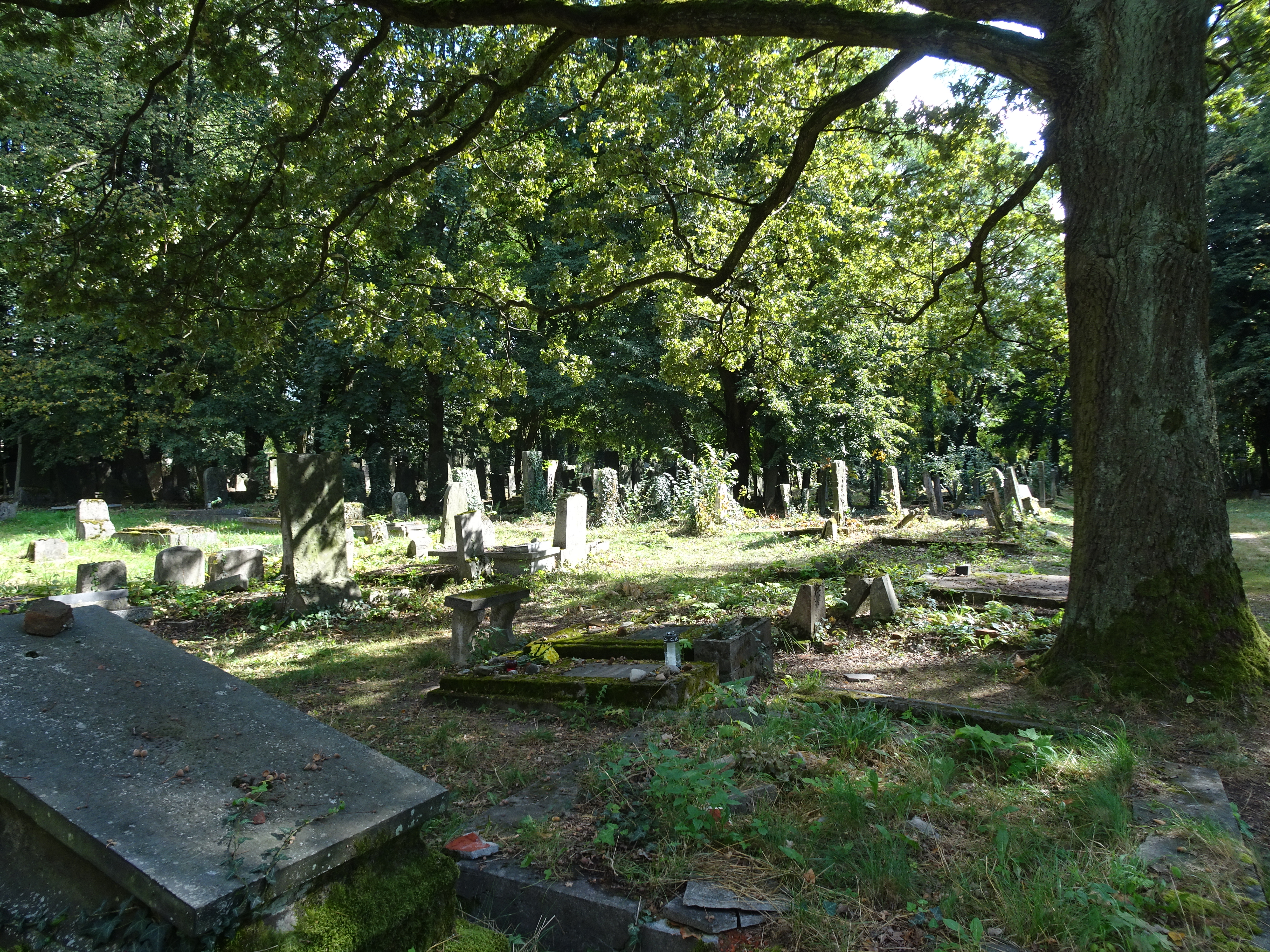
Our last stop of the day was at the Łódź Jewish cemetery where there are somewhere between 170,000 and 250,000 Jewish burials. One section has unidentified people who died in the Shoah. Outside the cemetery walls are stone fragments rescued from where they were used to build walls, and as a solid underpinning for roads, and even matzevot rescued from other cemeteries that had been destroyed.

The cemetery wasn’t destroyed but the sadness is that there is no one who remembers the dead, who still lives here. Are the people buried here remembered? Who is alive who still mourns? Does anyone say the names of those buried here or think about them? Do they still live in someone’s memory. Tomorrow we go to the Warsaw ghetto.

Posted in Uncategorized | Tagged , , , | Leave a comment

What Should Not Have Been Destroyed

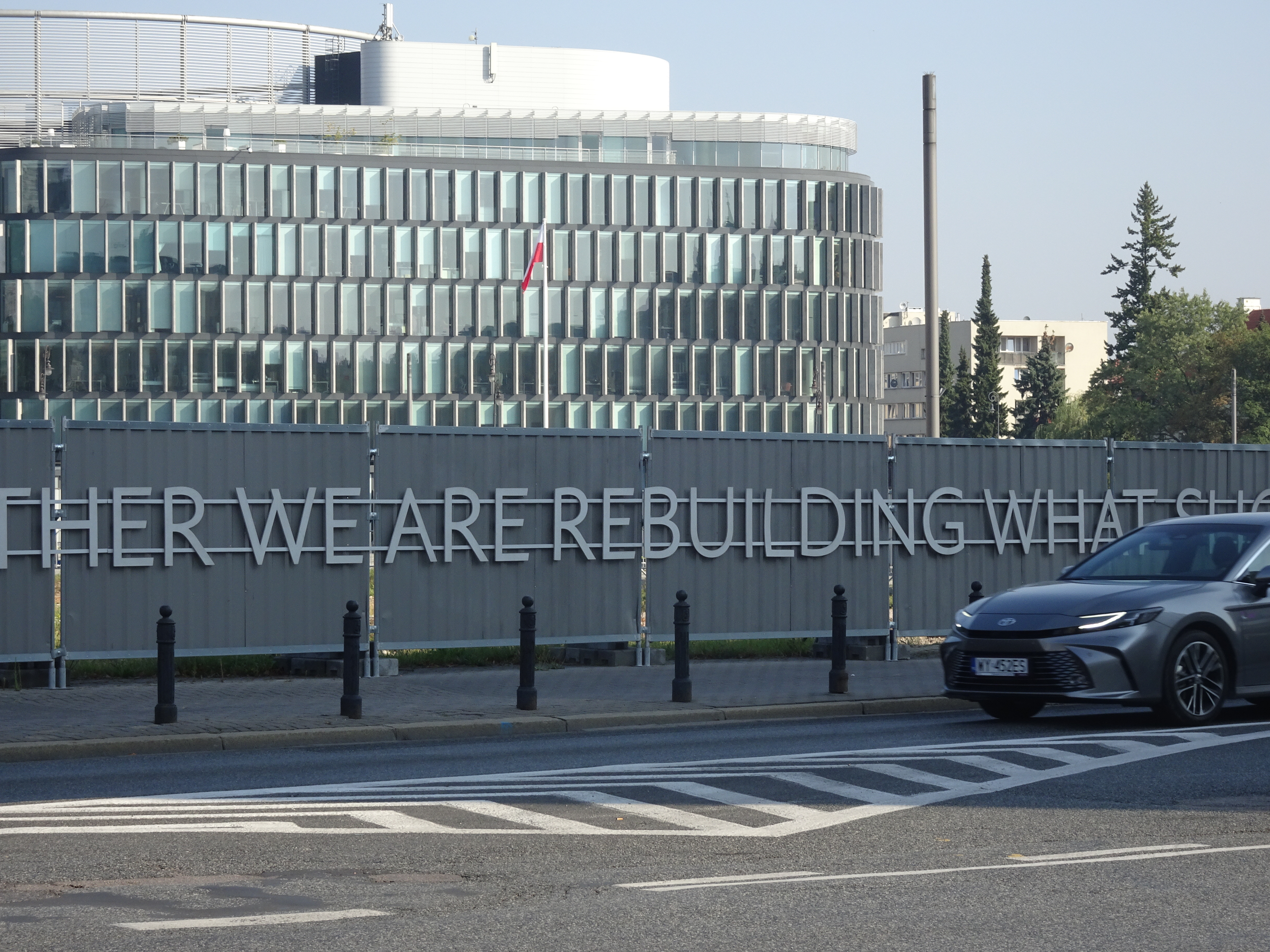
The first thing I saw when I walked out of my hotel this morning was a giant sign “We are rebuilding what should not have been destroyed.” I’m in Warsaw, and this sign applies to so much. I have to say that this morning’s short walk to the Tomb of the Unknown Soldiers was very weird. Not the walk itself – the monument is right across the street from the hotel. Walking to the monument in formation for the hourly changing of the guard, were soldiers in uniform with high black boots, marching without bending their knees, guns with bayonets on the end. I just wanted to run. I tried to blend in with the walls of the reconstruction that was going on. Nothing violent happened of course, but, at that moment, it was too easy to envision it. I didn’t even take a photo.

After that, Ola and I had a wonderful day.

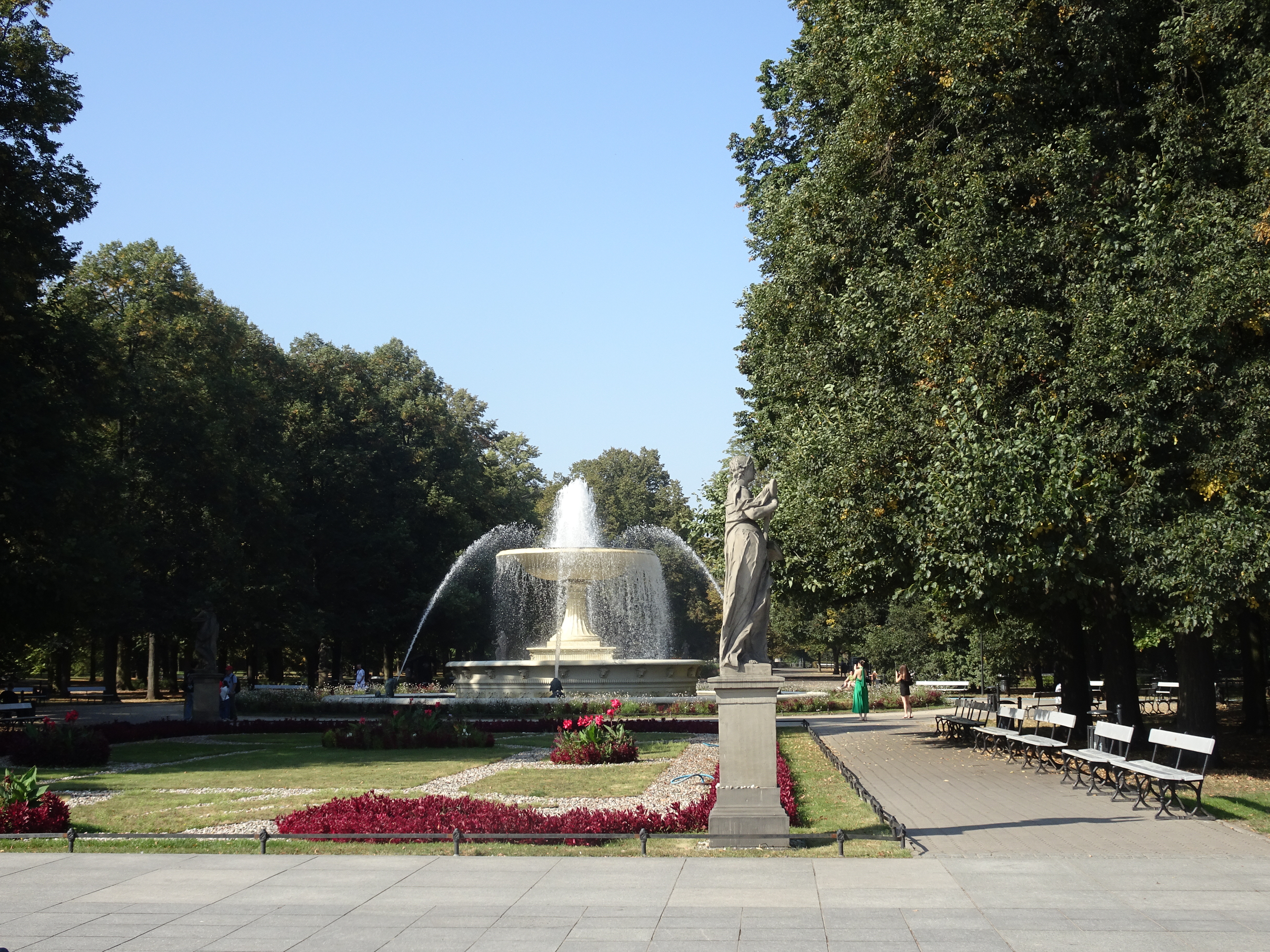
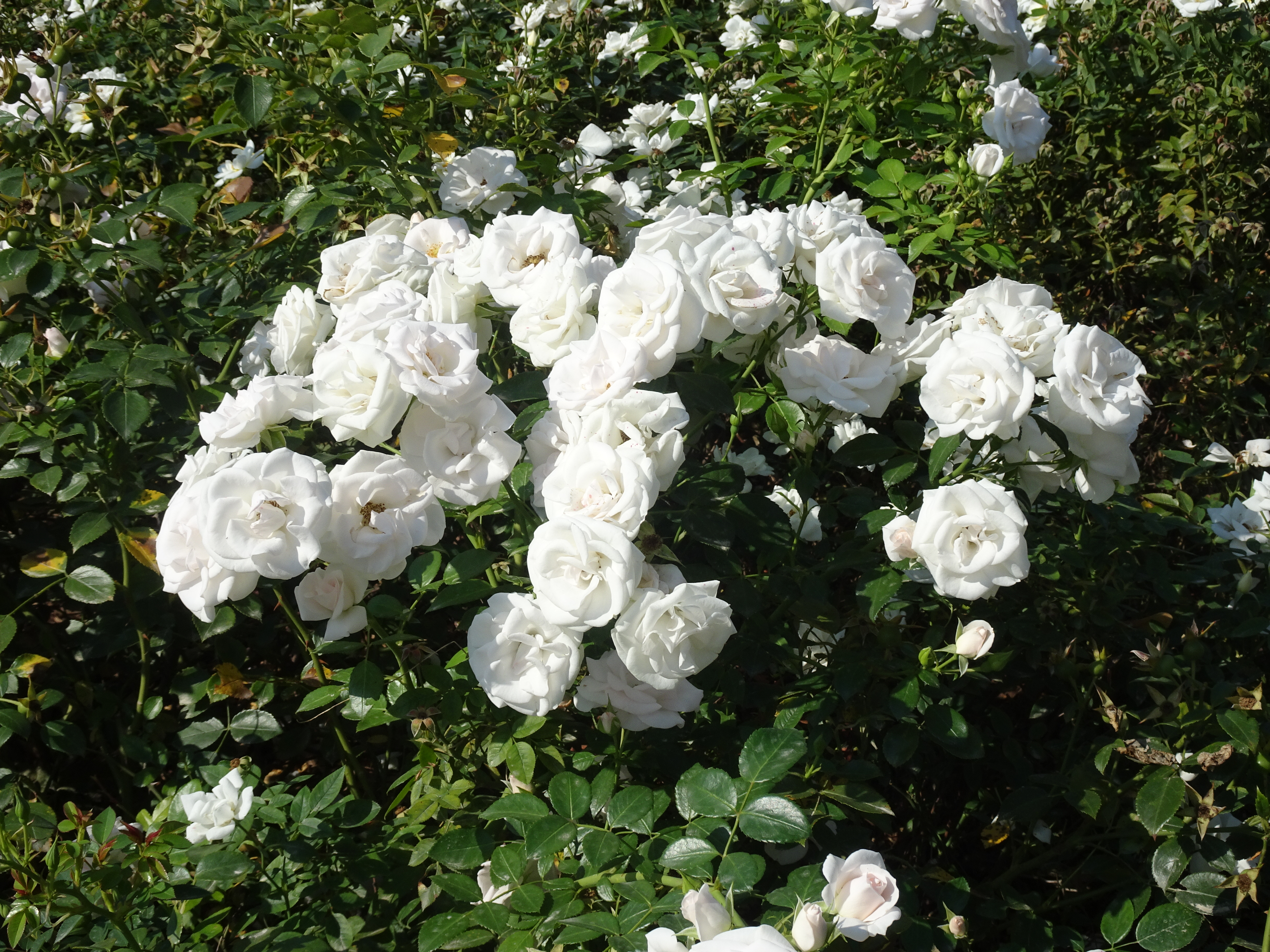
Next, we went to Belvedere – the park is always so beautiful

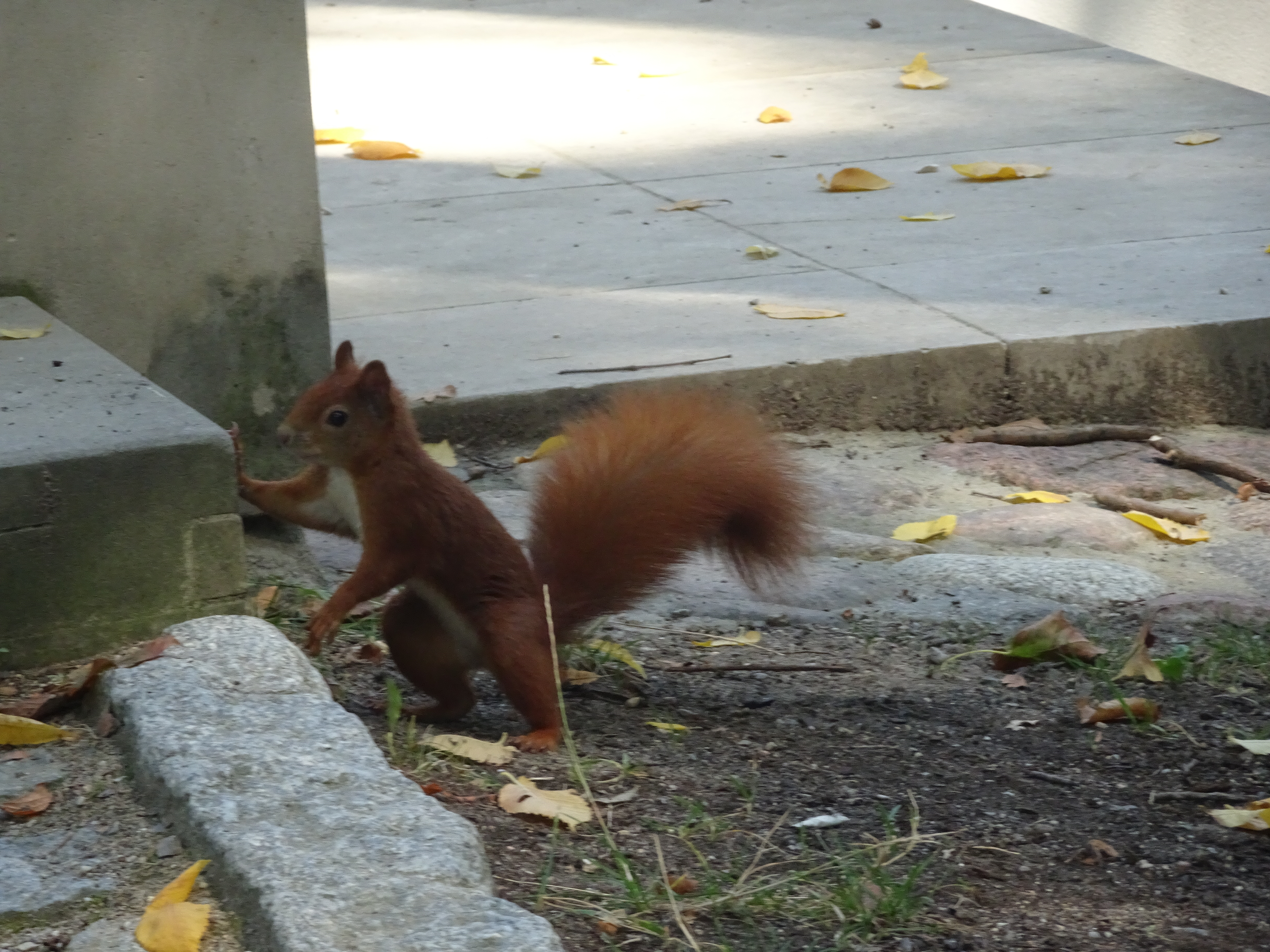
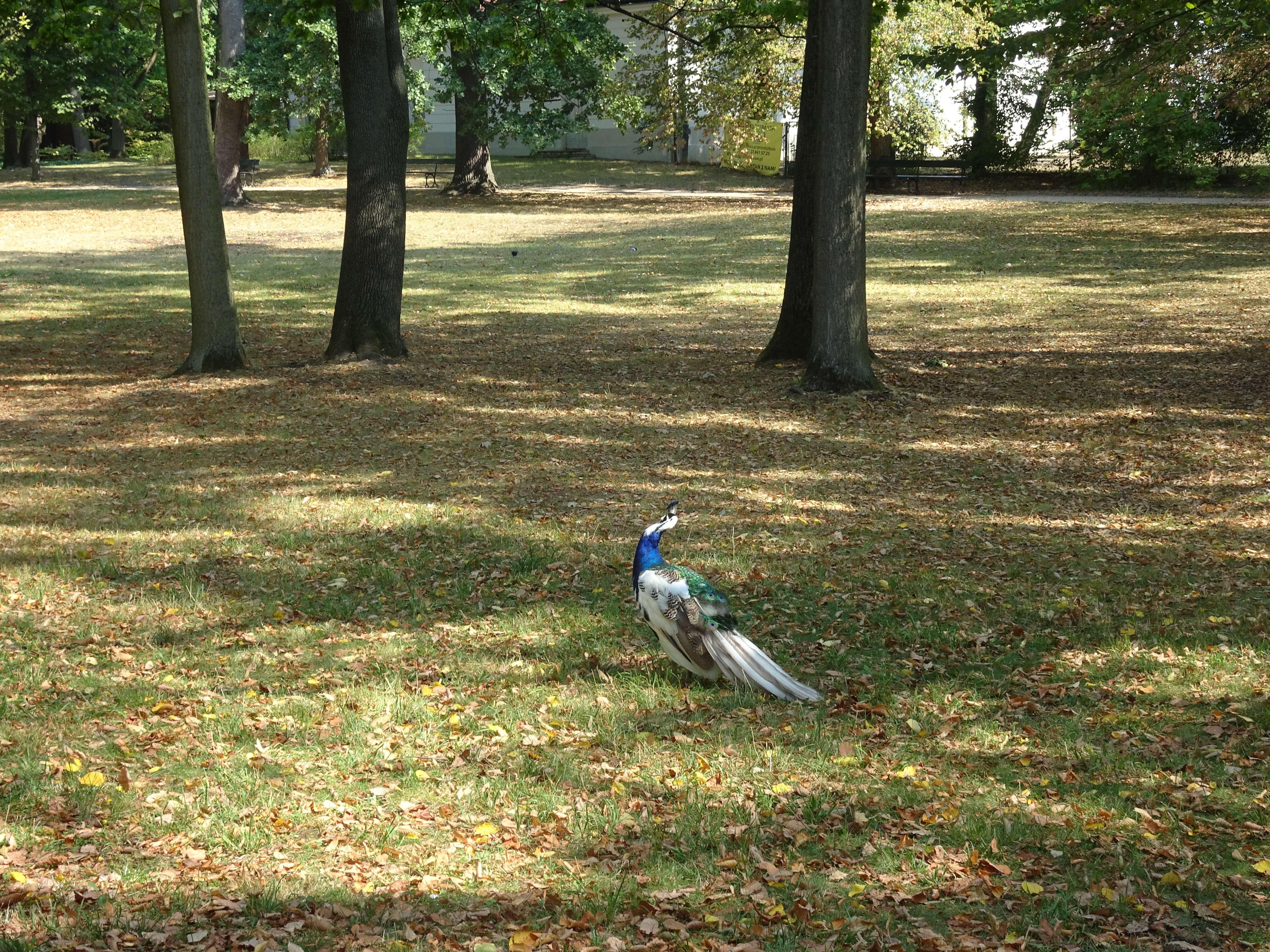
The wildlife were out too

Warsaw represents so much to me about rebuilding that which should never have been destroyed – the buildings, the way of life, and of course above it all, life itself. It is a miracle and a demonstration of the resilience of people that so much has been rebuilt

The way the city has been reimagined and recreated, means that what happened is never be far from a visual reminder. The juxtaposition between this morning’s military demonstration, and the old city, just a few blocks away is very jarring, and really shook me.

Posted in Uncategorized | Leave a comment

Every City

If I were to tell you that I have a favorite city that I’d be visiting on this trip, I’d be lying. Every city we go to, I can be found saying that I love this city. Today we flew to Warsaw. Before I write about Warsaw, I want to give a shoutout to Lot Polish Airlines. The flight from Vilnius to Warsaw is about 40 minutes. No sooner did we take off than the flight crew was handing out a square version of a jelly donut and coming around with drinks. A 40 minute flight including a snack and a drink? Unheard of, right? Then, just when you felt this couldn’t be out-done, bags were delivered about 10 minutes after we landed. Such efficiency, I felt like I was in an alternate universe!

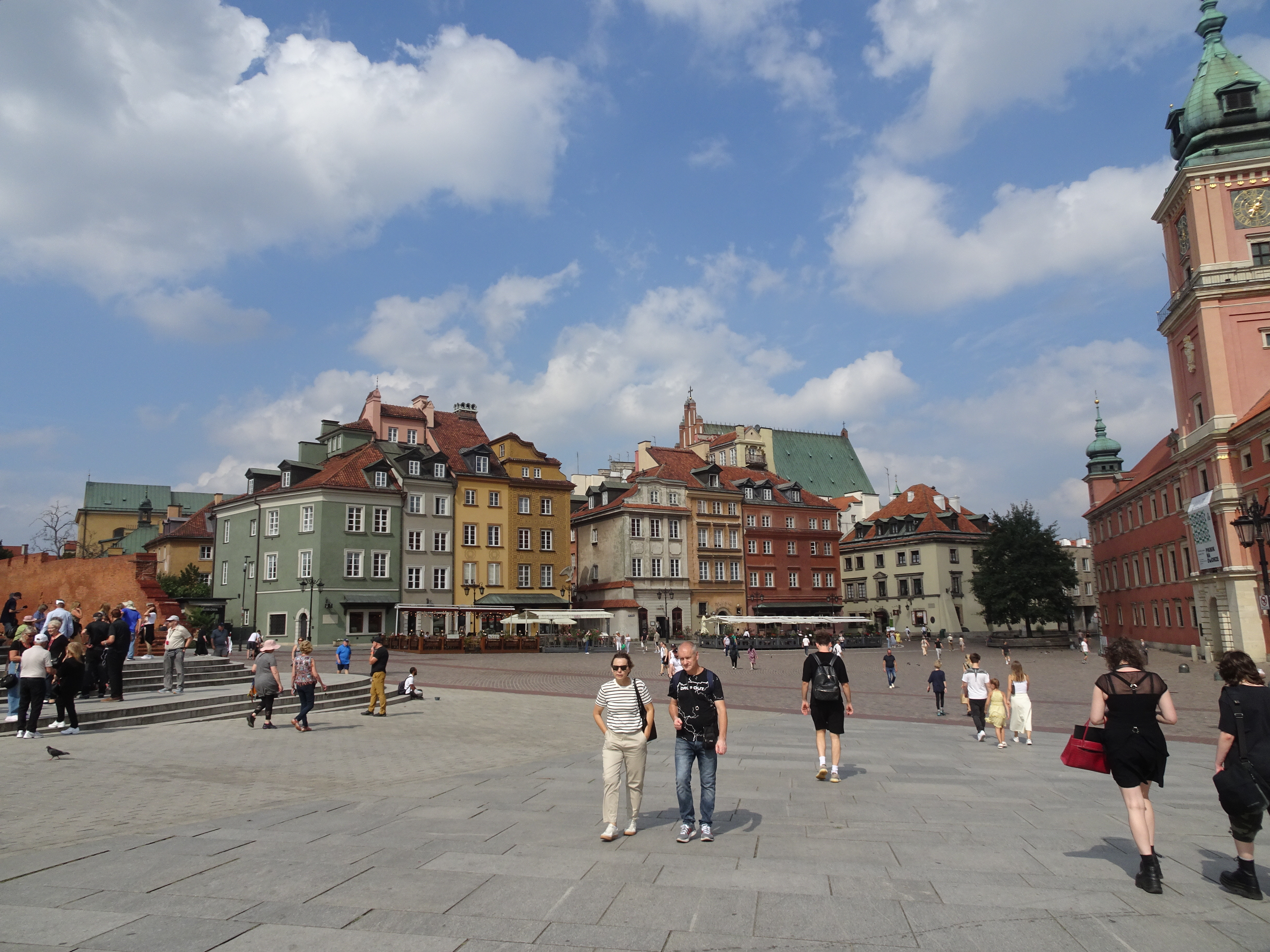
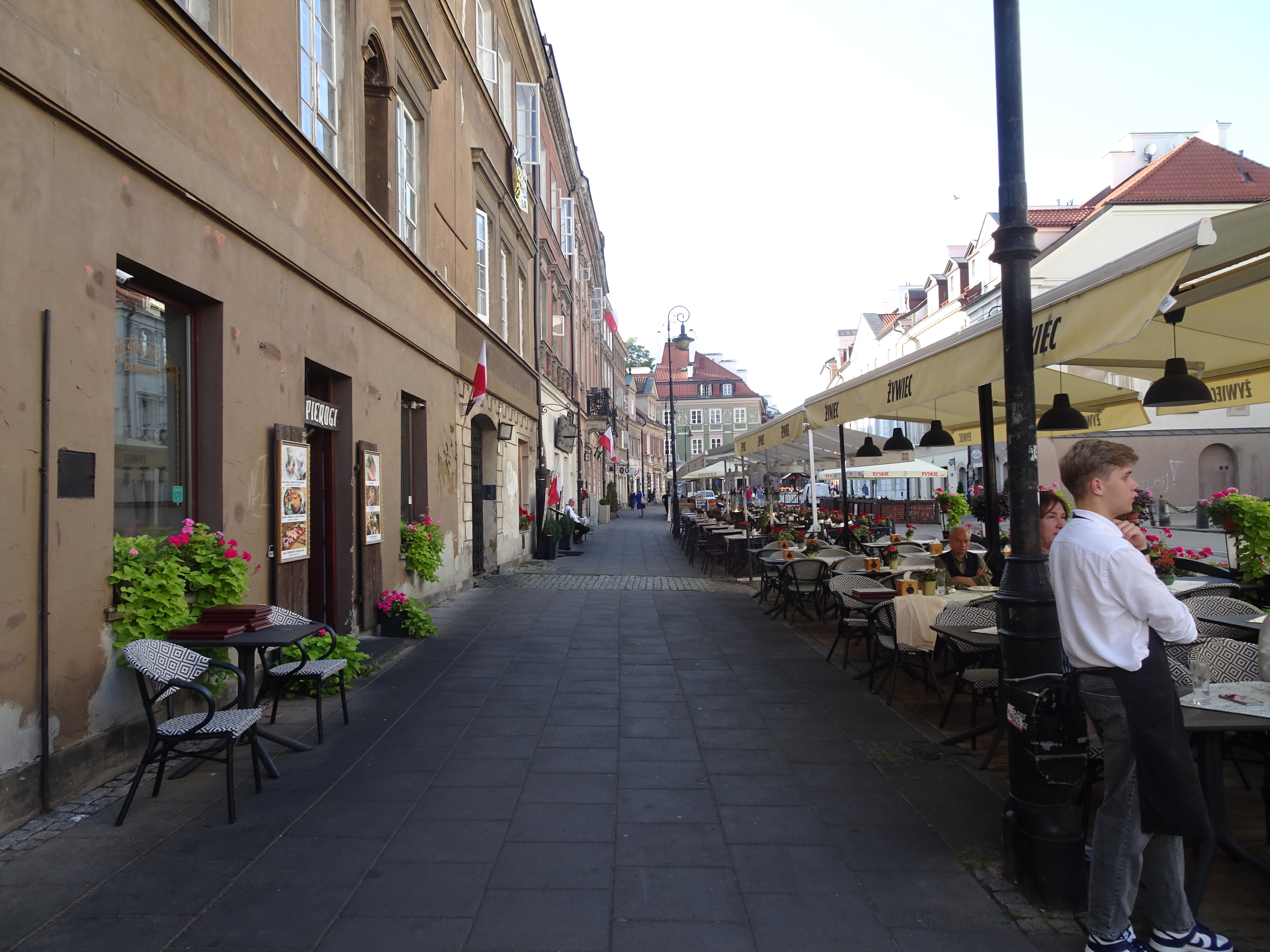
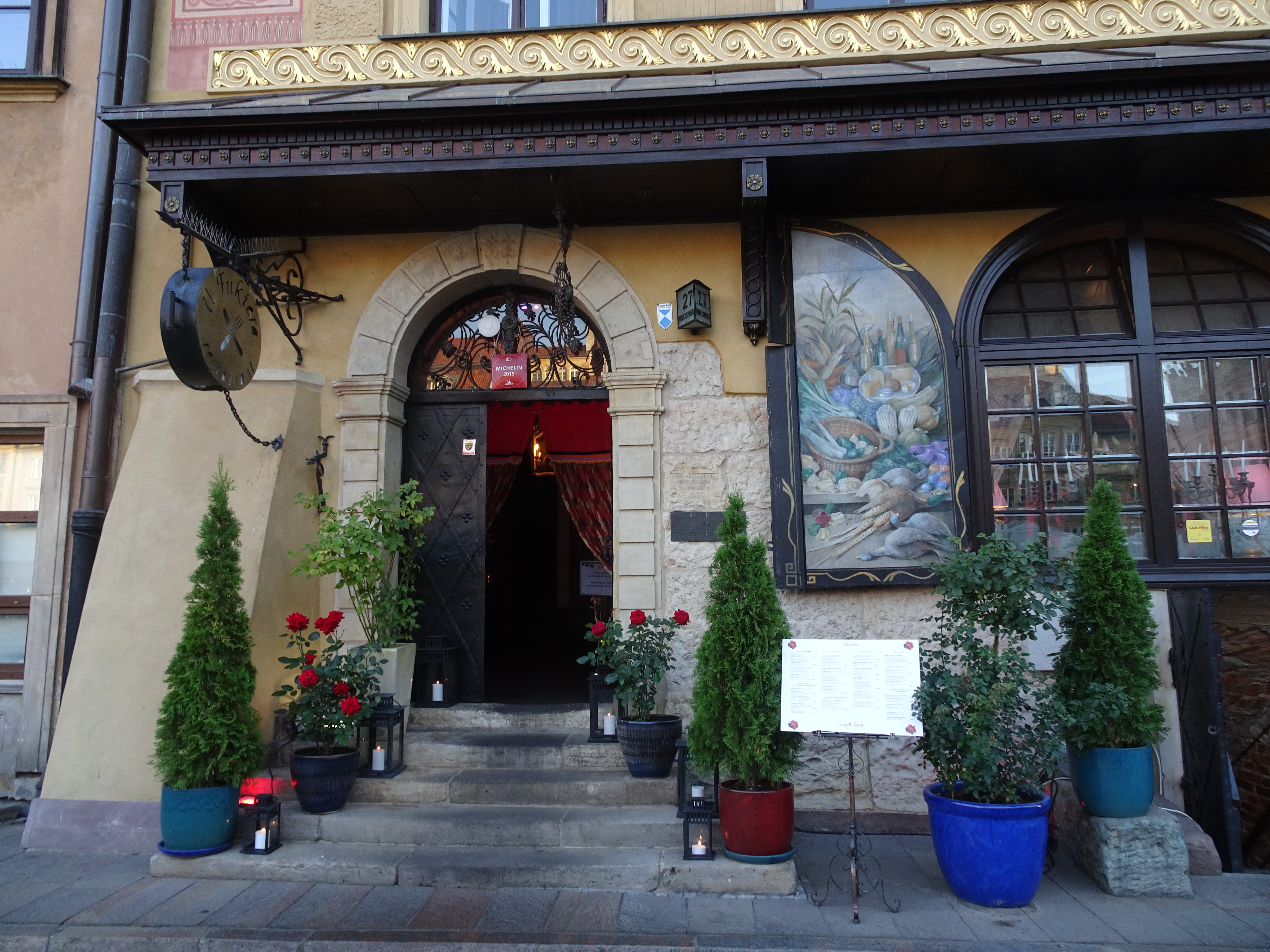
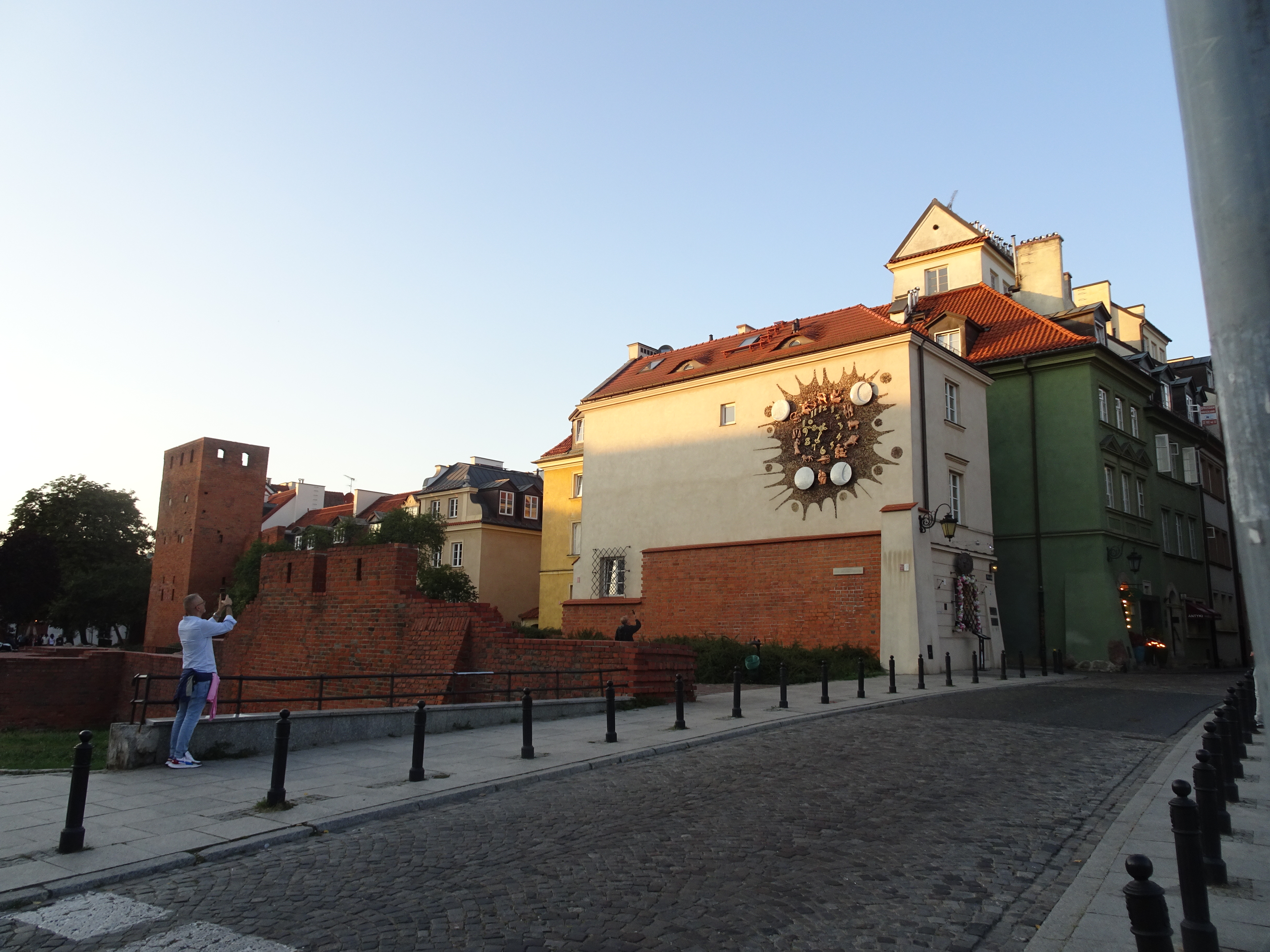
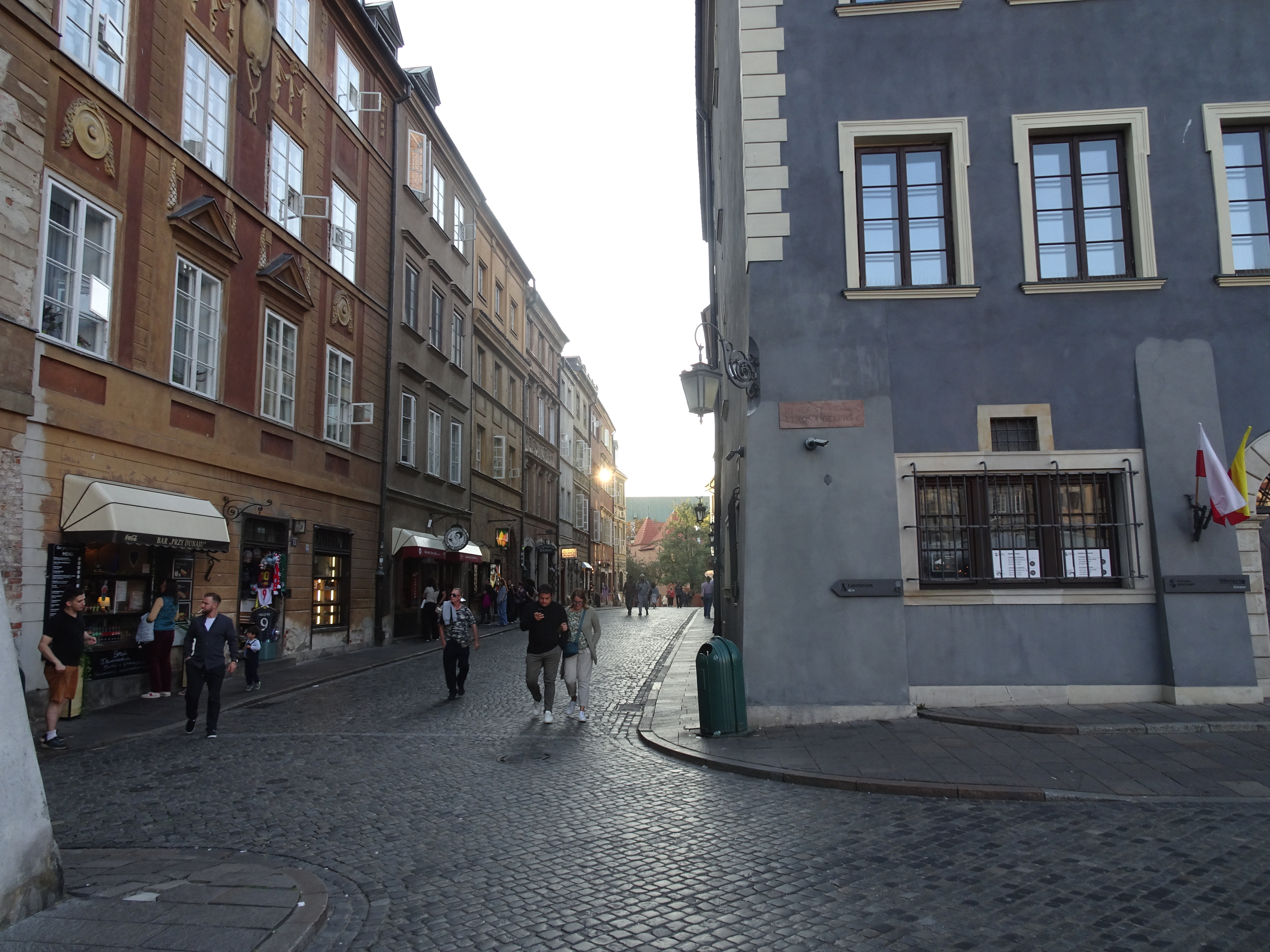
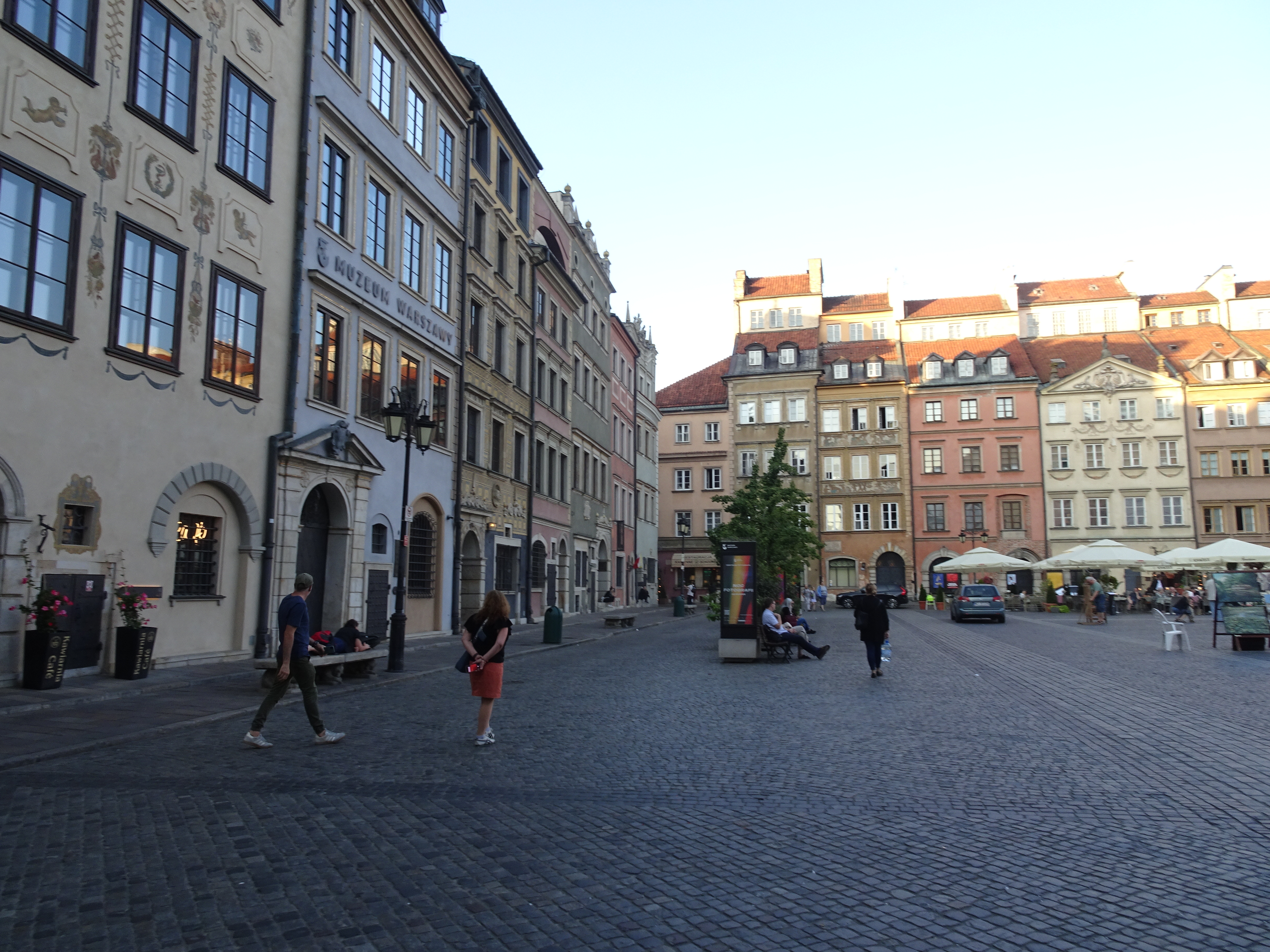
I do so love the diversity of a city. The photos above are all the old town in Warsaw. We’ll be seeing a bit more of that tomorrow. Dinner was pierogi for me – cottage cheese and potatoes. Later on this week I’ll branch out and have cabbage, or spinach, or mushroom.

After dinner was a Chopin concert. I think it’s a great entrée into Warsaw, and I love taking people to these intimate concerts. A glass of sparkling wine during the intermission is always a welcome treat. After the chill and rain in Lithuania, the weather today was a really welcome break. I’m looking forward to doing a little travel around Poland for the next 11 days – as far south as Kraków and as far north as Gdańsk.

Have I said I love to travel? I know I’ve said I love cities.

Now that I’ve commented on all the good things about today, I must comment on the date. Today is 1 September 2025. On 1 September 1939, things happened in Poland that forever changed the landscape of the country, the Jews, the world. Just remember that those who cannot remember the past are condemned to repeat it. enough said.

Posted in Uncategorized | Tagged , , , , , , , | Leave a comment

Flowers, History, and Tears

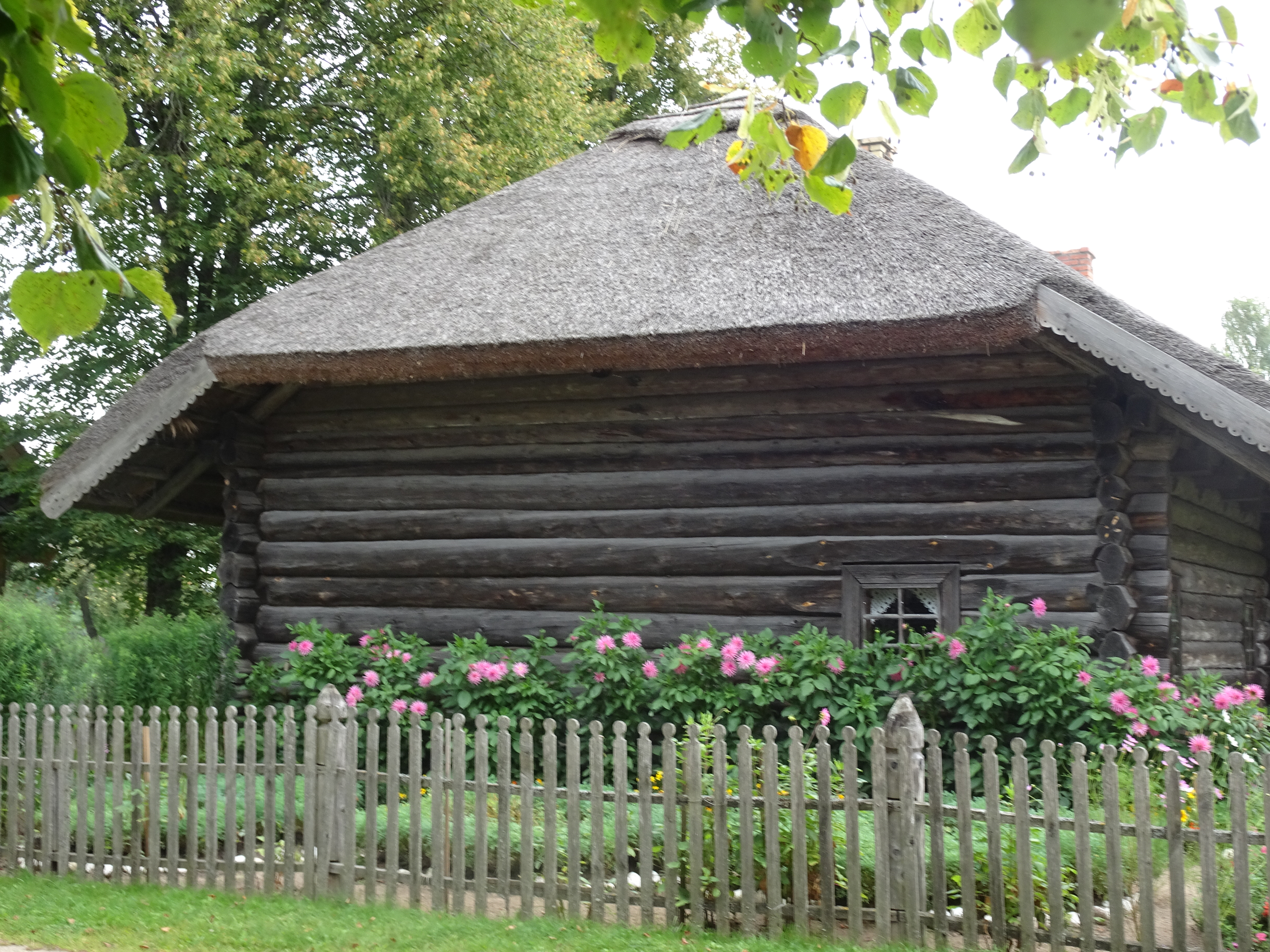
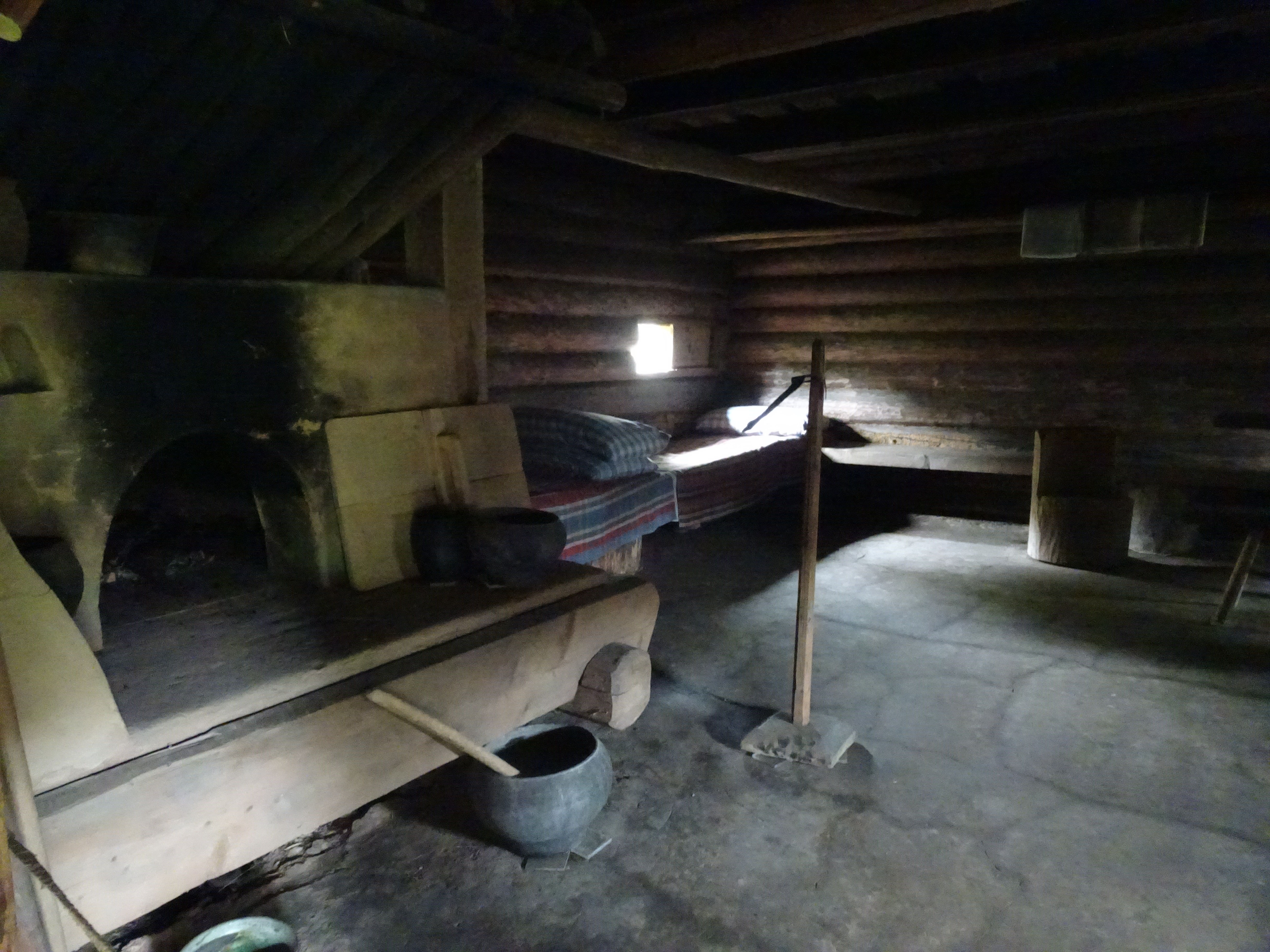
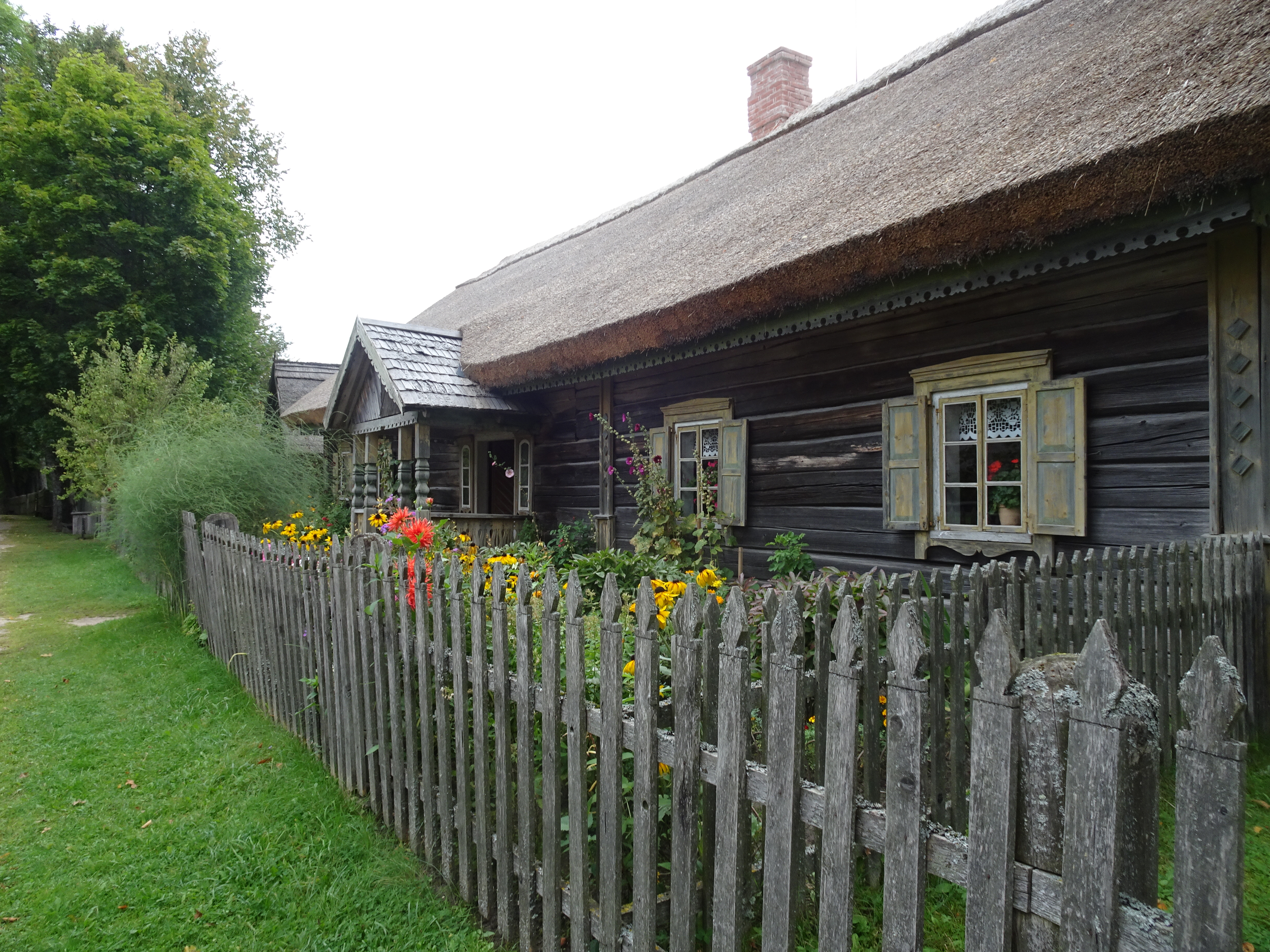
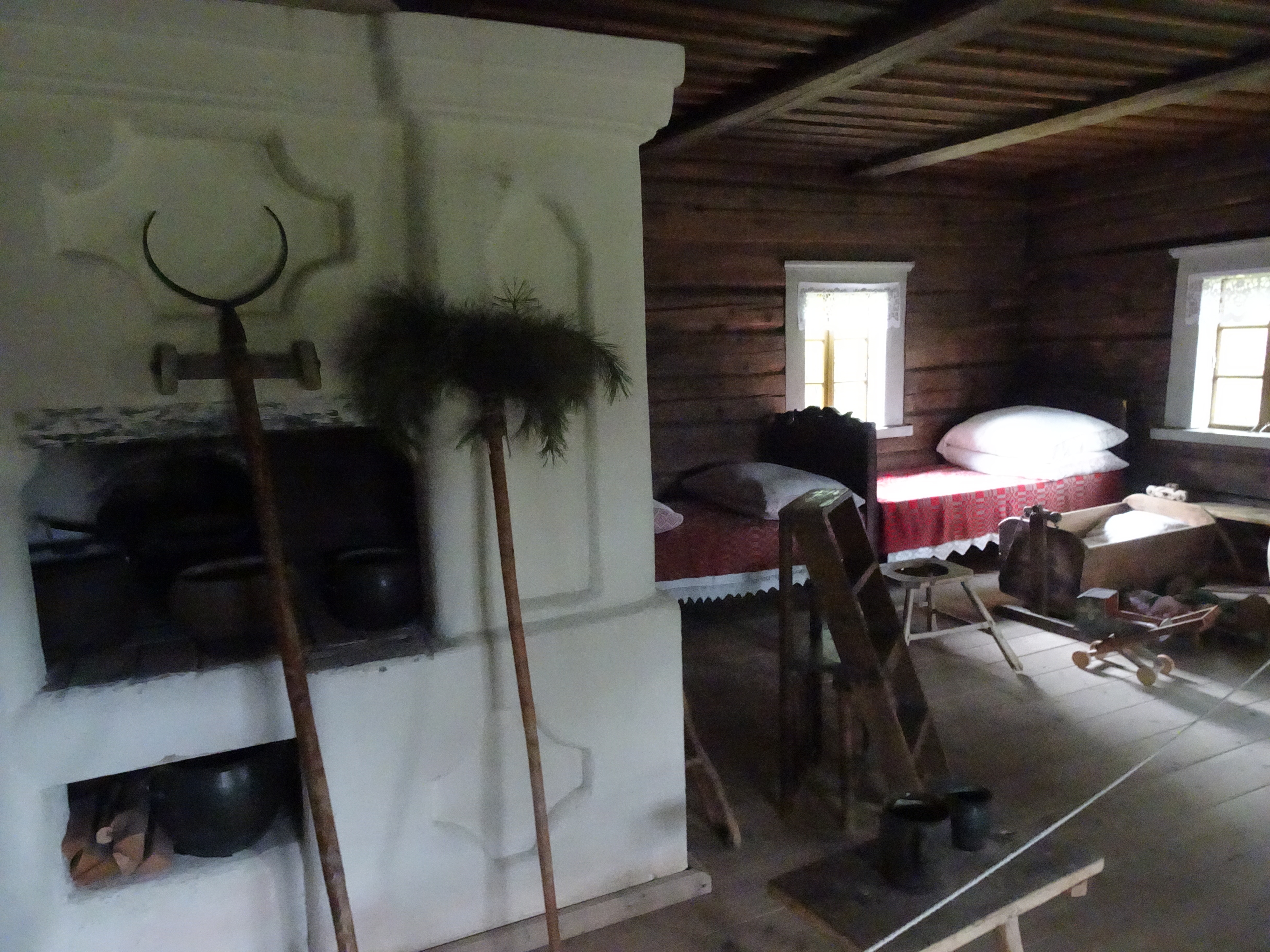
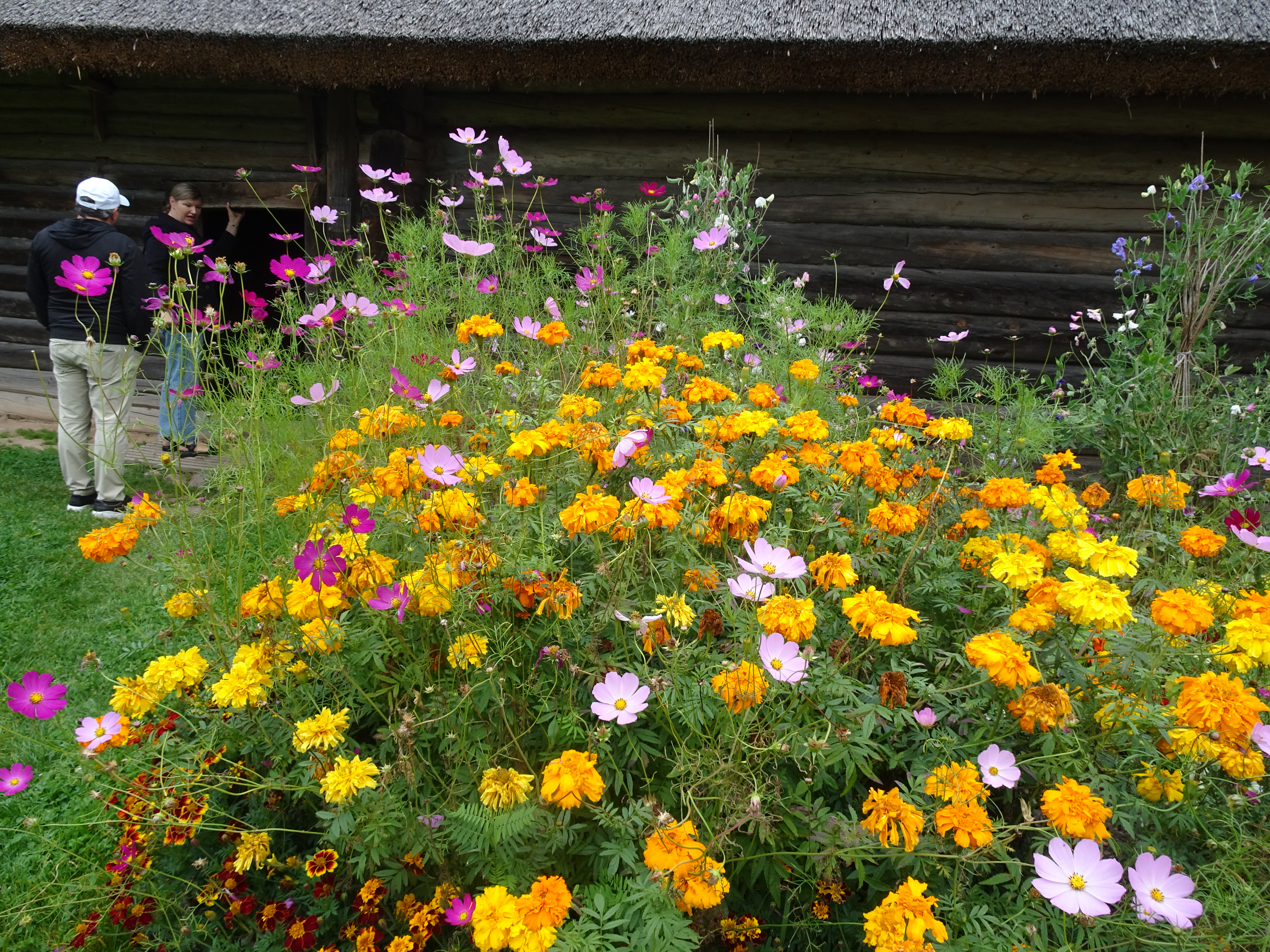
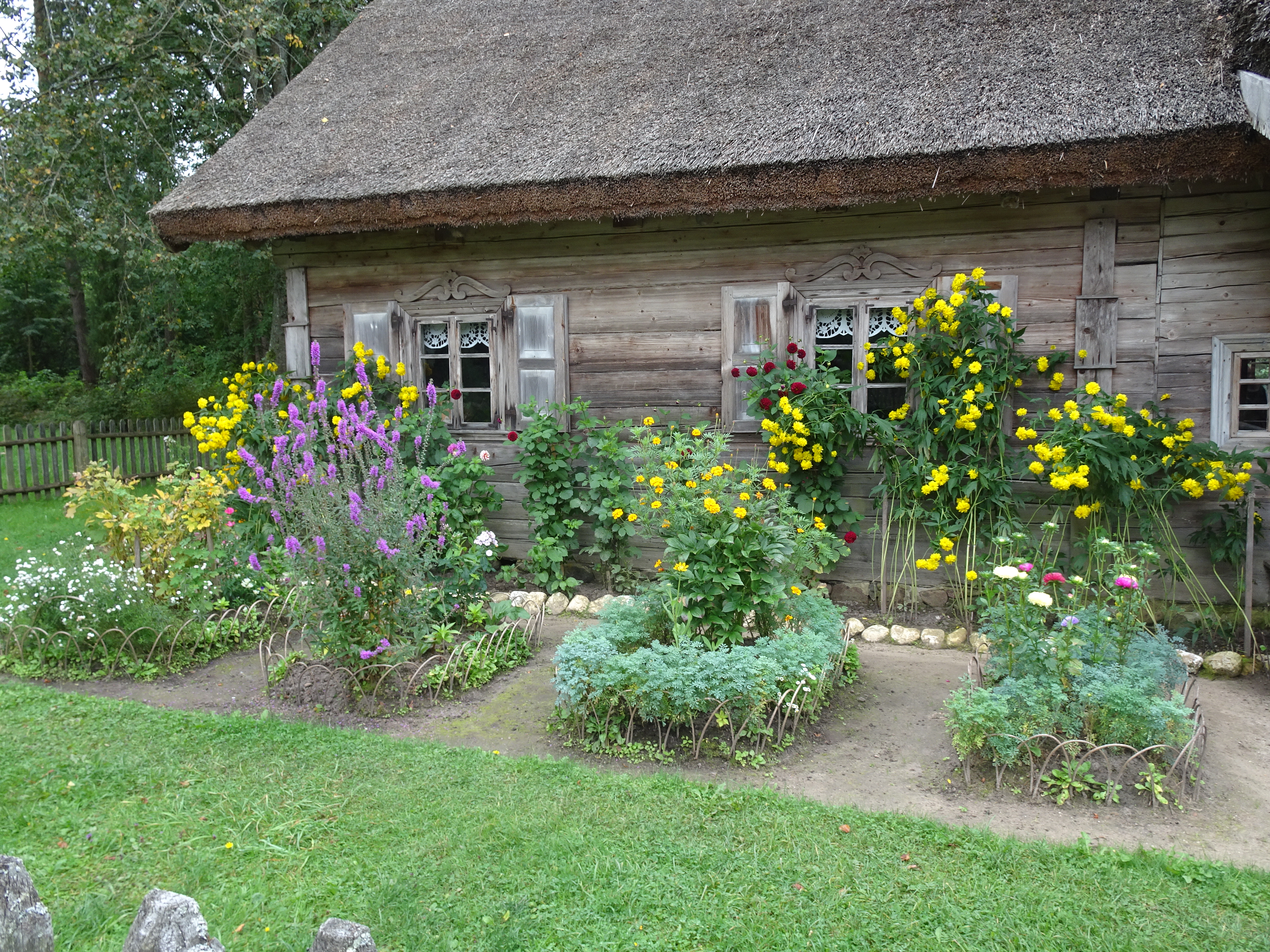
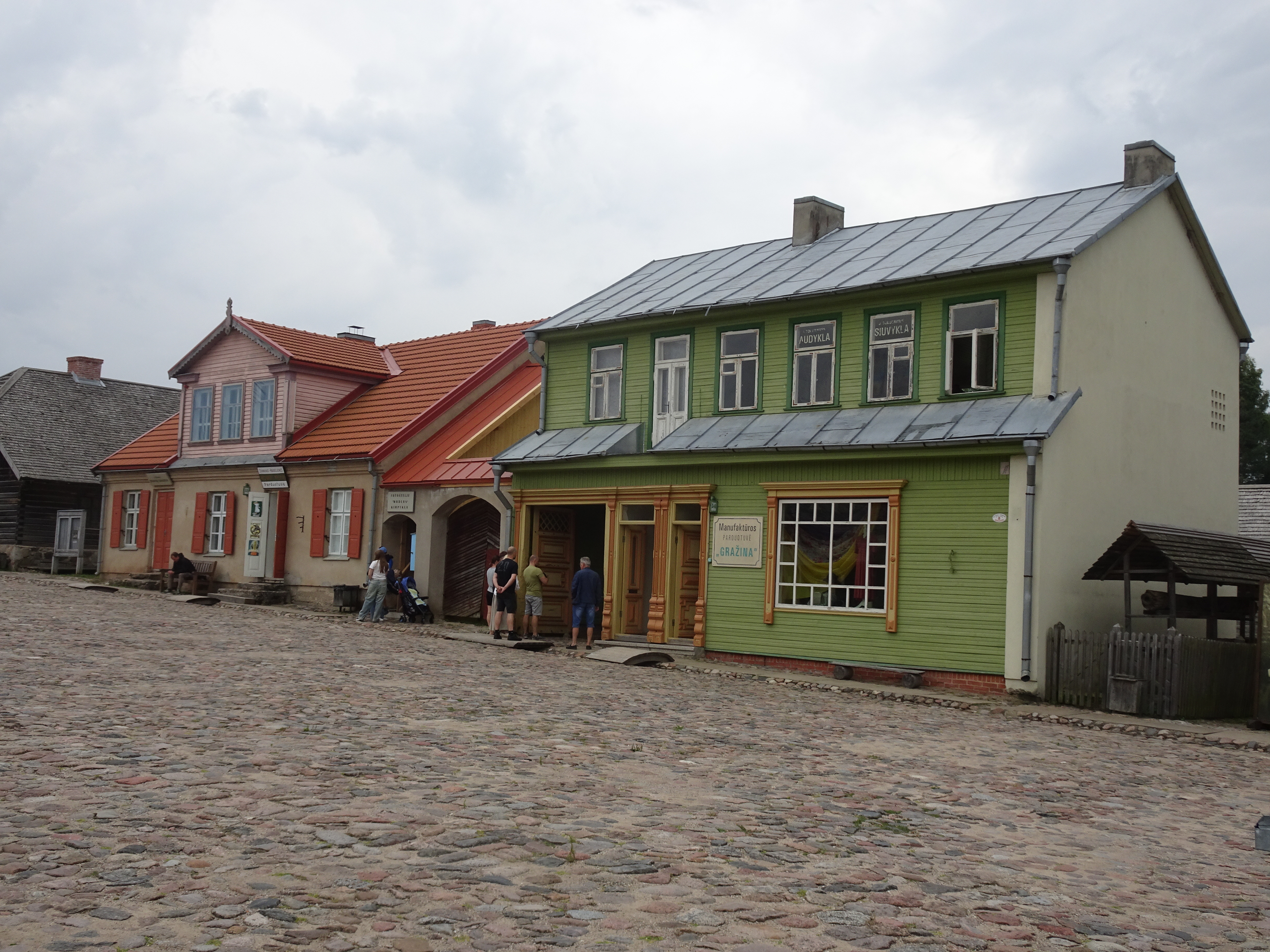
Today we walked into the past – into the mid-19th century. This amazing ethnographic museum portrays life as it was in the various regions of Lithuania through its houses, villages, and other structures. Apparently, buildings representative of 19th century life as well as all the “things” people had in their homes are part of this enormous undertaking. If I understood it correctly, the “museum” occupies just under 500 acres. Each section is meant to look like a typical village from a specific area. From the thatch-roofed home of the poorest families in a tow…

…to a larger house, representative of a the home of a welathier family in the same town

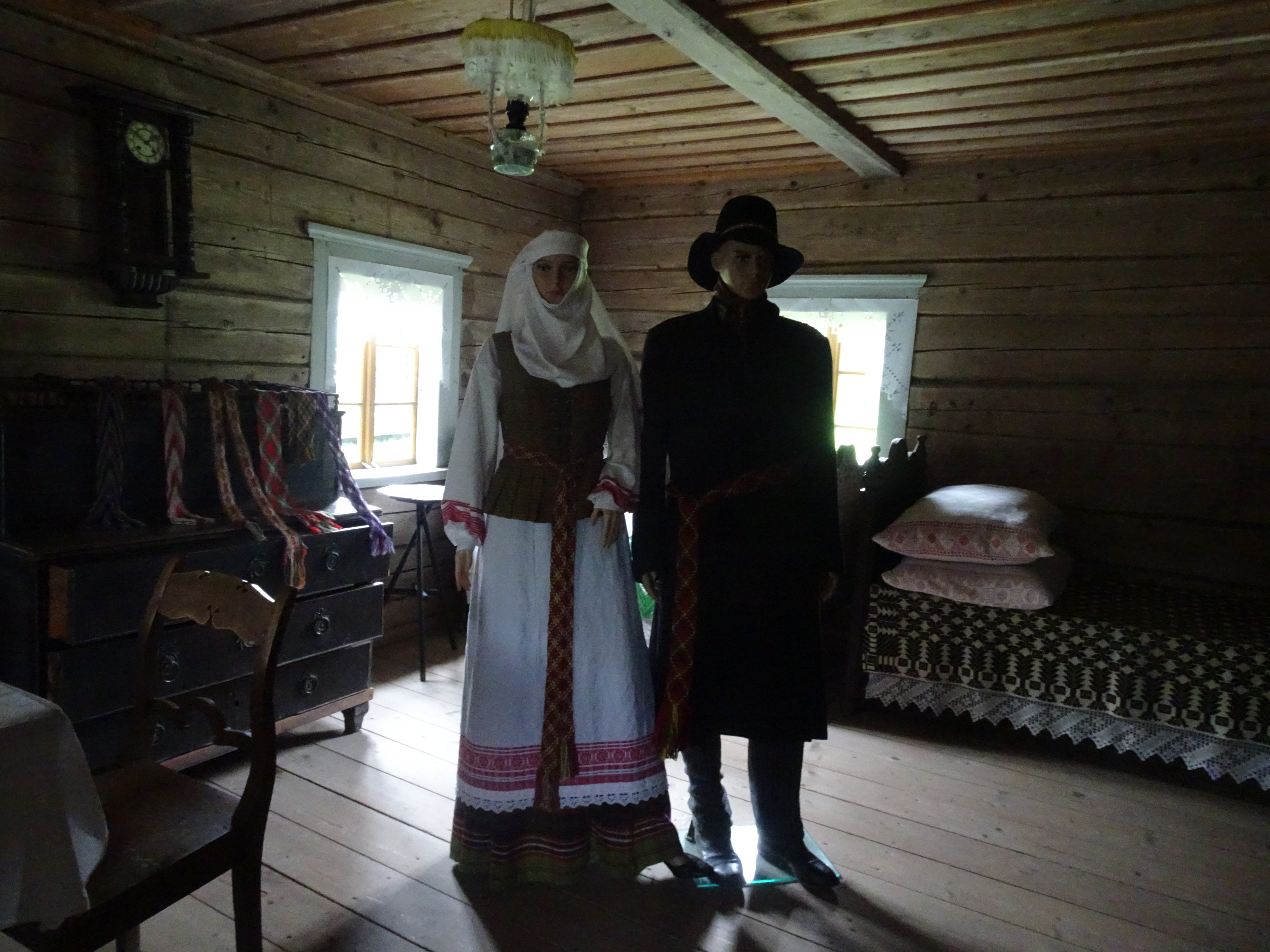
Each village had different types of homes with different typical costumes.

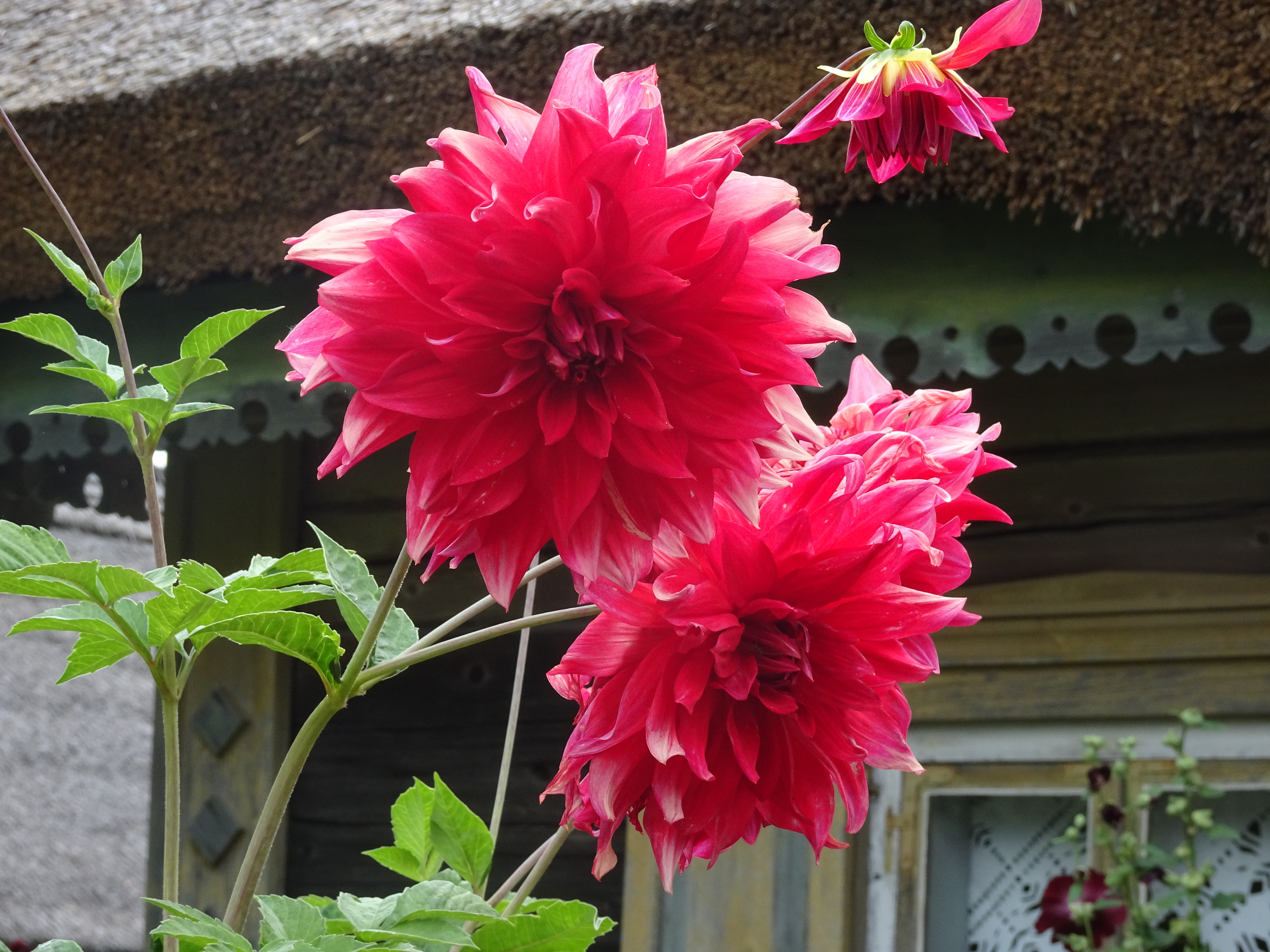
…and flower gardens galore

The Jewish homes and shops had mezuzot on the doorposts

The non-Jewish homes were distinguished by a corner with portraits of Jesus and Mary.

We enjoyed a lovely morning, marred by the pesky presence of kazillion mosquitos. Every time we got into the van, we spent a few minutes getting rid of the mosquitos, which seemed very attached to all of us.

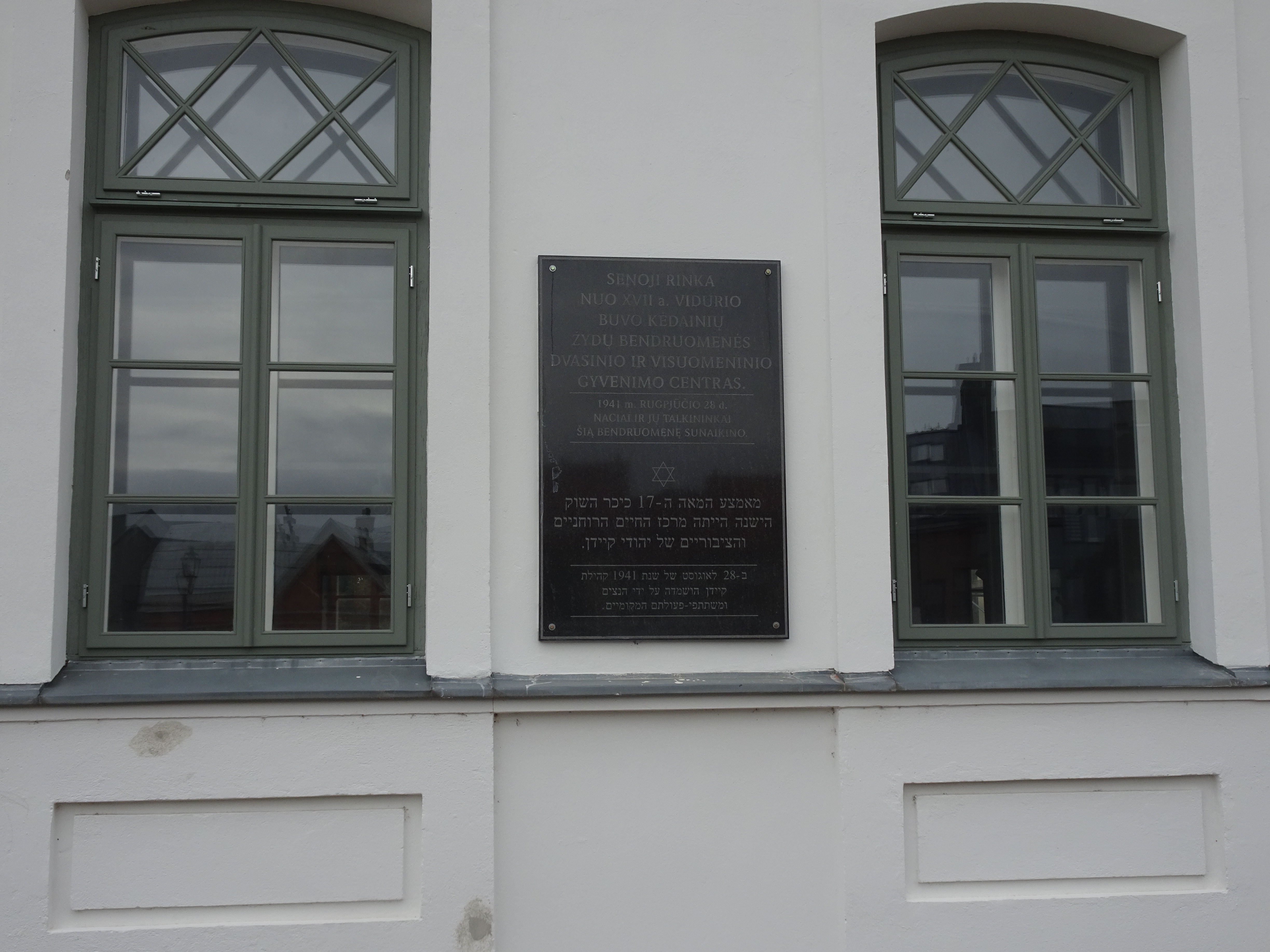
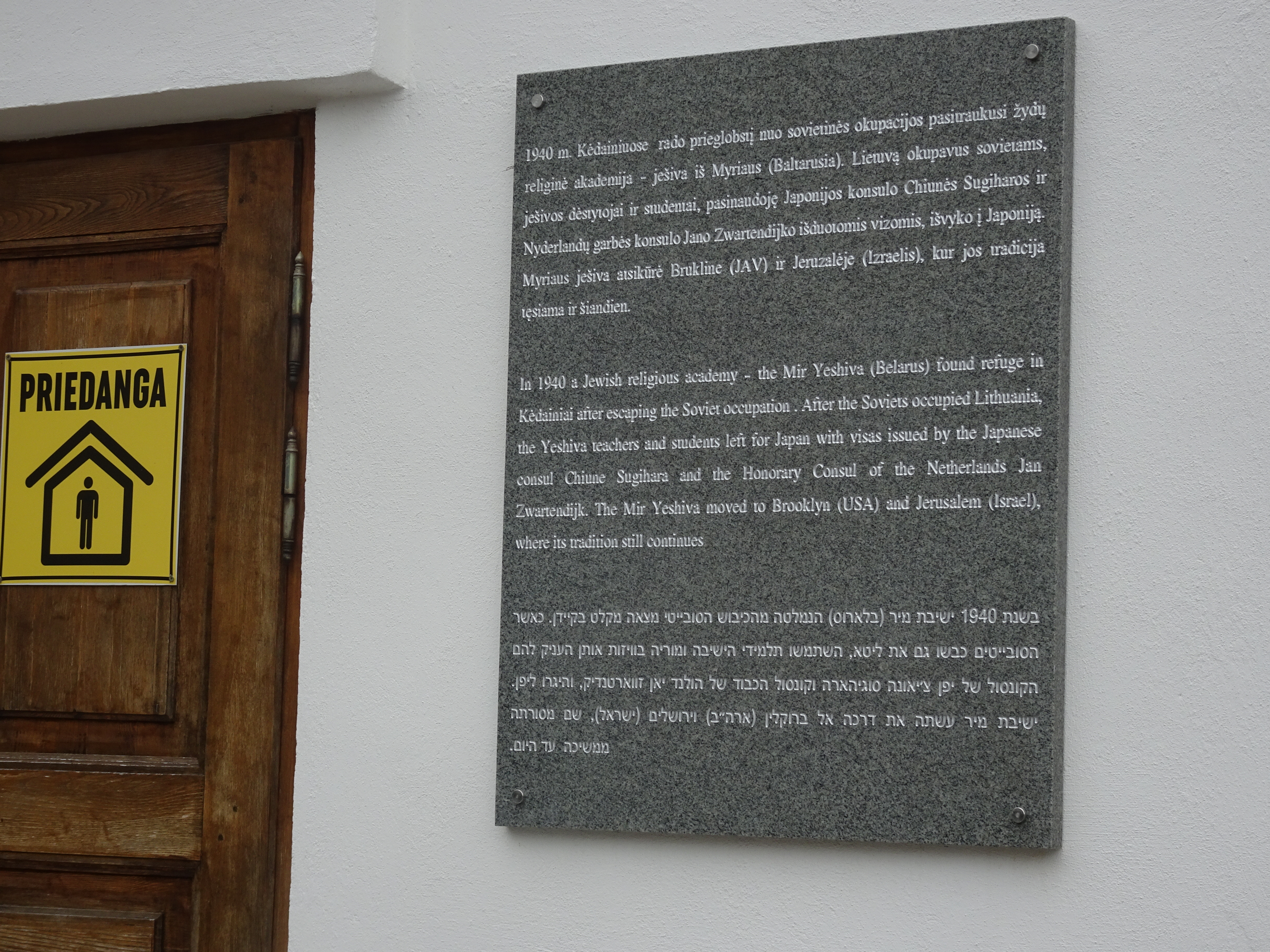
We headed off for Kedainiai for lunch at Gray’s restaurant, where Lina and I had eaten on another trip and to see where the synagogues were and other Jewish-related reminders of the time when 60% of the town were Jews.

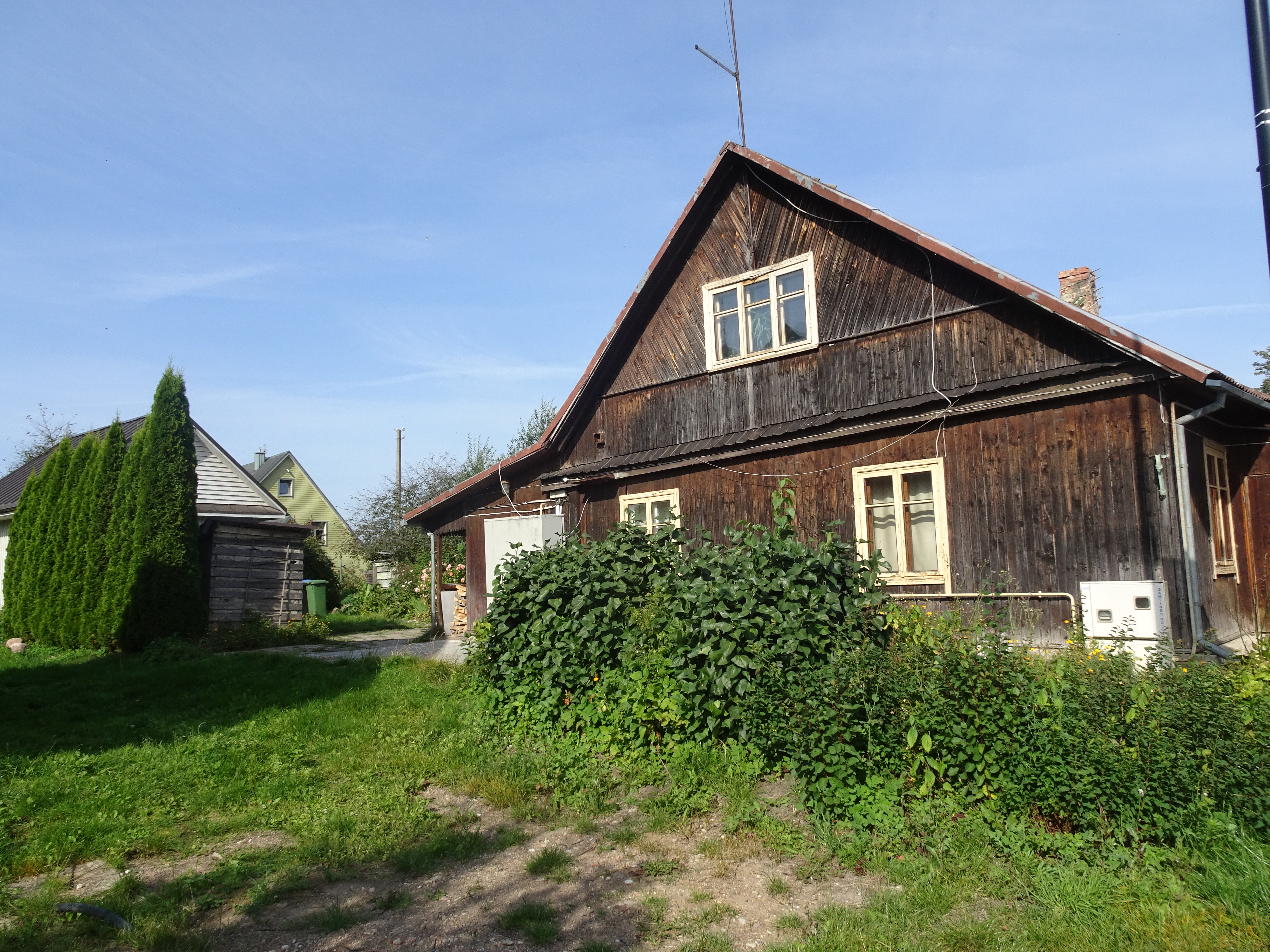
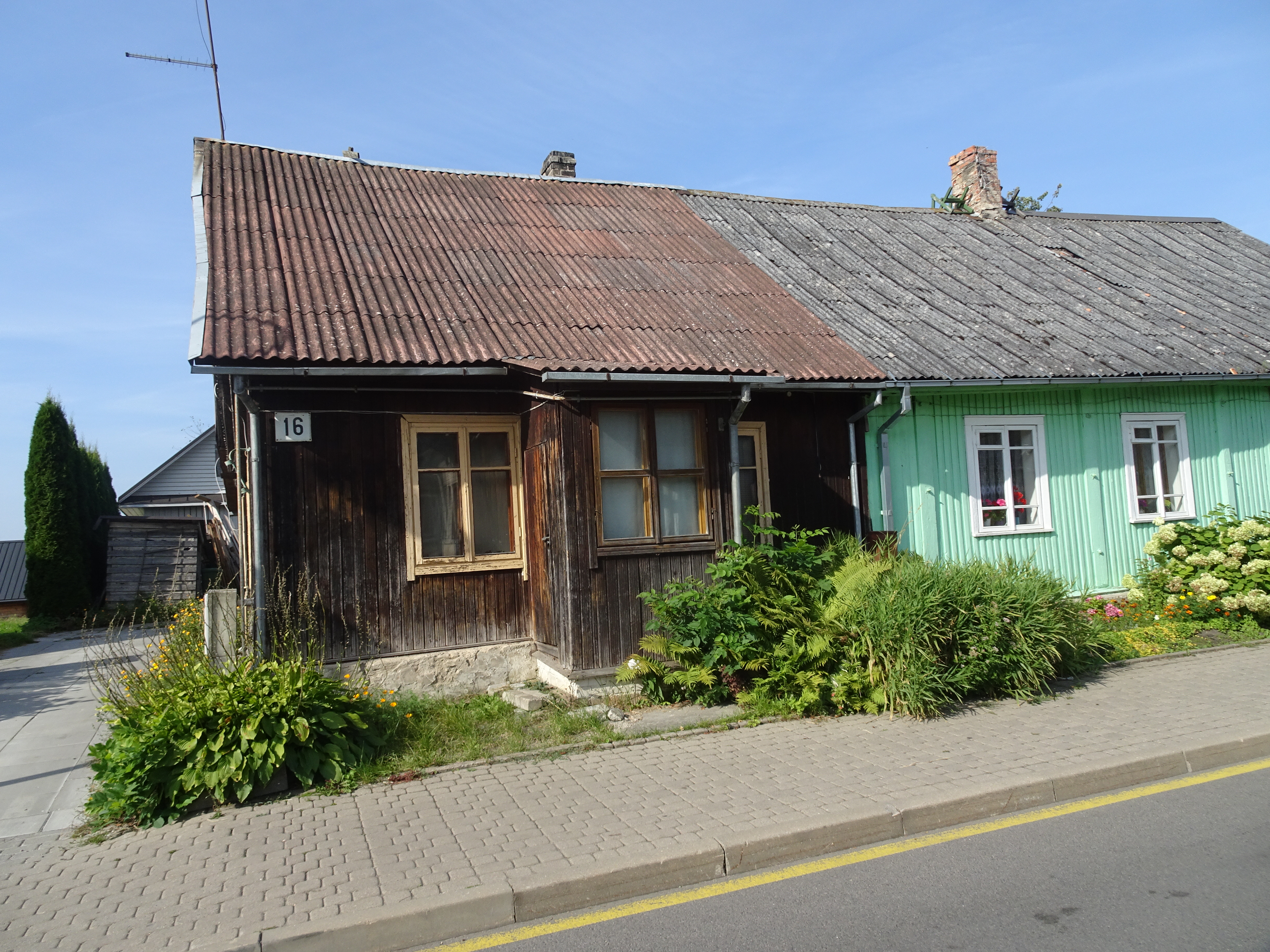
On our way to the synagogues, we passed by homes formerly occupied by Jews

The brick addition on the house above was apparently aSukkah – the roof while seeming to be solid, wasn’t – there were panels that could be moved so the stars could be seen – this was the compromise to the often rainy and cold weather – and was more solid as a structure than what we would imagine building as a Sukkah today.

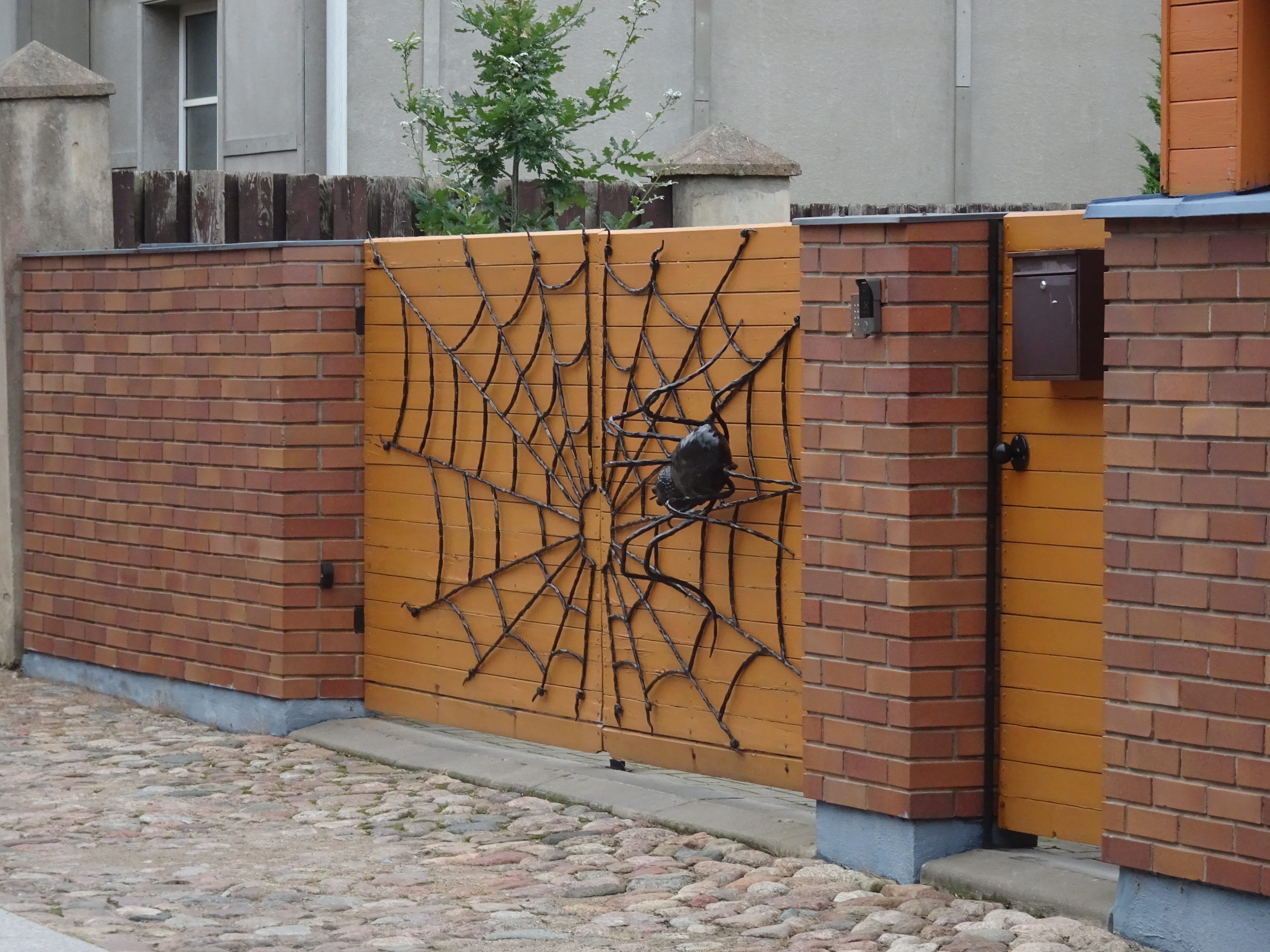
We passed two amusing sites

And then we stopped being amused.

Apparently when the Nazis came in they herded all the men into the synagogue with a bag of their goods, walked them into the woods, and I don’t have to repeat the rest. Your imagination cannot possibly recreate a scene more awful than what must have been.

I spend a lot of my time on Shoah research, looking to restore the names of people to living memory. No many times I hear the stories of the horrors, it’s as if I am hearing them for the first time. The stories of individuals and of towns, shake me to my core. I hear of horrors perpetuated by friends and neighbors of Jews. I hear of people who were threatened by guns at their backs if they didn’t fire the guns in their hands at the defenseless people standing before them. I hope that if I was in that situation, I would have the strength to do the right thing and turn on the person behind me even if it meant my own certain death. After all, how could you wake up the next morning or go to sleep that night knowing what you’d done. If you didn’t fight back even if the reprisal was certain, sooner or later it would catch up with you. In the words of Pastor Martin Niemöller

“First they came for the Communists
And I did not speak out
Because I was not a Communist
Then they came for the Socialists
And I did not speak out
Because I was not a Socialist
Then they came for the trade unionists
And I did not speak out
Because I was not a trade unionist
Then they came for the Jews
And I did not speak out
Because I was not a Jew
Then they came for me
And there was no one left
To speak out for me”

Even if you don’t do something because it’s the right thing to do, do it to save yourself. Otherwise, no one else will.

Posted in Uncategorized | Tagged , , , | Leave a comment

Tears

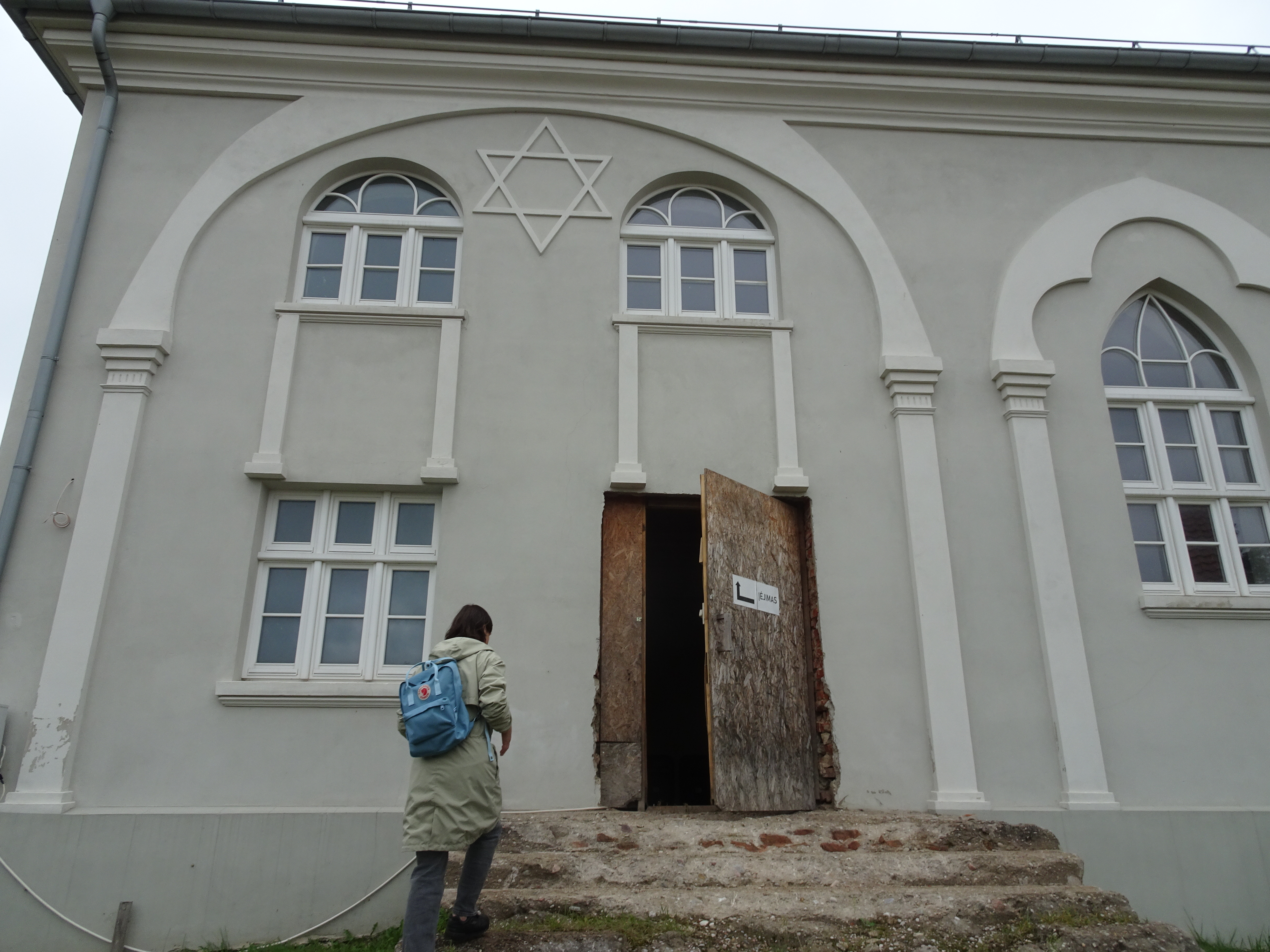
Today we visited one of those all too many lost communities. It was about a two hour drive from Kaunas to Švėkšna. In 1897 there were about 1000 Jews living in Švėkšna. By the interwar period, Jews owned more than 20 shops and groceries although there were perhaps 500 Jews still in the town by 1923. AT one time this shtetl had a summer synagogue and a winter synagogue, which was typical – they were next to each other with distinctive designs and features – one was intended to keep the building (and the people in it) warm during the winter, and the other was designed for warmer weather. The synagogues were originally wooden, and in a massive fire in 1925 they, along with about 200 homes, were destroyed. In the aftermath of that fire, buildings were no longer permitted to be made out of wood.

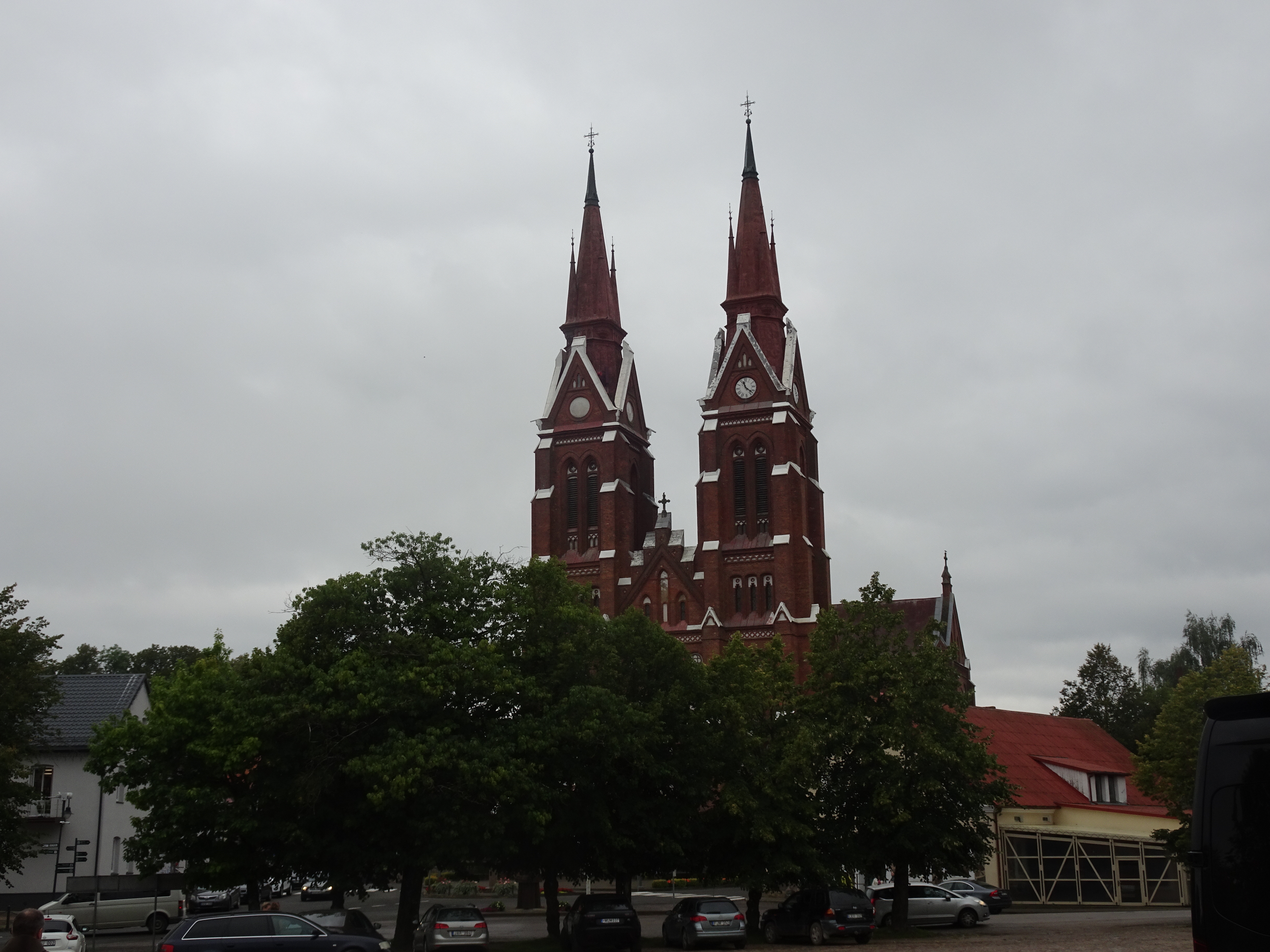
Today the building above is in the process of being restored and redesigned, keeping as many of the artifacts from the original buildings, and from the rebuilt synagogue after the 1925 fire, as could be included. The synagogue will be the home of a museum and cultural center, both of which are lacking in Švėkšna. The synagogue stands as perhaps it ways did in the shadow of the local church.

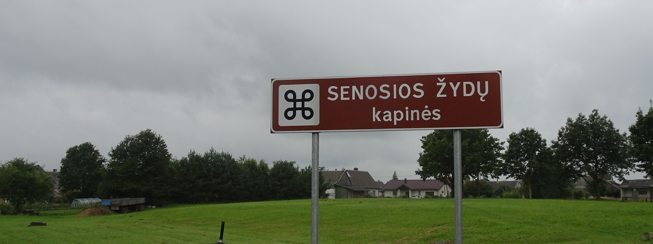
There are no Jews living in Švėkšna today. When the Germans came in, they separated the town – men and boys who were fit to work were herded into the synagogue, older men, men who could not work, women, and children, were taken into the woods and murdered. They were left in a mass grave. Although we went to the site, it was heavily wooded and raining, and I stayed in the car. There is just so much grief I can handle in a day. We had already visited the place where the cemetery once stood, and where very few visible stones remain. It was easy to see under the grass where matzevot had toppled over and were covered by grass.

The building once used by the Jewish community for a mikveh still stands. Out guide, Agna, told us that at some point, the Jewish community opened it up for use as a bath house by the whole community, Jews and non-Jews.

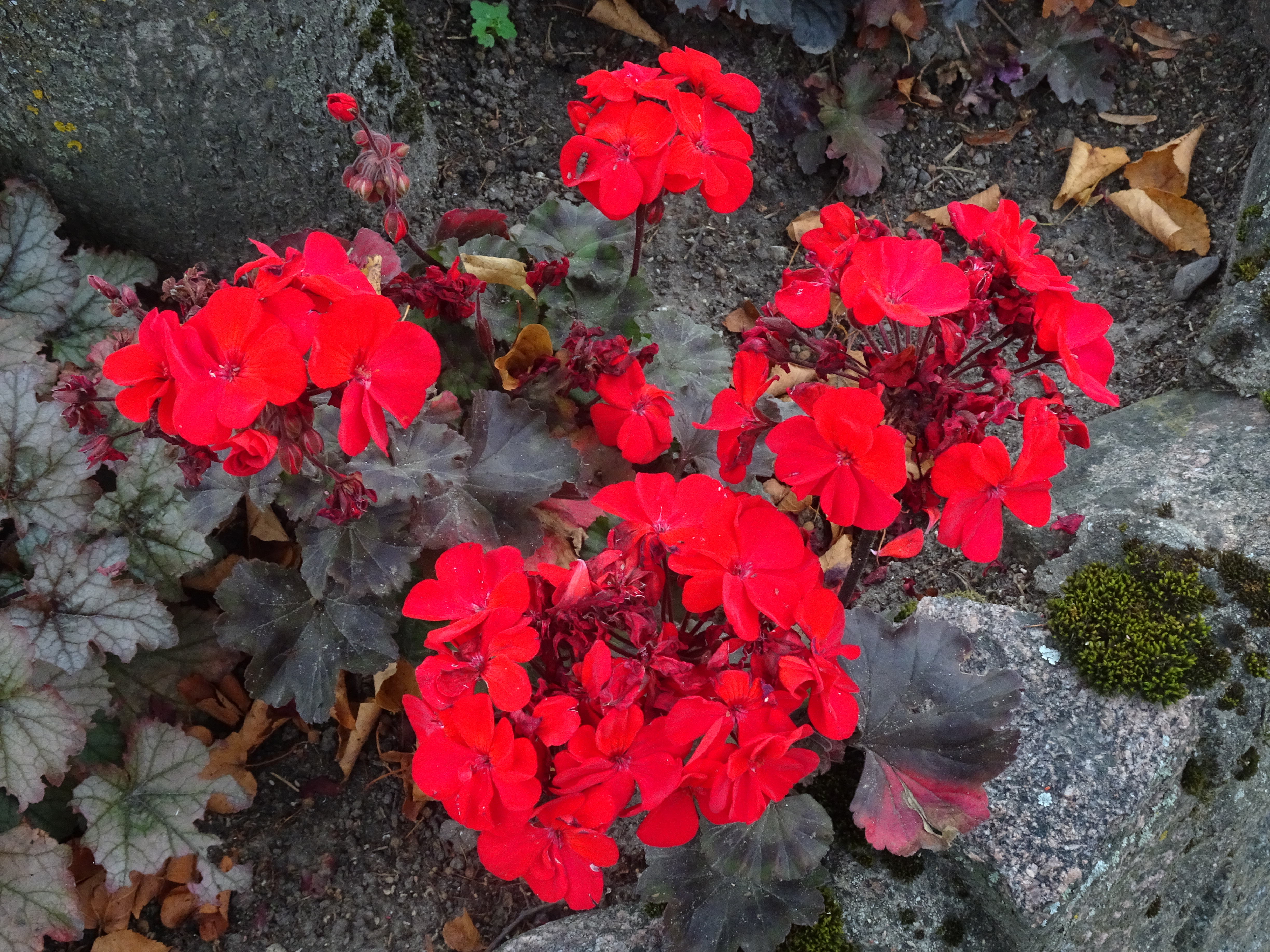
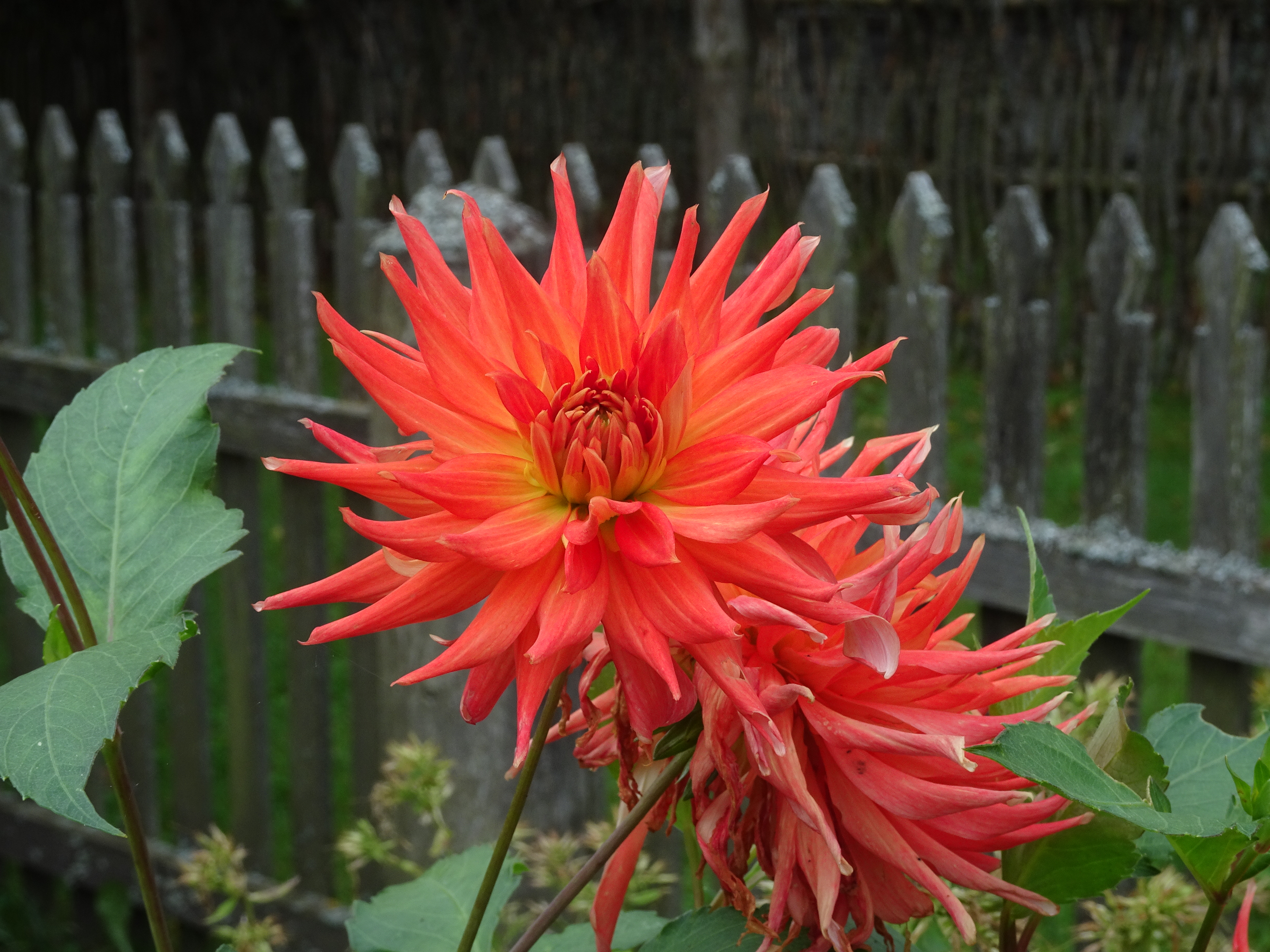
Although the day was rainy, which suited the tears I was shedding internally, there was beauty to be found in the flowers.

We ate lunch in the only restaurant in town. Tomorrow we go first to Rumšiškės one of the largest ethnographic open-air museums in Europe to visualize what life was like in Lithuanian villages. After that we’ll be going to Kėdainiai which has a wonderful rebuilt area of a Jewish community that was, with a museum in the old and restored summer and winter synagogues. In two days, we take a short flight from Vilnius to Warsaw where we will begin the Polish segment of our trip.

There is so much beauty in Europe, and so much history to absorb. I know the Jewish communities flourished here for millennia, sometimes more peacefully than others, and I know it’s not all tears and pain. Still, walking the streets that the Jewish community walked on, seeing the houses in which they lived, listening to lives being turned into museum exhibits, I can’t separate myself from those emotions.
Posted in Uncategorized | Tagged , , , , , , | Leave a comment

History, Culture, Food, and of course, Ice Cream

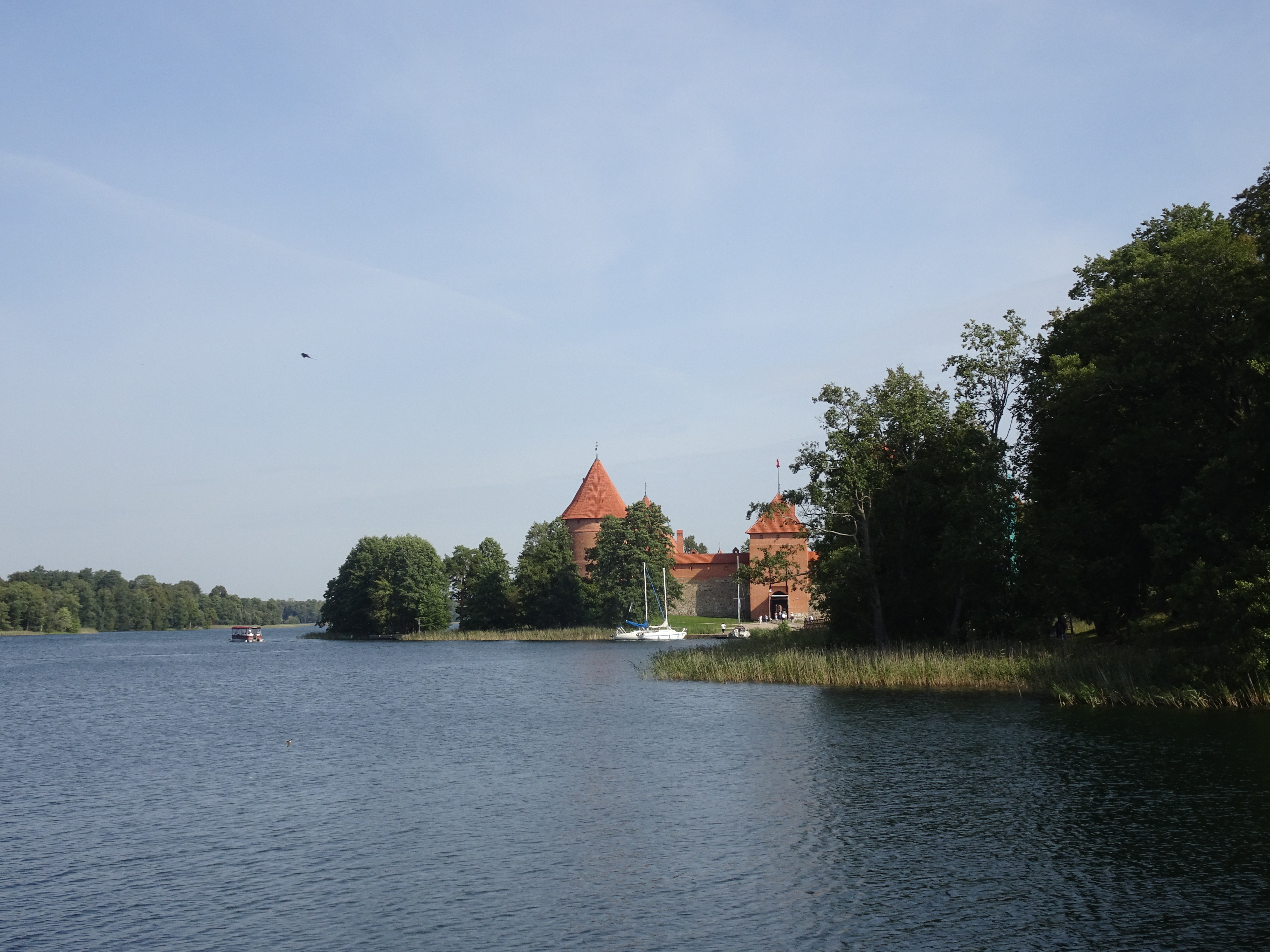
This morning, because the hours spend at the Palace of the Grand Dukes didn’t cure us, we went to see Trakai and Trakai Castle. If you followed my blog or spoke with me after my 2018 and 2019 research trips, you would have heard about my fascination with the old houses by the side of the road. On those trips, Marek was driving and I could open the window (I was sitting in the front passenger seat) and take photos galore as we drove through places. This time, I am in the back of a much larger van with windows that don’t open, and I impatiently wait until we get where we’re going to take photos. Driving through roads of old houses, flower-filled fields, shops, all of which I can’t photo.

Trakai has a community of Karaites called Karaim and they came to Lithuania from Crimea with a lot of customs they absorbed from the Turkish and Moslem communities. They don’t consider themselves Jewish, but a lot of the words I saw on their buildings and descriptions I heard of their practices tell me they haven’t thoroughly discarded their Jewish roots. Karaites don’t follow Rabbinic Judaism – if it isn’t Biblical, it isn’t part of their beliefs or observances. They have a food that is similar in appearance to an empanada called kybyn. Most of them are meat filled but there was a cabbage choice and a spinach-curd choice, and I had one of each. They were so good.

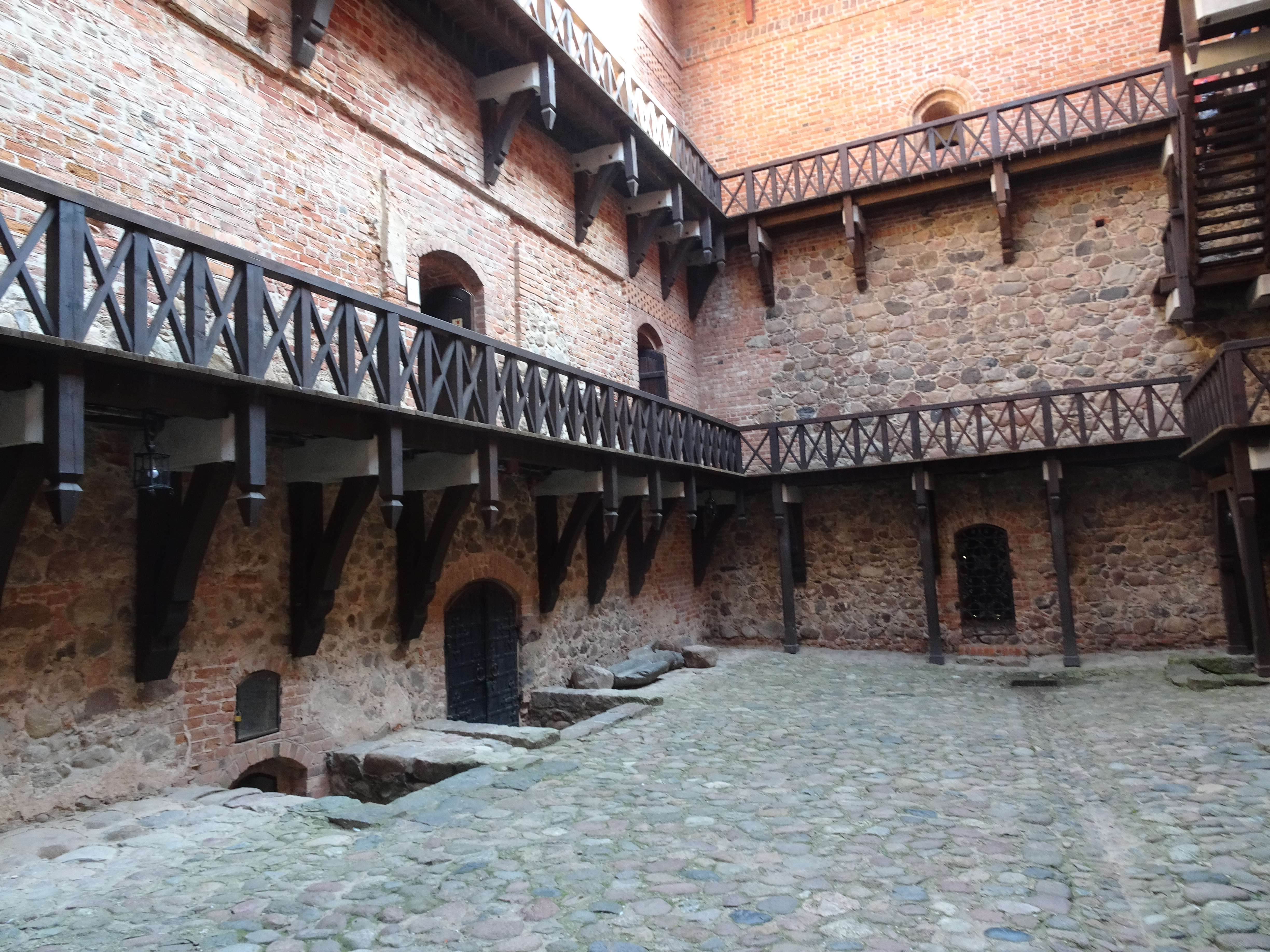
Yesterday we read about the history of Lithuania, and Trakai figured prominently in that information

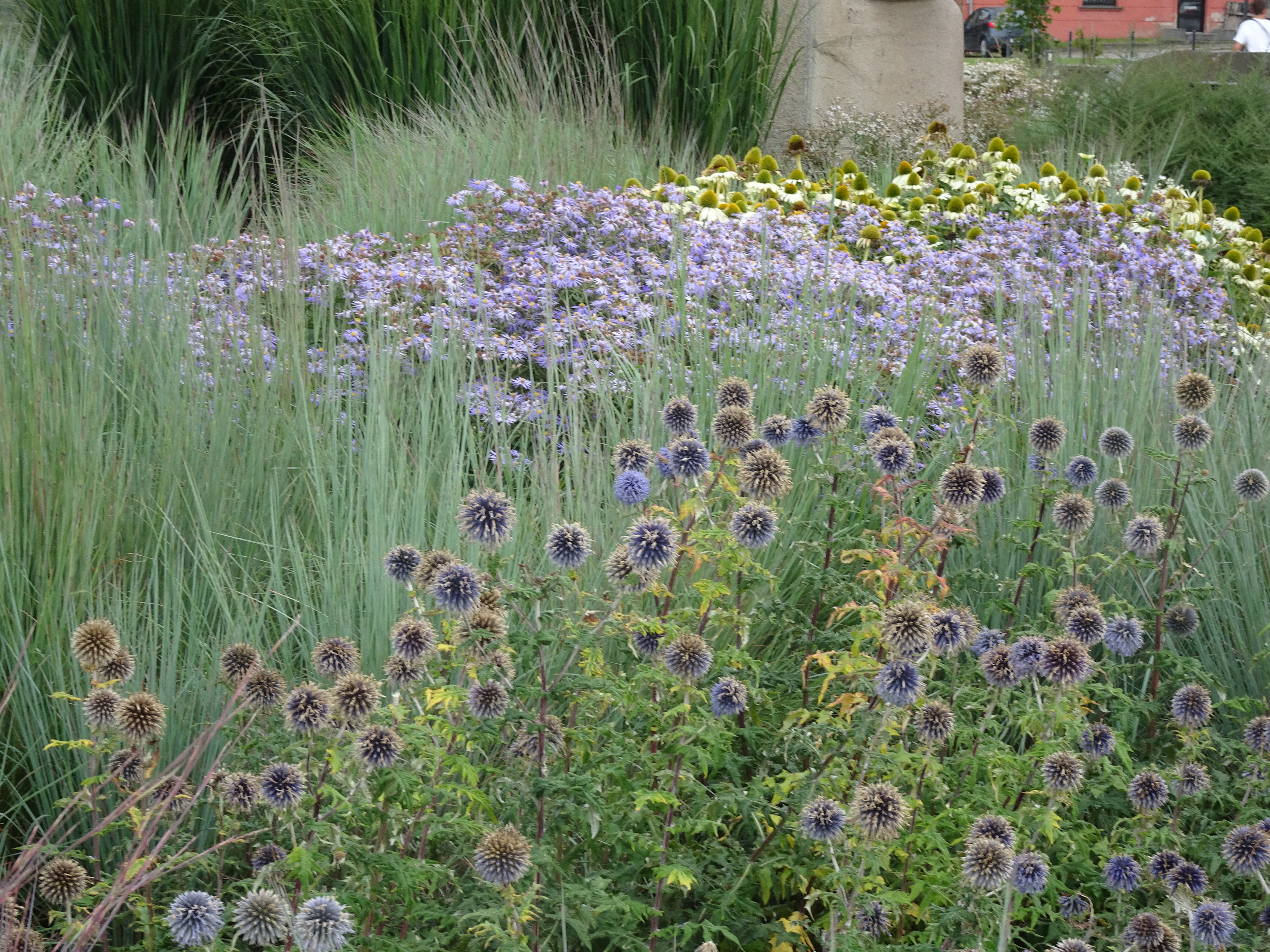
After marveling at the bricks and stones, seeing silver bars and coins cut off the bars, looking at a cannon, chain mail, and more, we headed off to sample the kybyn I mentioned above and then settled in for a 2 hour drive to Kaunas. By the time we got there, the chilly weather we had experienced earlier in the week and the beautiful mild weather in Trakai had become a blazingly hot summer day. This field of flowers was a welcome, cooling site.

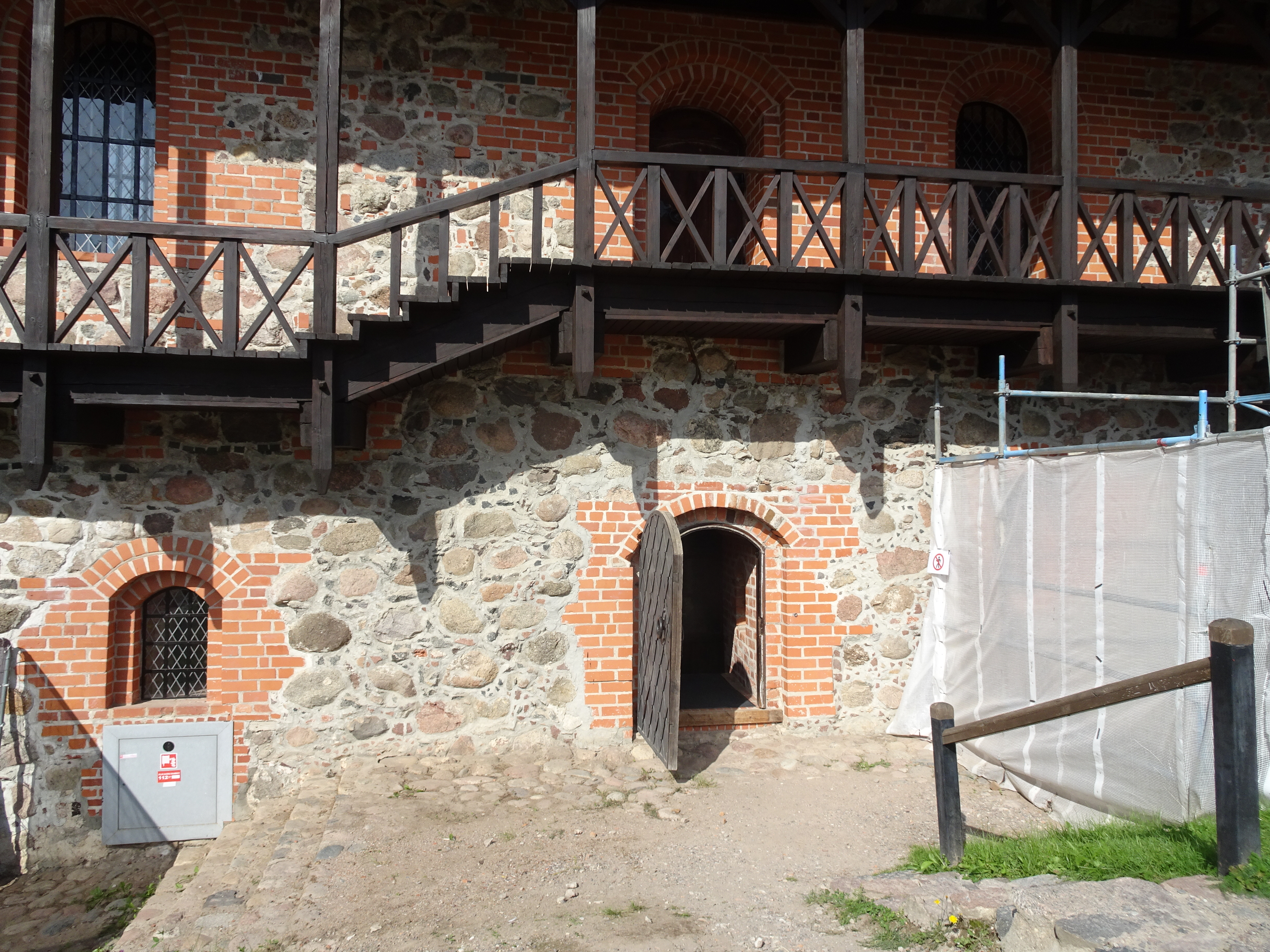
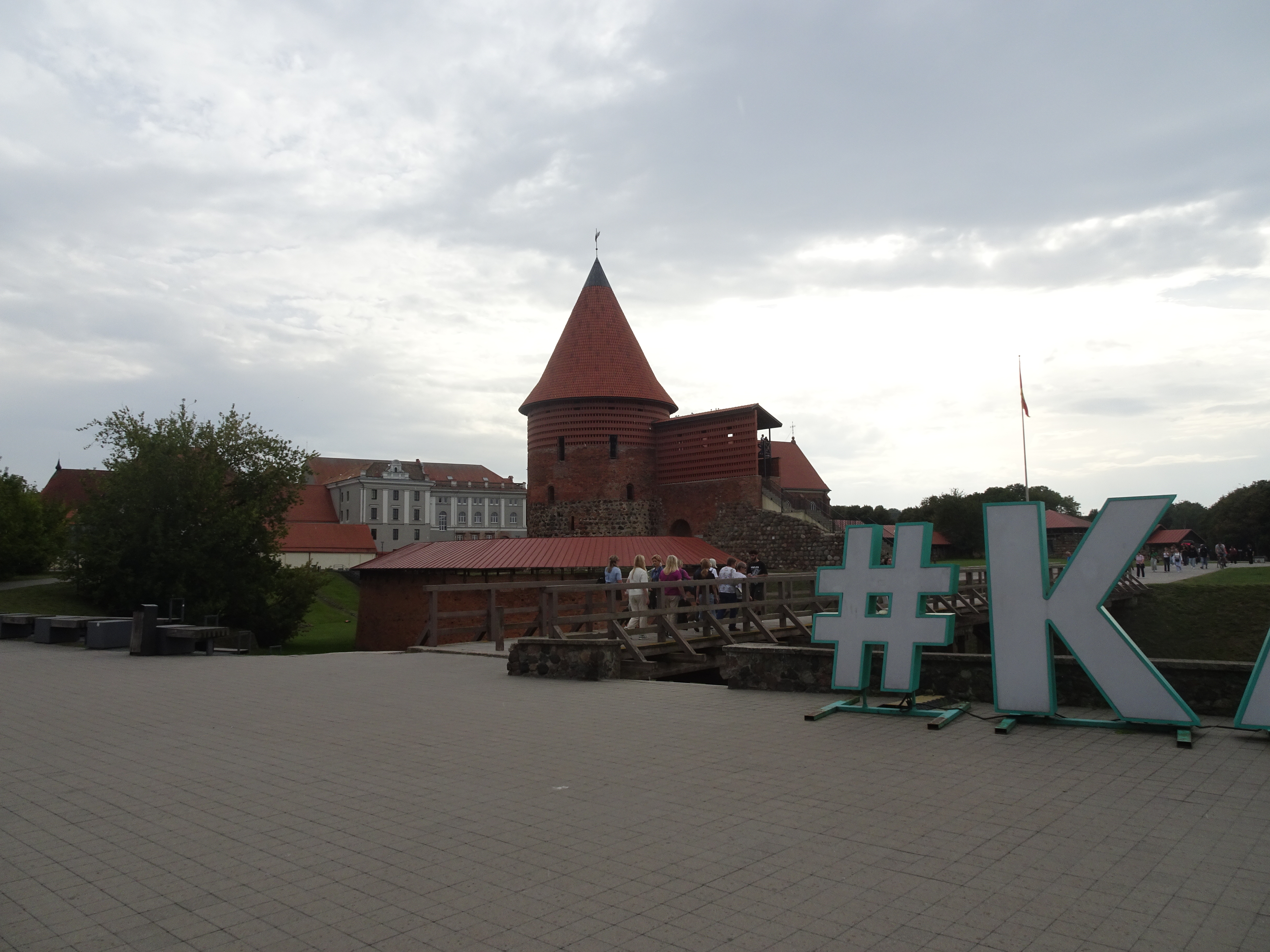
There are castles all over Lithuania, and this one is in Kaunas. It’s not far from the bridge to Viliampole, the town where Jews were permitted to live before they were allowed to live in Kaunas.

The old city of Kaunas is, as always, charming. Unfortunately on this trip we won’t be spending much time here. It will be a rushed 3 day stop, using Kaunas as a base while we visit other places. Dinner was wonderful but afterwards, I walked down to Independence Street which is packed with restaurants, in search of an ice cream shop that was still open. I’m so glad I found it. The chocolate though was milk chocolate and the pistachio was tiny crushed almost pulverized pieces. This was not my favorite ice cream stop, but it was good.

Posted in Uncategorized | Tagged , , , , | Leave a comment

A Balebosta in Vilnius

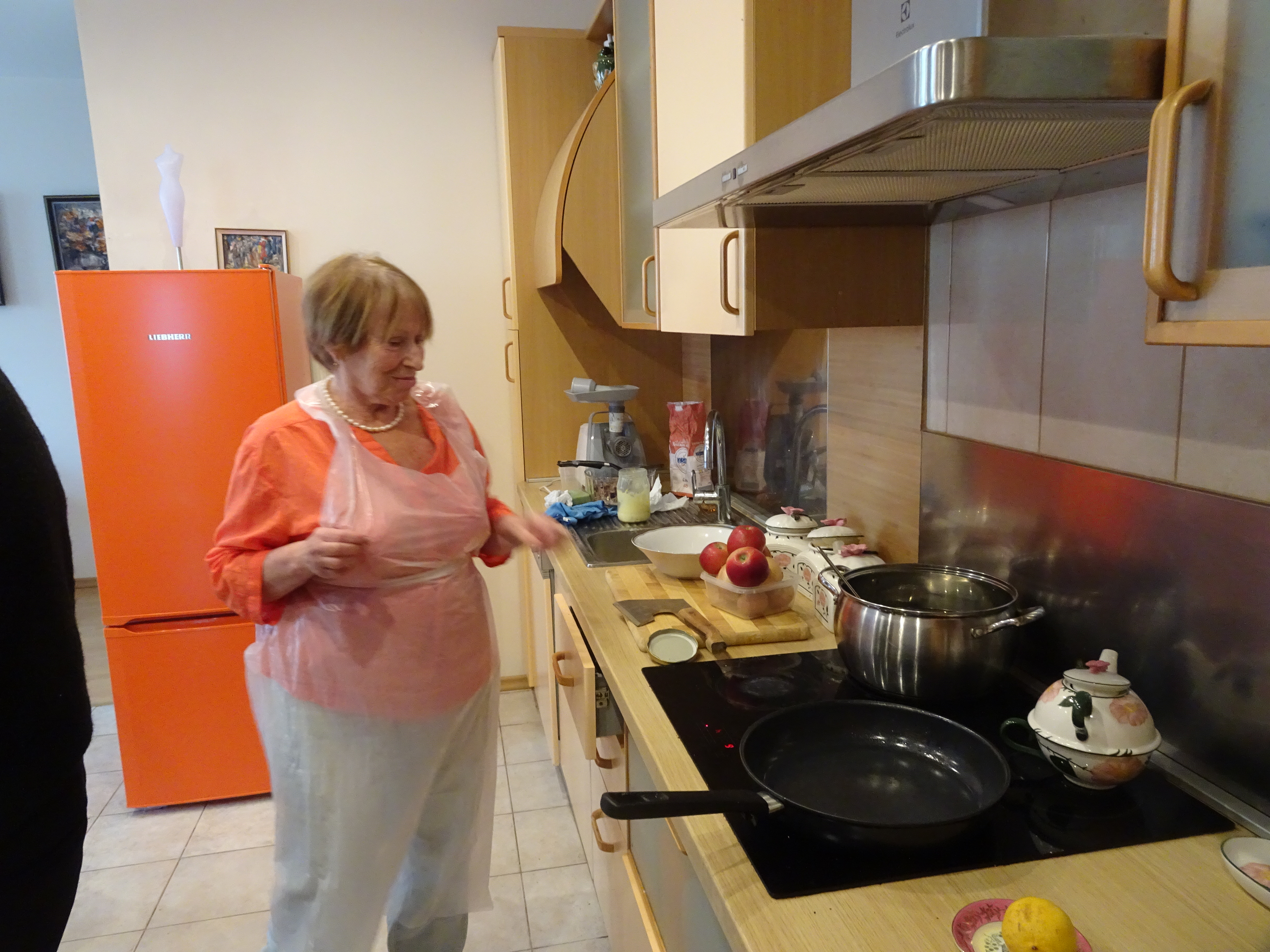
It’s not often that you have an opportunity to meet with someone who carries the traditions of Litvak food in her soul. Even if she doesn’t sing out loud as she prepares the ingredients, mixes them, all the while explaining not only what she’s doing, but what her mother and grandmother, and now her granddaughters do, you can sense the music and energy coming from within.

Her delight not only in cooking, but having a final product that looks as good as it tastes was so obvious. The bagels – two trays in a small oven, baking after boiling, took longer to brown because there were so many in the oven. Riva, the Balebosta, was worried that we’d grow bored or impatient. We didn’t and all patiently waited. The wait was definitely worth it – the bagels were done to perfection.

She hugged me as we left. She and I had been exchanging a few words here and there, in Hebrew. As I was leaving she pointed to her mezuzah which I did as she expected – reached out my fingers to touch the mezuzah and then kiss my fingers. She said I had a real Yiddishe neshama. A real complement from this native Litvak whose family survived the war, some went to Israel afterwards. She was born after the war was over and she remained in Lithuania where she carries the Litvak culinary traditions and is passing them on to the next generation. If you’re lucky enough when you visit Vilnius, you may be able to study with her for a morning as we did. After watching her and tasting the results of her efforts I humbly admit that there is no way I can every hope to duplicate her bagels.

I know I’ve commented many times on my fascination with the remnants of old buildings here. Today I feel privileged to have visited the Palace of the Grand Dukes and to see closer up what I viewed from the outside through glass a couple of days ago.

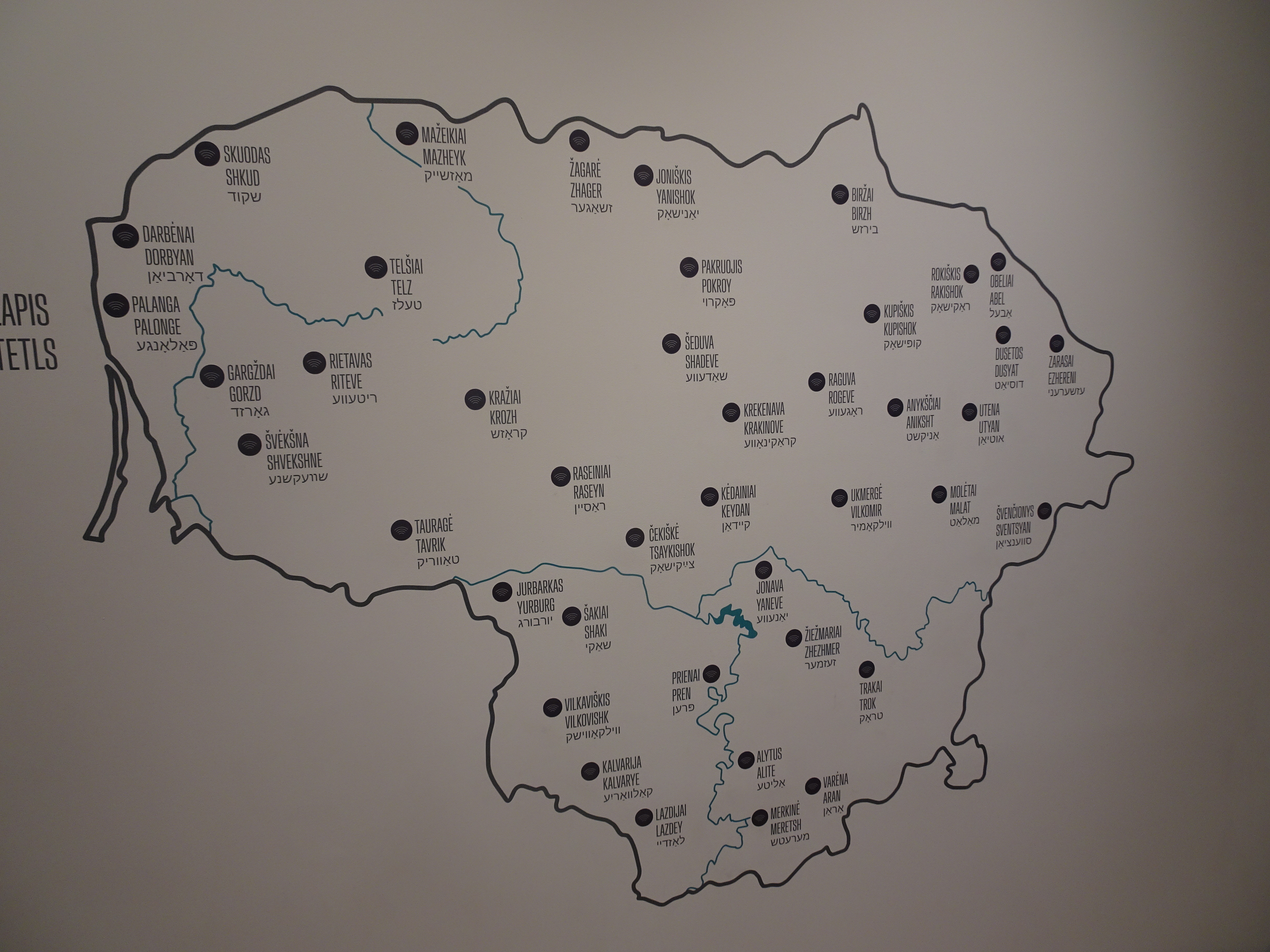
The story boards describing the history of this ancient city were phenomenal. To see the entire museum you’d probably need a daily visit for a month. To absorb all the information would take years.

What a day we ended with an interesting dinner – the menu had the century in which each of the offerings came from!

Lina with catfish, tomatoes and potatoes.

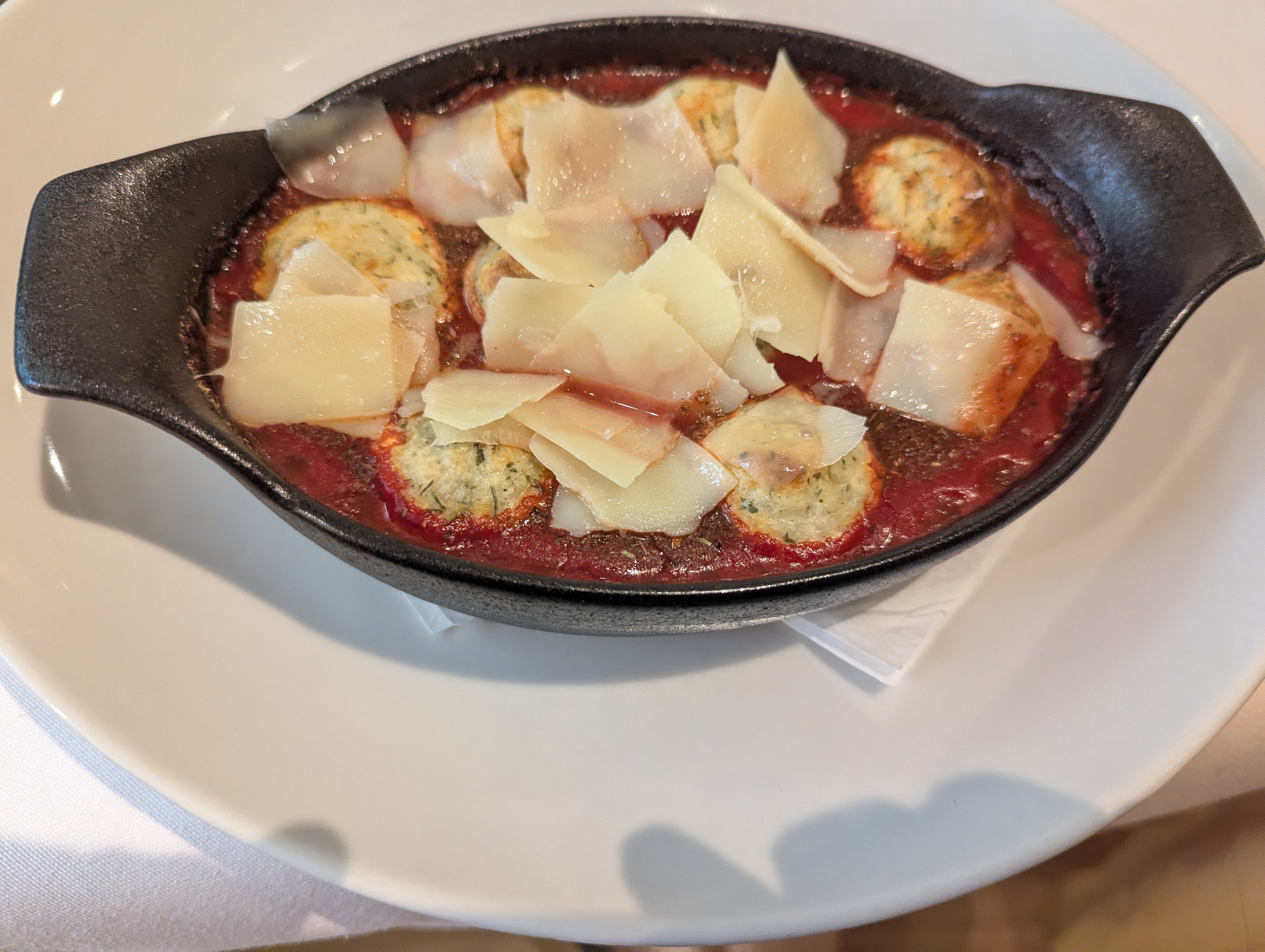
I had cottage cheese balls in tomato sauce which is from a Litvak recipe. There are so many more meatless options in restaurants now than there were 6 years ago when I was here last, but it seems like I’m eating the same things – cepelini with curds, crepes with curds, and pizza. Oh, yes, ice cream too. The chocolate in many places is a dark chocolate ice cream. I generally get that and pistachio. Heavenly.

Posted in Uncategorized | Tagged , , , , , , , , , | Leave a comment

Getting rattled

There are many things when one travels that could be disturbing or nerve wracking. I can’t imagine how our ancestors coped with this, traveling in steerage, carrying all they owned on their backs. I need multiple suitcases even for short trips and I’m not taking pots and pans or 99% of my possessions. Today, our travel stresses might (mine do) come in the form of over-thinking how much time is between flights and imagining the miles I have to traverse to get across an entire airport for the connecting flight, lost suitcases, I even imagine my suitcase breaking and all my clothes strewn across the runway or the baggage claim area. Unless I’m going home or to some place I travel frequently, I worry about getting a cab, getting through customs, having some odd thing happen at passport check, maybe even losing my passport. Did any of these things ever happen to me? Never.

Today though something did happen that let me know how distracted I can get when trying to pay attention to multiple conversations. I left my credit card on the table. I was folding a receipt, someone spoke to me, then another person. The receipts got folded and put away. The card stayed on the table. Thankfully, I was not in transit, and had another card with me. I discovered the lost card when I went to pay for dinner. It took a few very sweaty minutes for me to remember where I used it last and what must have happened.
In case any readers missed this, I’m in Lithuania and I don’t speak Lithuanian. Most people speak English and everyone has been very kind. I have noticed a disconnect between what I am trying to convey and what the non-native speaker gets from my words. They don’t match up always. So, I did the sensible thing. I texted Lina and asked her to see if she could call the restaurant at which we had lunch to see if I left my card there. Unfortunately, the same thing happened as it did when she phoned for a reservation – the phone rang a lot of times, but no one answered. Lina and Gabriel offered to meet me there. I was really grateful, since I didn’t know if the words I would use to inquire about my card would be easily understood. It went so smoothly. They met me at the restaurant, we stood on line for a few minutes (it’s a popular dinner spot) and then the staff person understood immediately what Lina was asking, beckoned for us to follow, and handed me the card. No questions asked, no i.d. required, just handed me the card. We stopped at the mini-market next door and purchased a stress reliever – chocolate. Works every time!

Before that, the day was going so smoothly. We started the day at the Vilna Gaon Jewish Museum and immersed ourselves in Litvak history and culture for the next several hours.

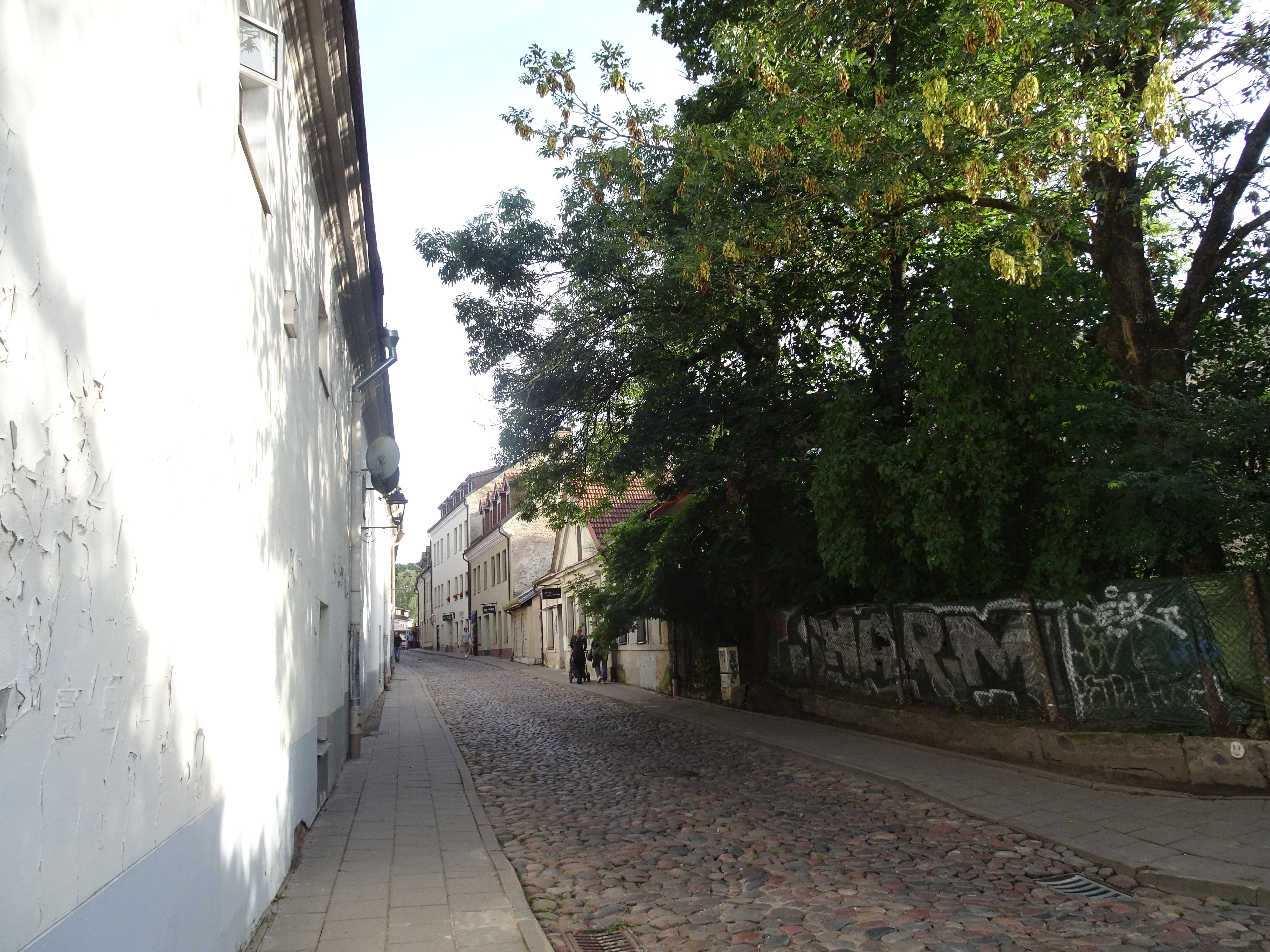
Seeing the remnants of the city when it was teeming with Jewish culture, learning, and just life, was very moving. I had an opportunity to describe in more detail some of the items the guide was showing us, explaining what was in a Torah scroll, even reading some of the words from the column that the scroll was open to. We looked at art, and some clips from a movie. As soon as the movie started, I knew exactly what it was – the Yiddish film The Dybbuk filmed in Poland in 1937 and based on a place written by S. An-sky. That movie is a favorite of mine – I don’t know how many times I’ve seen it. The acting is exaggerated deliberately, there is a wonderful play on words based on the characters. When I watch/read it I try to follow the subtitles but listen to the spoken Yiddish. Much of the dialogue is in a sing-song type voice. If you don’t know the film, it’s certainly worth getting a copy. I think Ergo Media in NJ may still have it in their online store. Now that I’m writing this, I realize that so many of the streets I;m walking on in Vilnius, like the one below could have been a street in that movie!

Today for dinner I walked back to St. Anne’s and over the nearby bridge to Užupis, a place that I’ve found fascinating in previous visits. It’s a charming, bohemian, artsy kid of place. I wanted to go to the cemetery (I’m a genealogist, isn’t that how we spend our free time) but was hungry and stopped for pizza which was a good thing since the missing credit card was noticed when I went to pay for the pizza. So, I guess all’s well that ends well, and the cemetery will have to wait until I come back next time.

Posted in Uncategorized | Tagged , , , , , , | Leave a comment

Starting with dessert!

One year at Thanksgiving I decided to start with dessert to see what would happen. In my family, dessert includes 0 calories and takes up no room. So, people dug in – to pies, cakes, cobbler, and mousse. They ate and ate, but there was still a lot left over. Then we went on to the rest of the meal. Same thing. The motto of the story is that whether you start the meal at the beginning or the end, no one will eat more or less of anything than they ever did before. My conclusion? Start with your favorite part and work backwards. I don’t generally do that no matter my inclination, but I always look at the dessert part of the menu first just to gauge the rest of the meal.

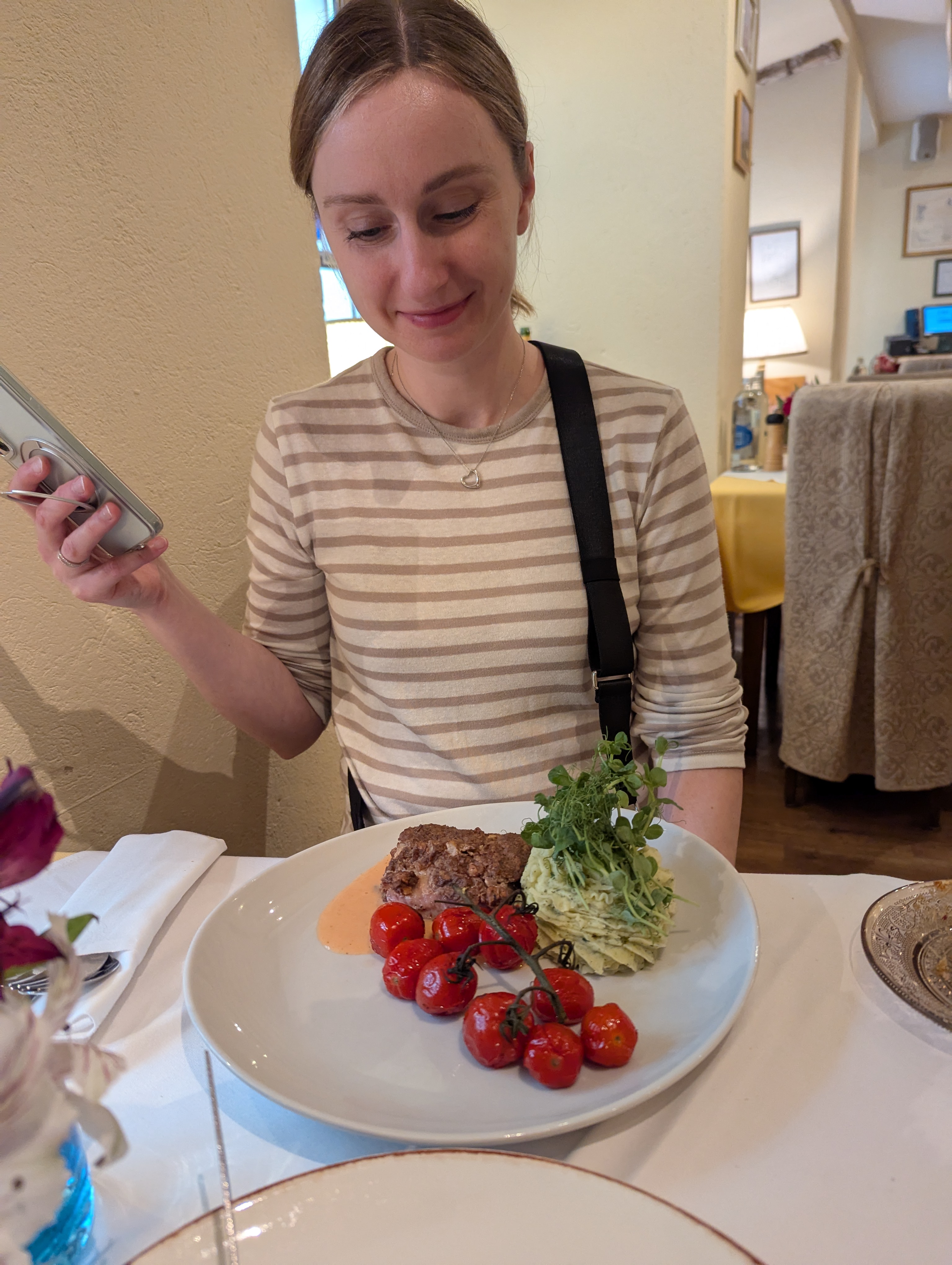
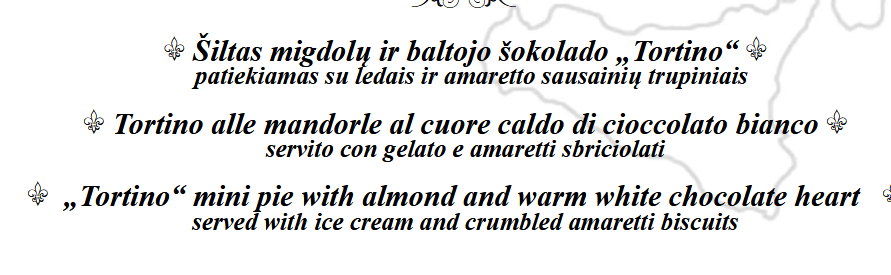
Tonight, the crowning touch to a lovely day, ended with dinner at a sweet Italian restaurant on a twisty, turny street in old town. The menu said, in Lithuanian, Italian, and English:

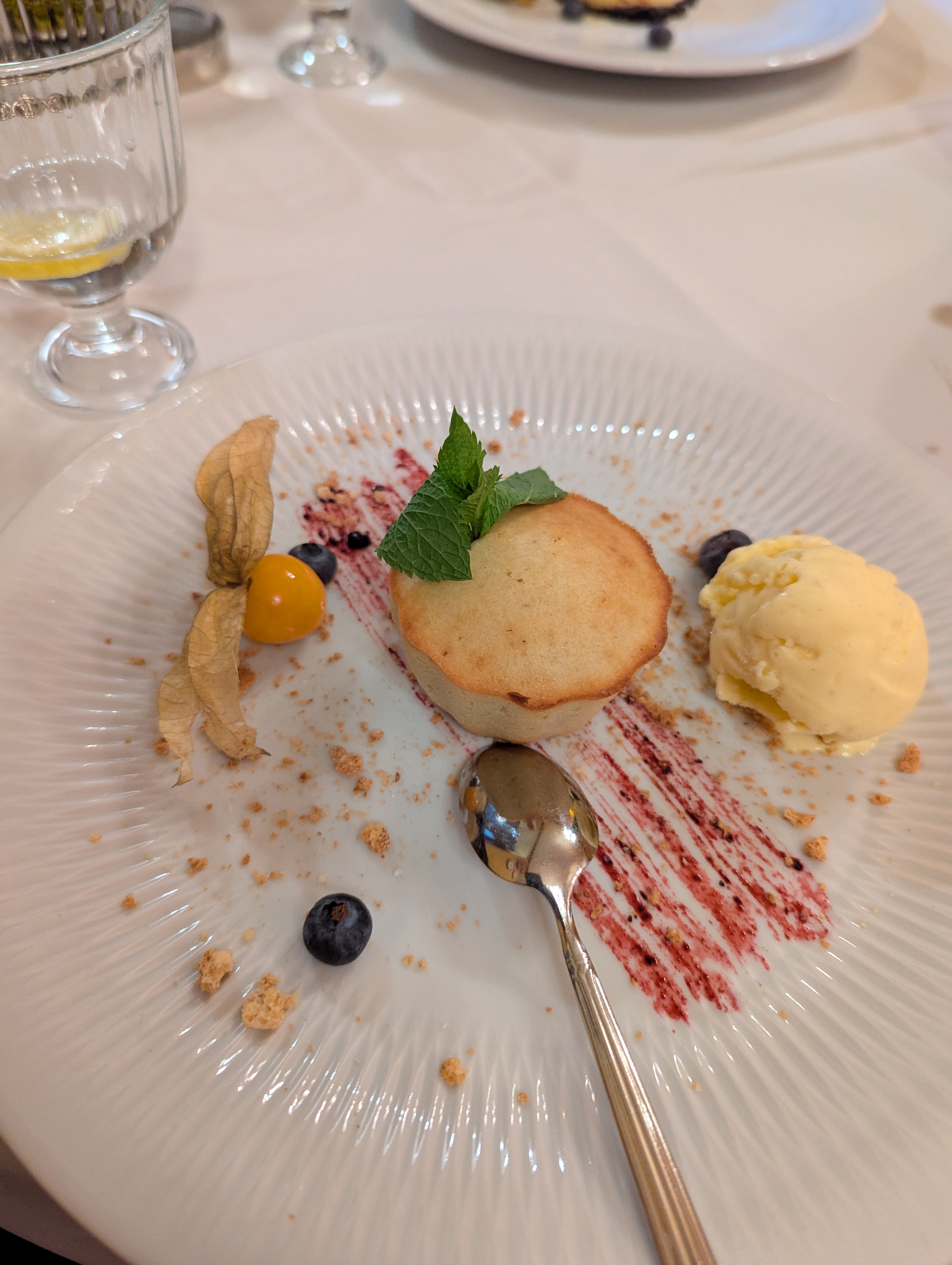
The only thing I can say about the dessert is that it ended way too soon. The inside of that mini pie had almond cream and was unbelievable. It almost makes me want to bake when I get home. You will notice I said almost.

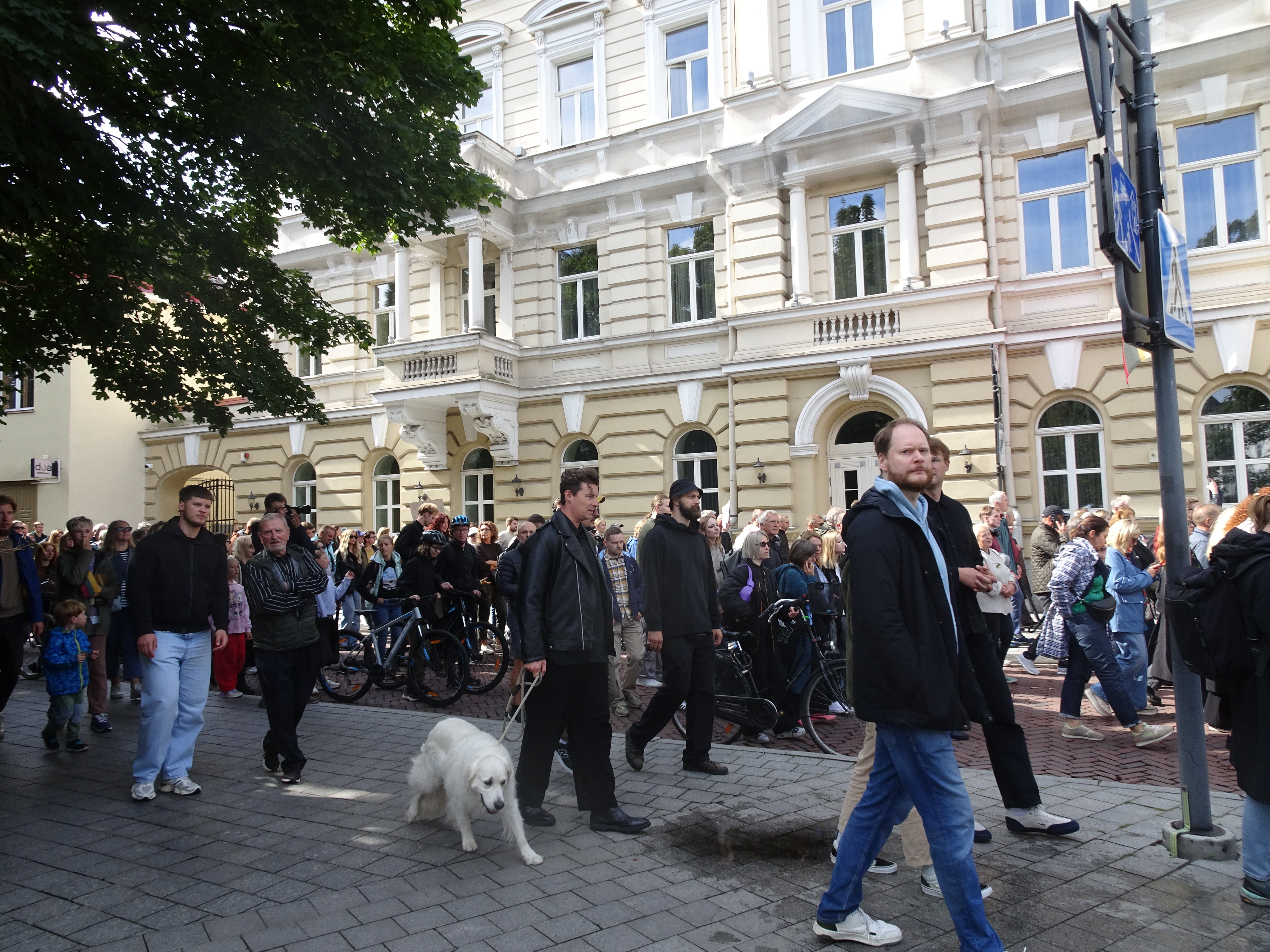
Today’s weather was pretty agreeable – we even had a teasing 10 minutes when the sun came out – just long enough to make us believe it wasn’t a rumor and such a thing did exist. I should really say, however, that today was just amazing. We had a phenomenal historian with us to discuss Vilnius in general, architecture and religion. She was incredibly interesting, and willing to engage in discussion and shift her talk to accommodate questions. My head is spinning from all I learned. We found ourselves smack in the middle of a protest over the Lithuanian government. There were about 8,000 protestors and it was startling how quiet it was1
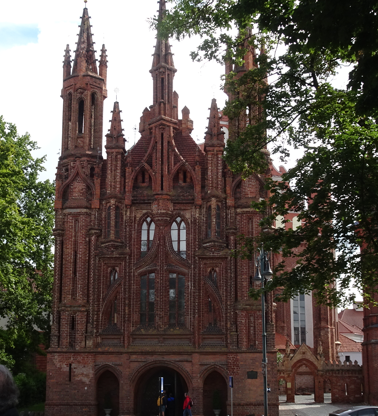
There are so many churches here it’s unbelievable. This is St. Anne’s and I think it’s the prettiest of them.

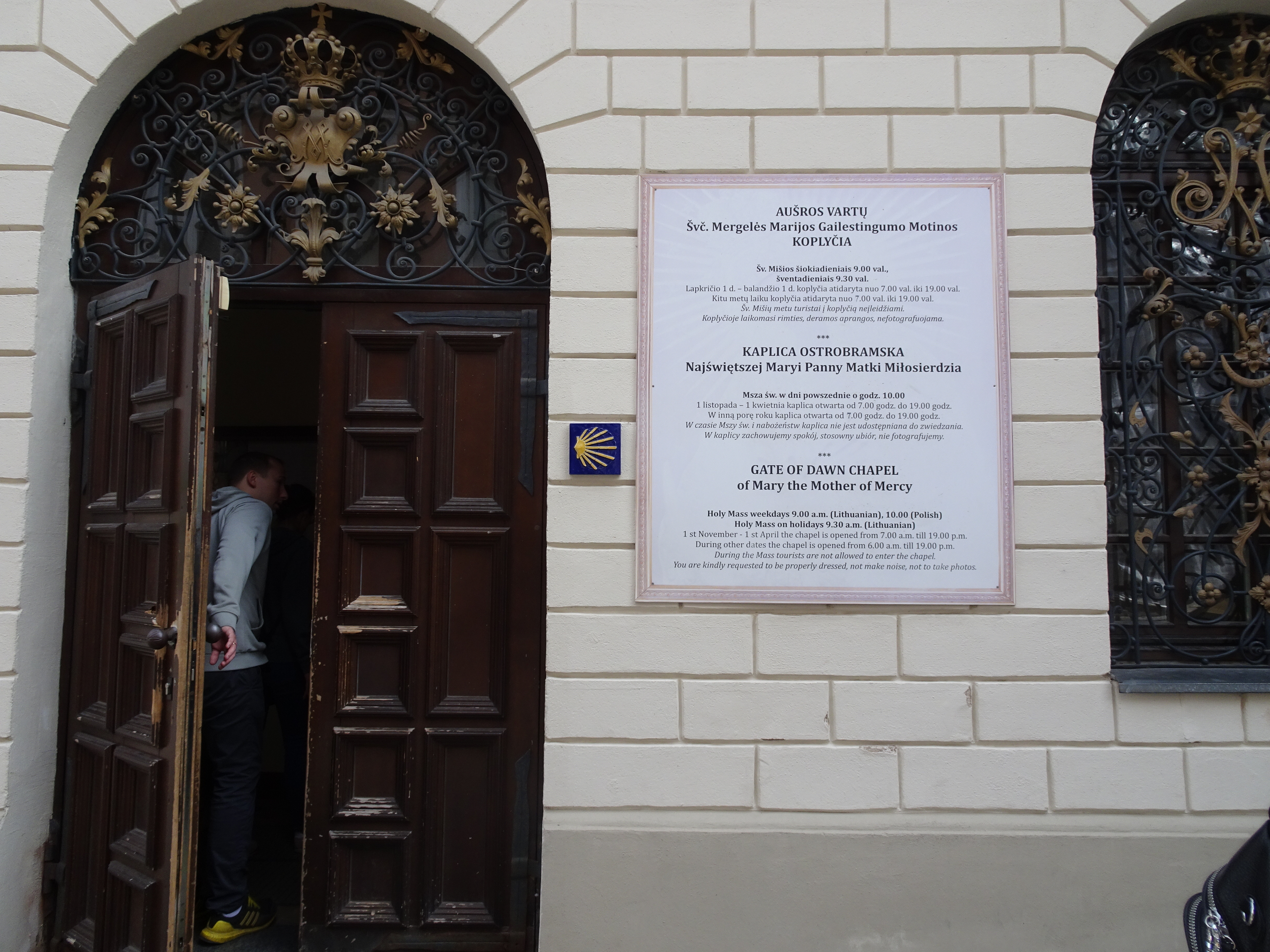
Something I saw but which never would have caught my eye before, is the shell on the blue tile outside the Gate of Dawn Chapel. Our guide told us that the Camino de Santiago pilgrimage has spread far and wide, and that people are even beginning to start their pilgrimage in Lithuania and there are signposts all over pointing people in the right direction as they make their way from here to Spain.

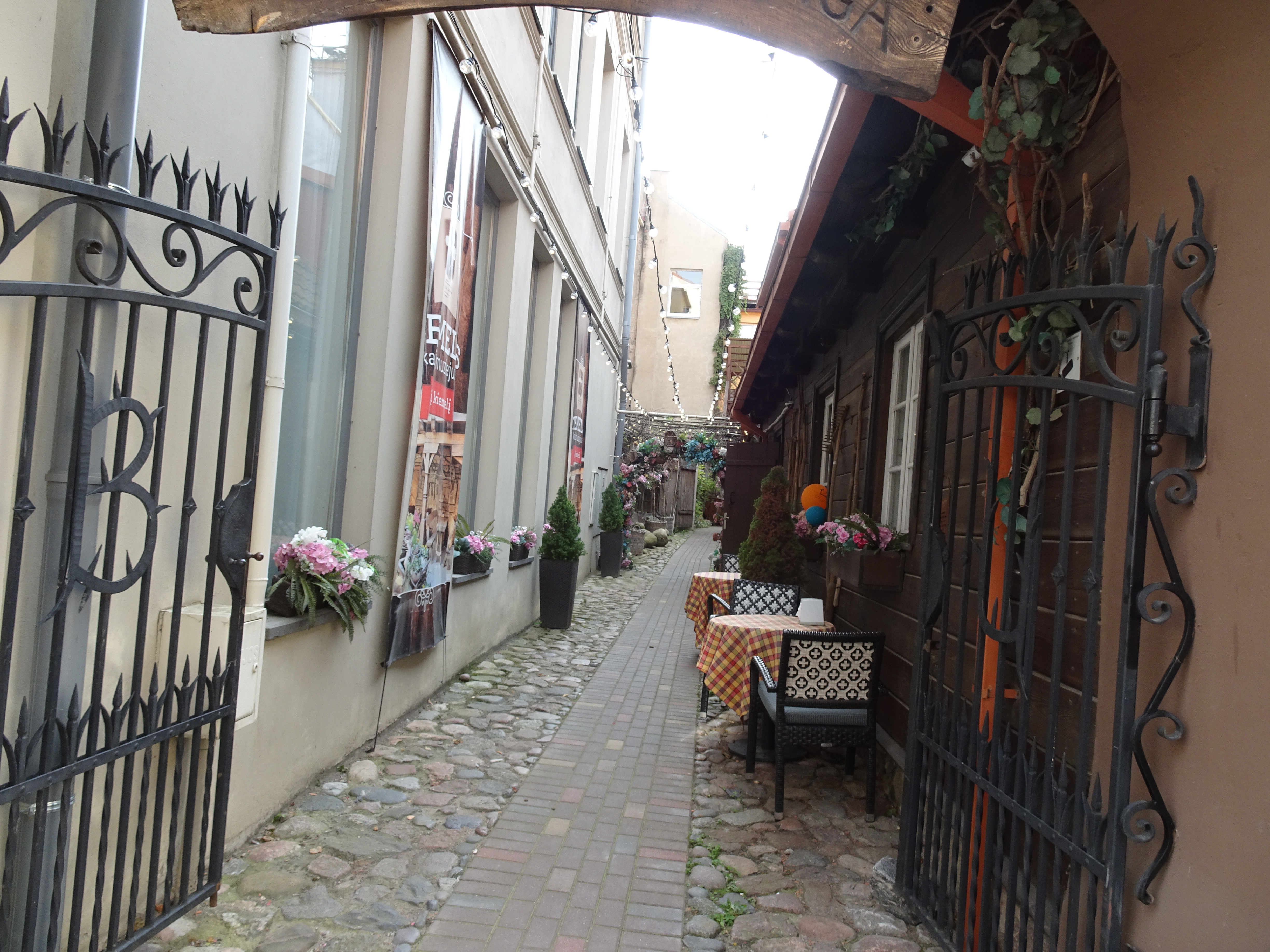
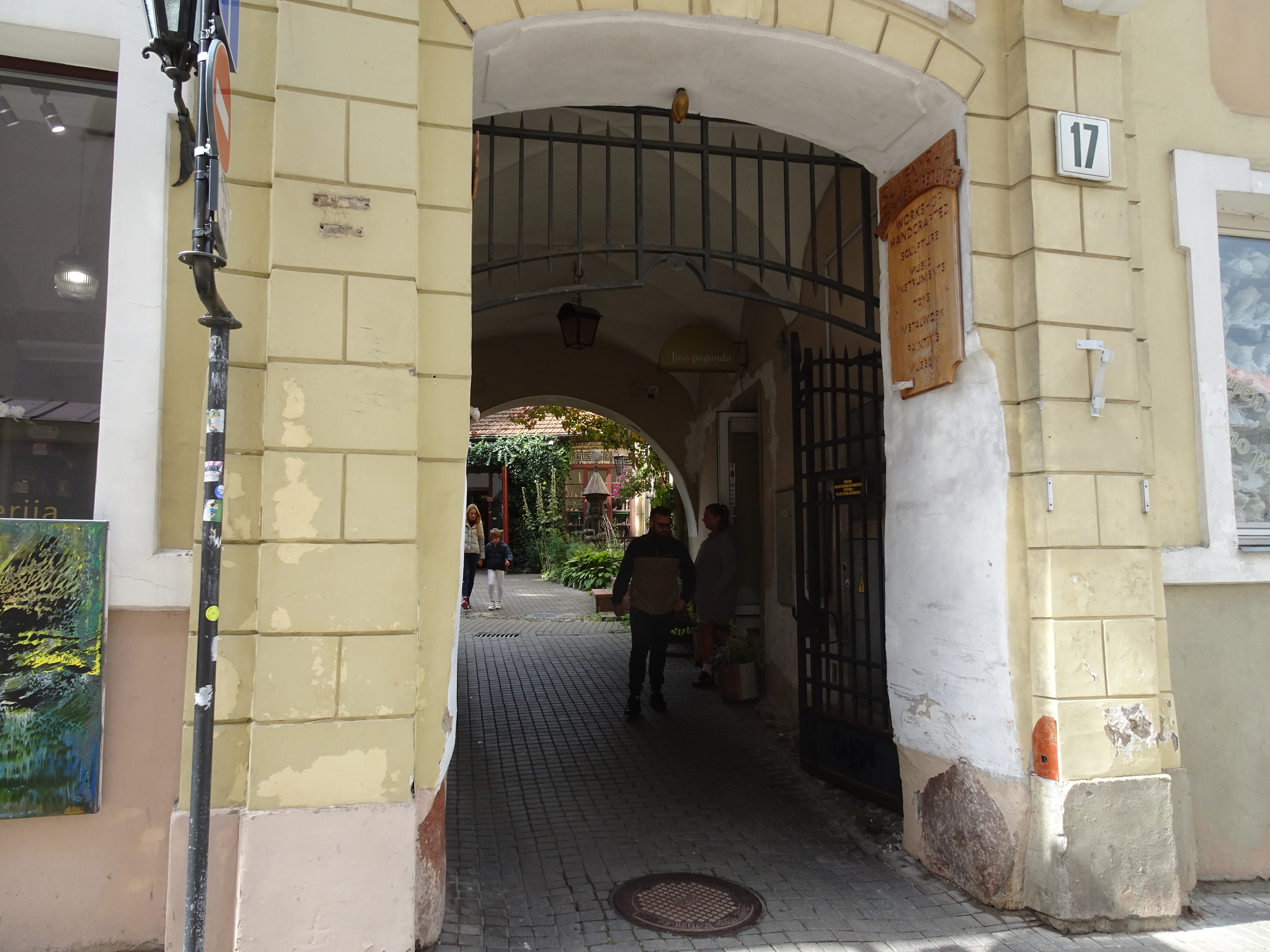
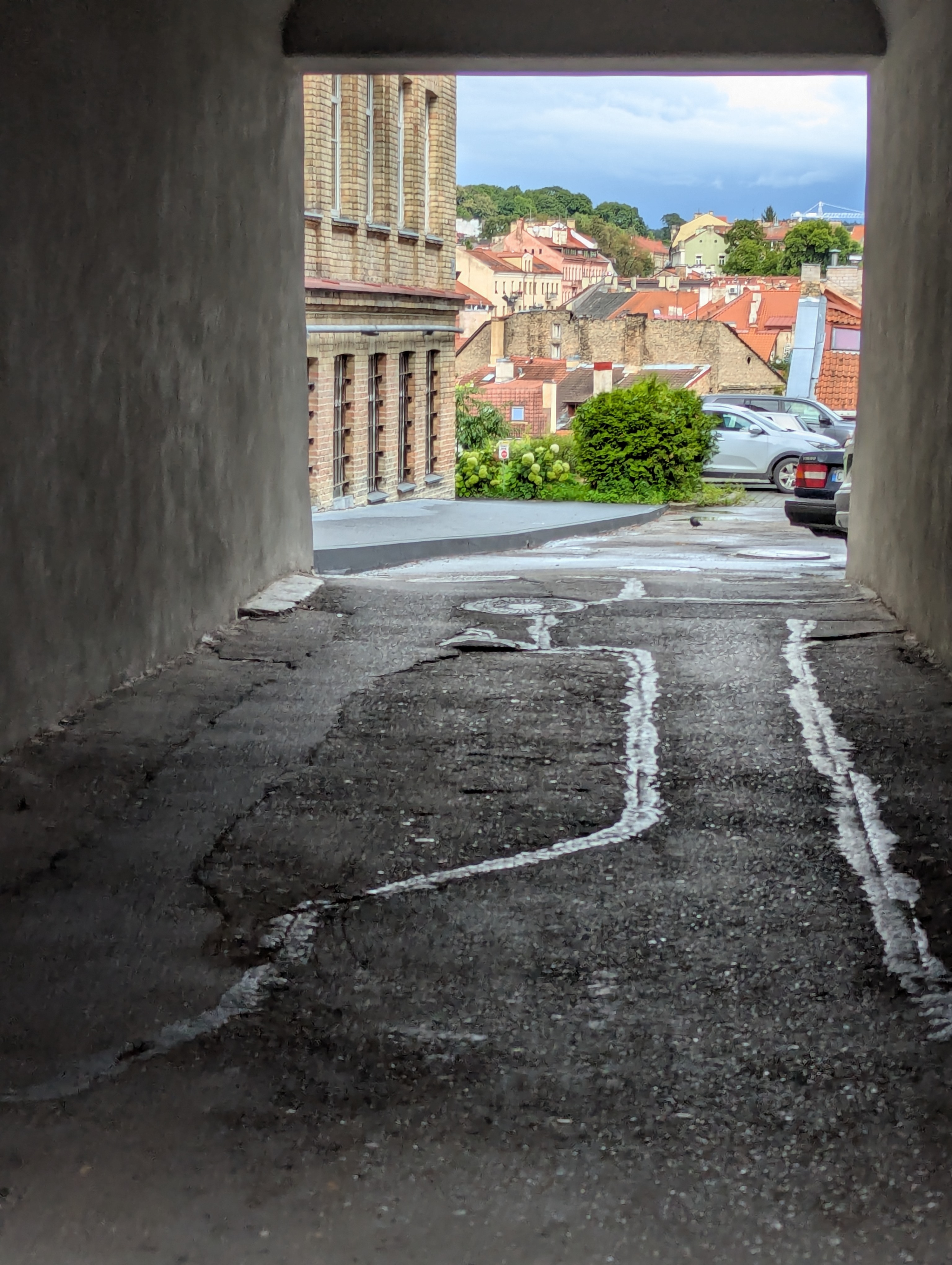
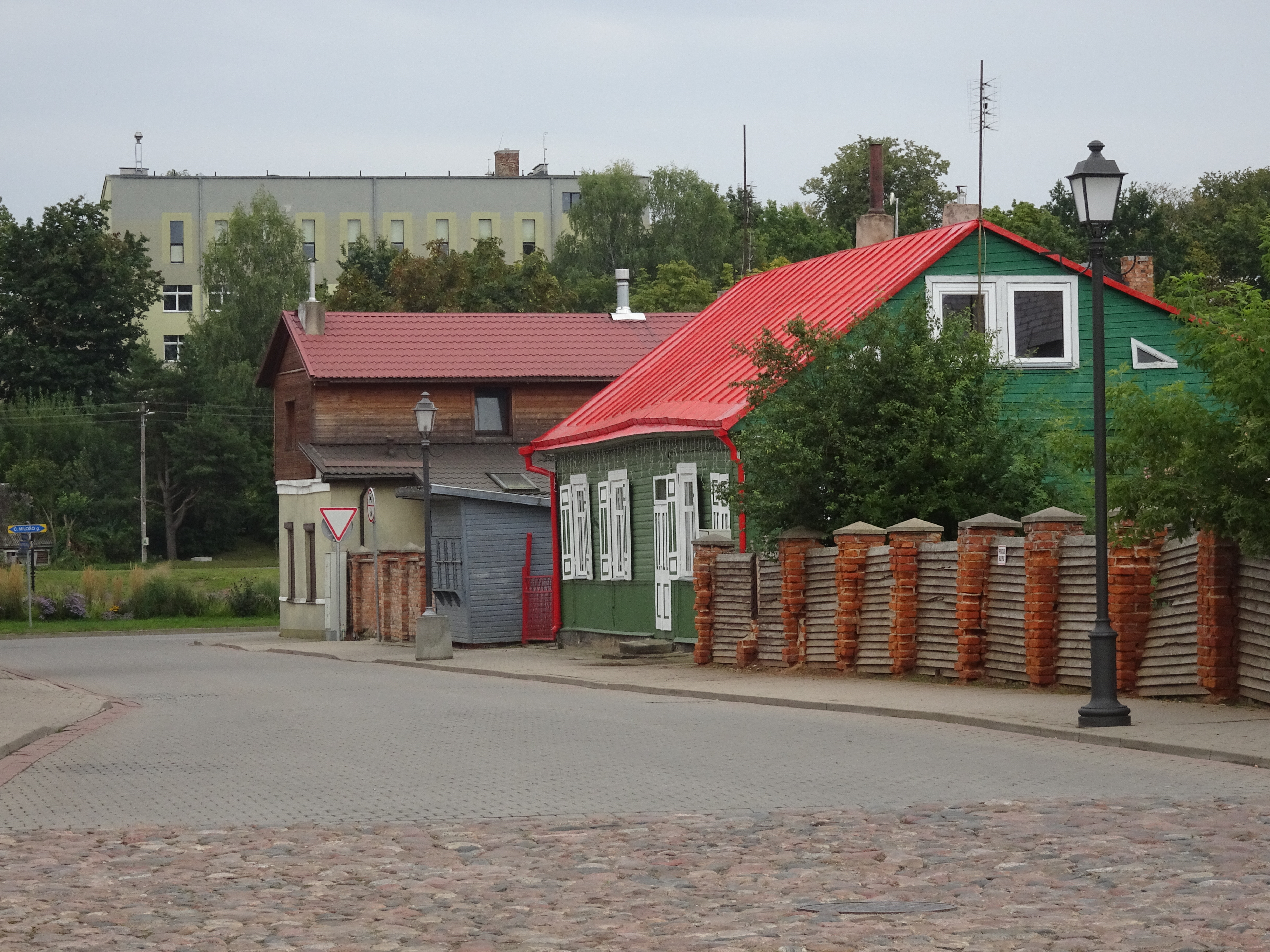
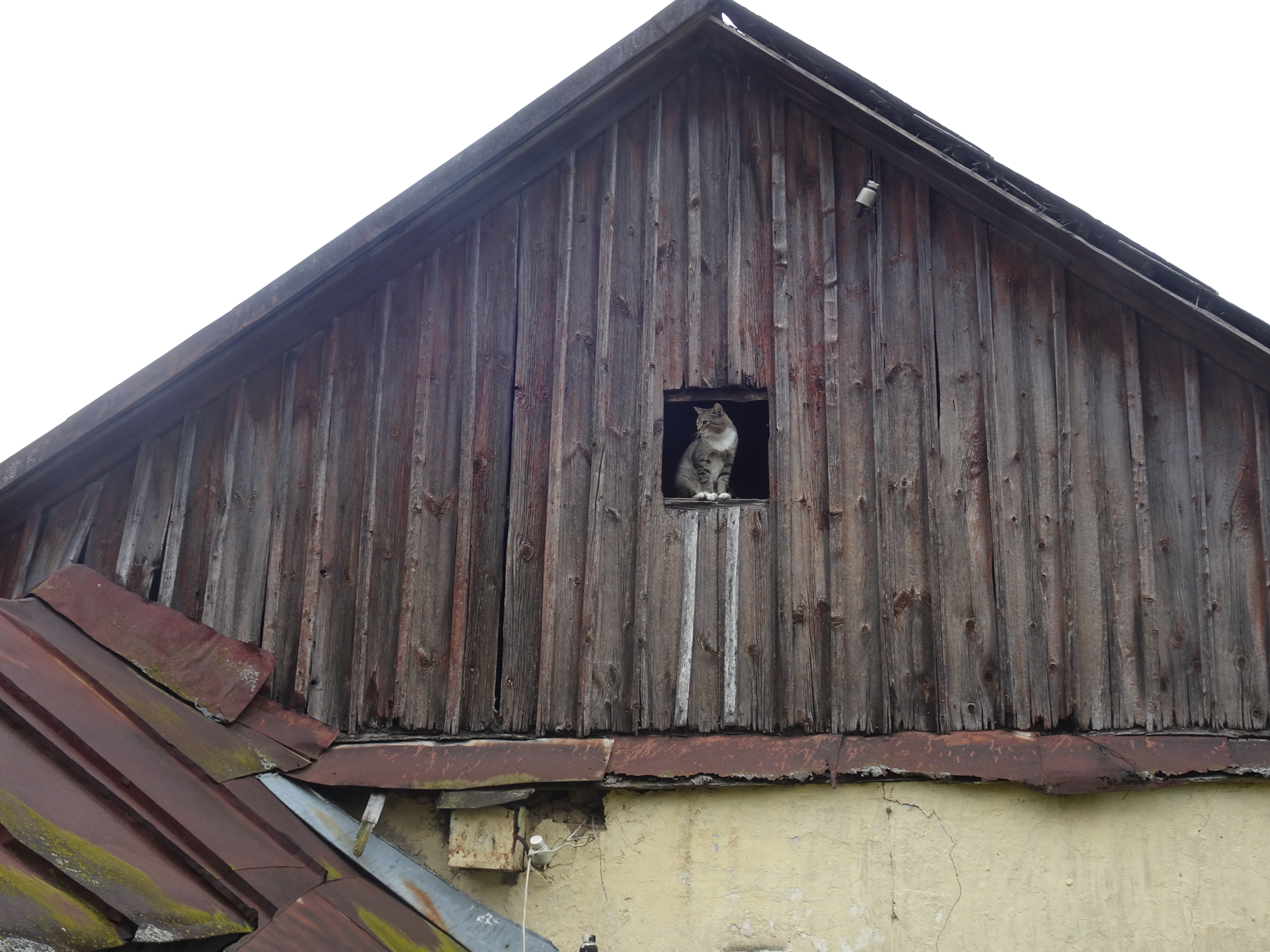
Anyone who has traveled with me previously knows that the alleys, the old buildings, and the balconies are the sights that most often catch my eye. Today was no exception.

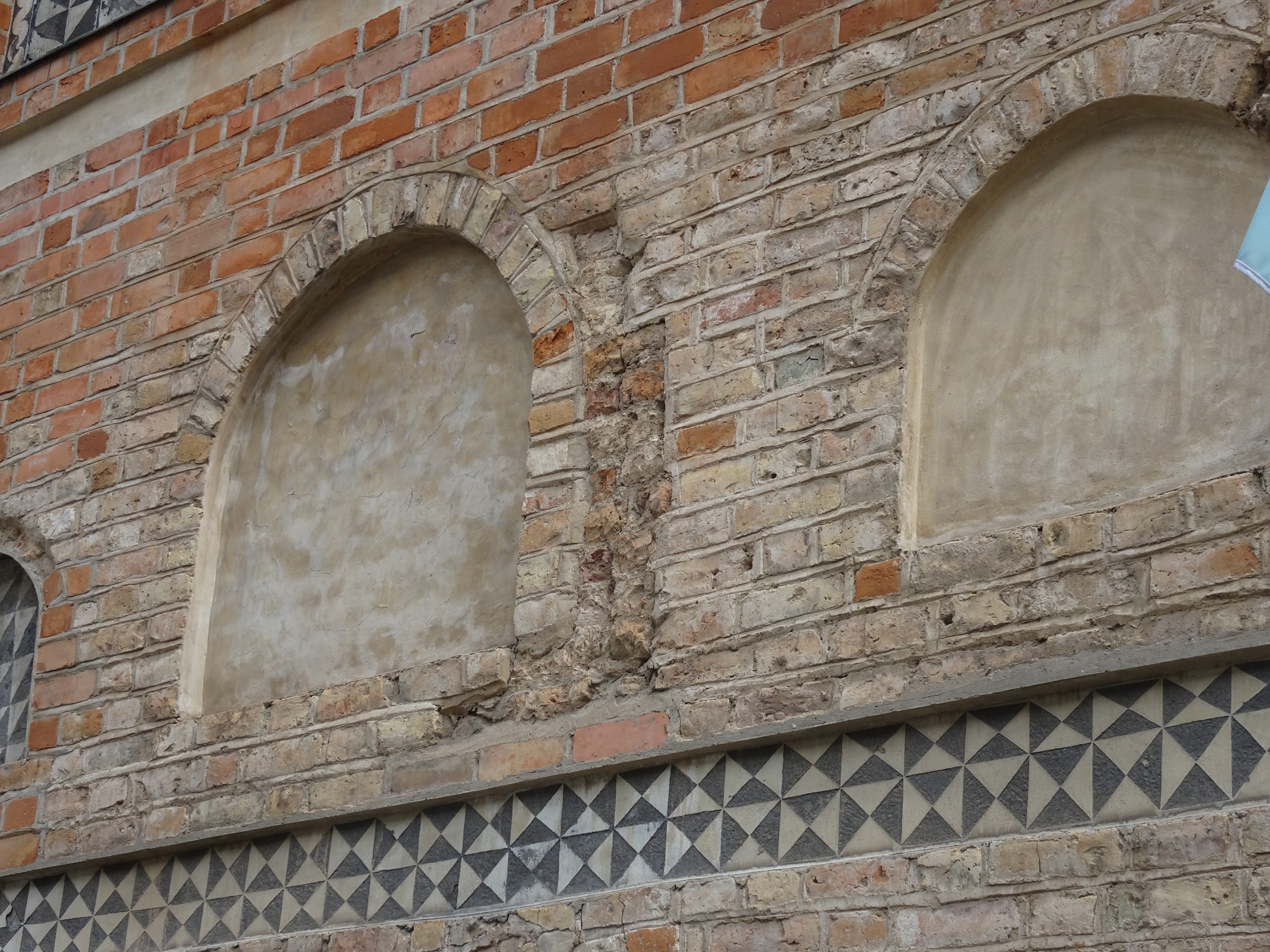
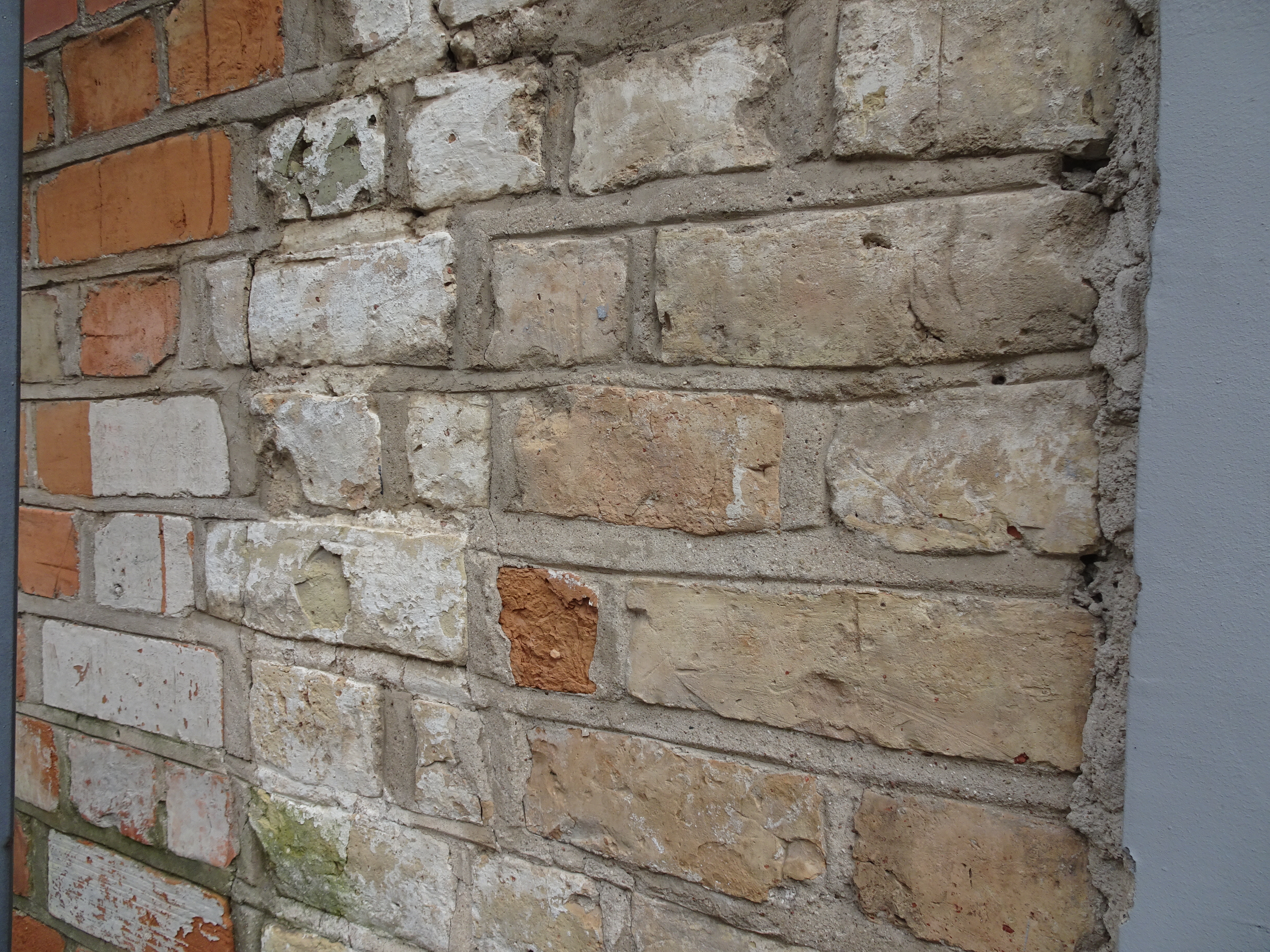
It’s not the buildings themselves most of the time, but the remnants of them that capture my imagination.

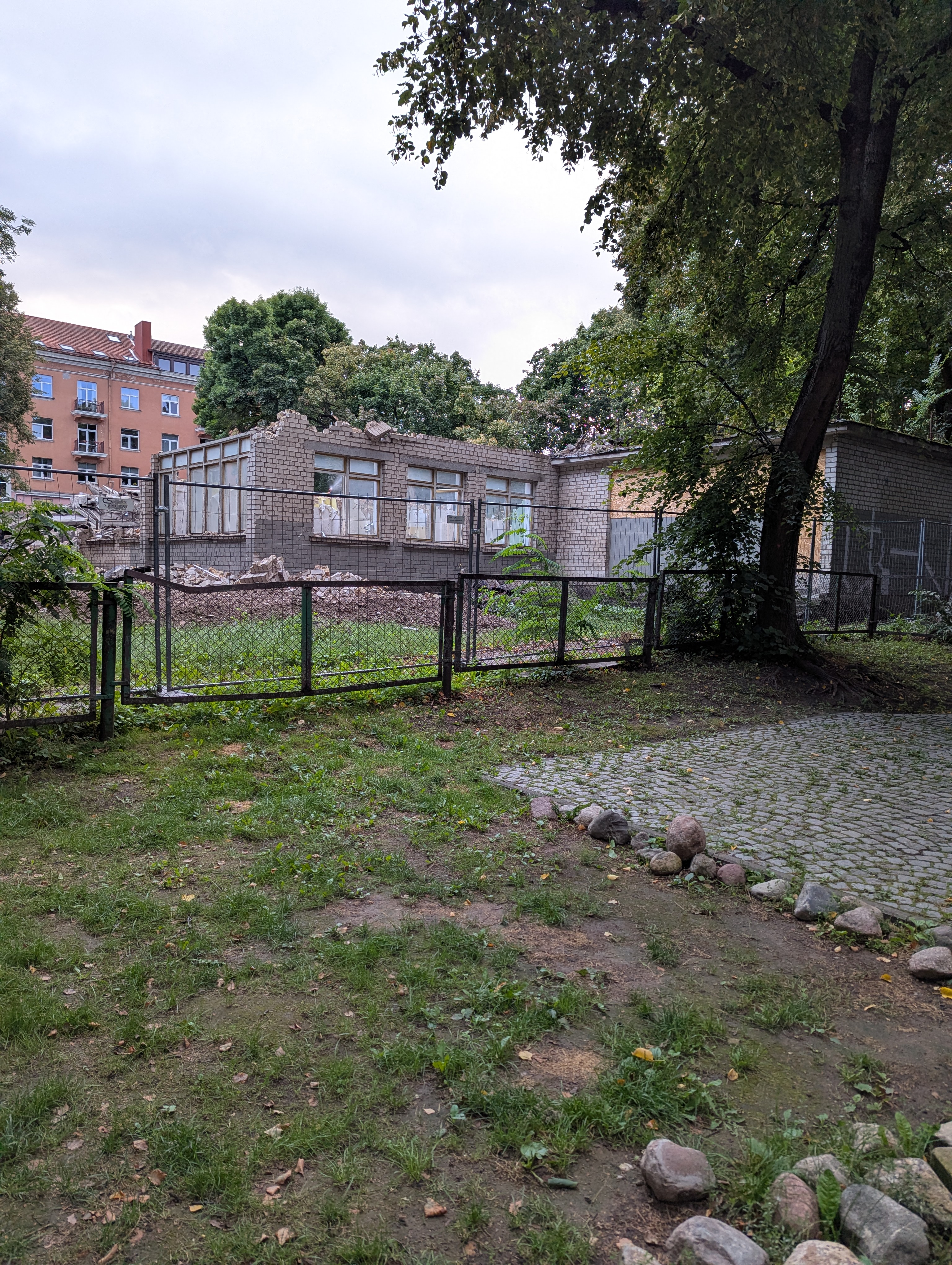
One thing Agnesia (I’m sure I’ve completely butchered the spelling of her name) mentioned was that the kindergarten built in soviet times on the site of the larger of the synagogues in Vilna was just torn down. The school was adjacent to the statue of the Vilna Gaon. I hope that they erect some type of memorial here. The stone patio, bordered by loose stones in the right foreground is the base for the statue.

I should mention that although Gabriel accompanies us sometimes and will on an outing to the client’s ancestral village, any photos I post on the blog are mine. If they were his, I would certainly include attributions.
Tomorrow the adventure continues.
Posted in Eastern European Travel, Jewish Genealogy | Tagged , , , | Leave a comment