
The raindrops are very real, but they are also metaphorical. Today we took a long drive to Plungė. I’ve never been there before, and neither has Lina, a native of Lithuania. I have probably not been to half or maybe 3/4 of the places in my home state of New York and love when visitors want to go to places I’ve never been. I hope Lina felt that way about our trip today. We anticipated a 3 hour drive, and despite lots of cars on the road, and an area of construction, we didn’t have to stop for any of this, and it took 3 hours.
You could see big black clouds in the distance and either they caught up with us or we caught up with them periodically. Either way, it would rain slowly, and then with a lot of force for a few minutes, and stop. Just when we figured we were out of the rainy area, it would start again. This dogged us the entire drive, and of course didn’t stop once we reached our destination even though we were sure, getting out of the car, that we would be rain-free for a while. As they say, if wishes were horses…
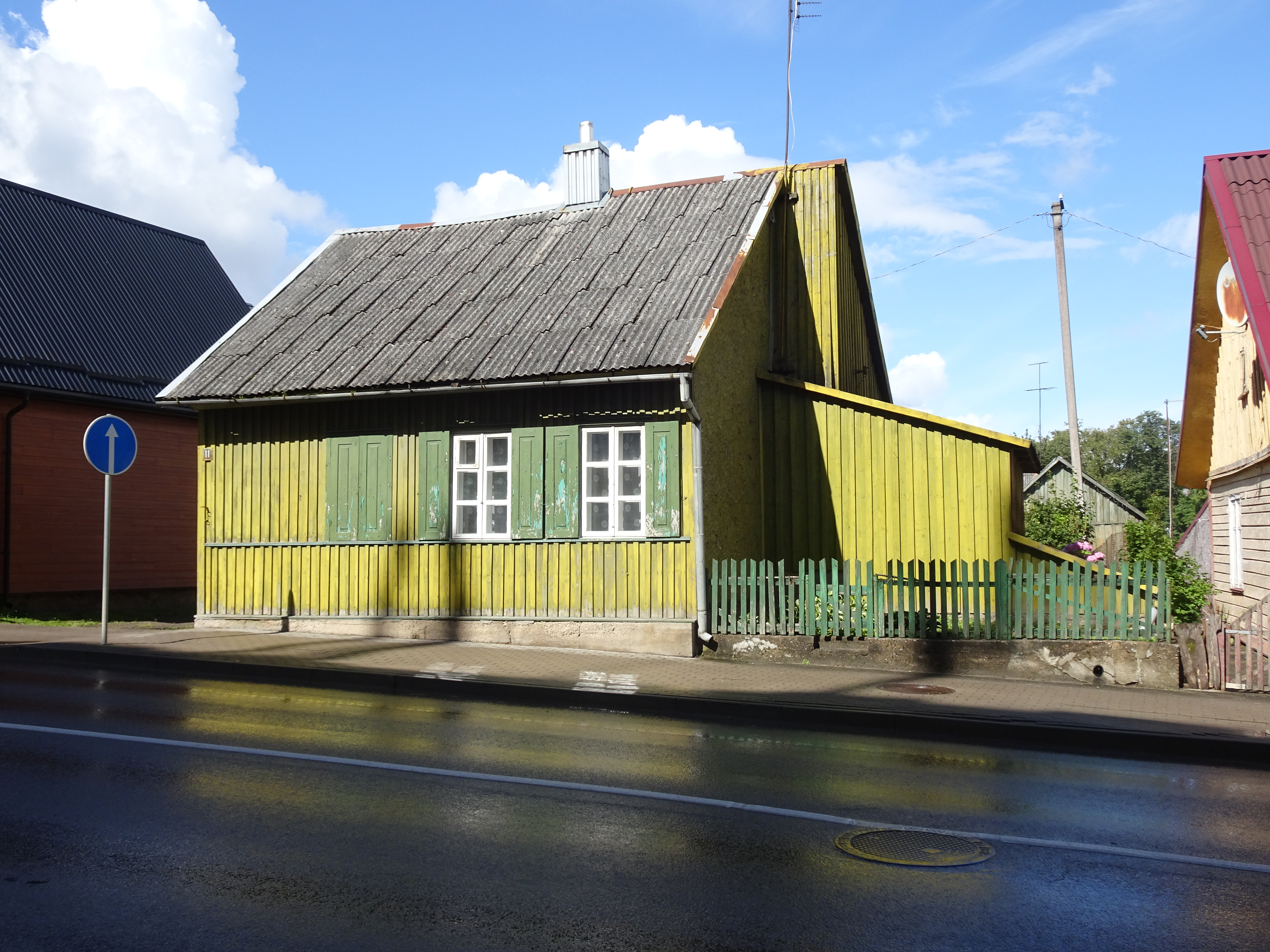
Plungė was an odd mix of the very old, the relatively new (or newly re-done old) and soviet era buildings.
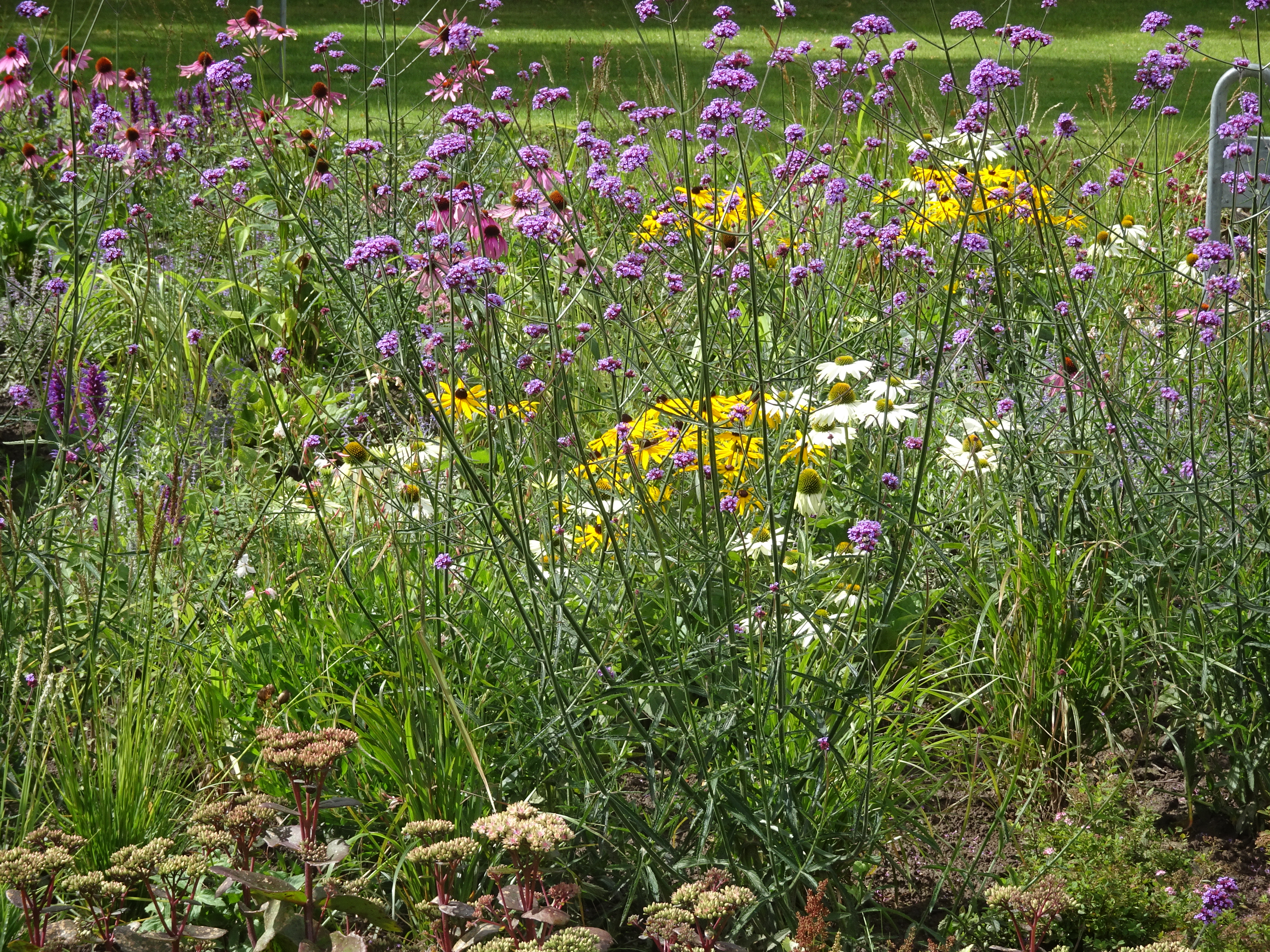
And then there was nature’s bounty – the gardens.
The city was almost completely destroyed during World War II. Unlike many other places that were once home to a thriving and vibrant community, and disregarded that history when the community was destroyed. Plungė had monuments commemorating what was.
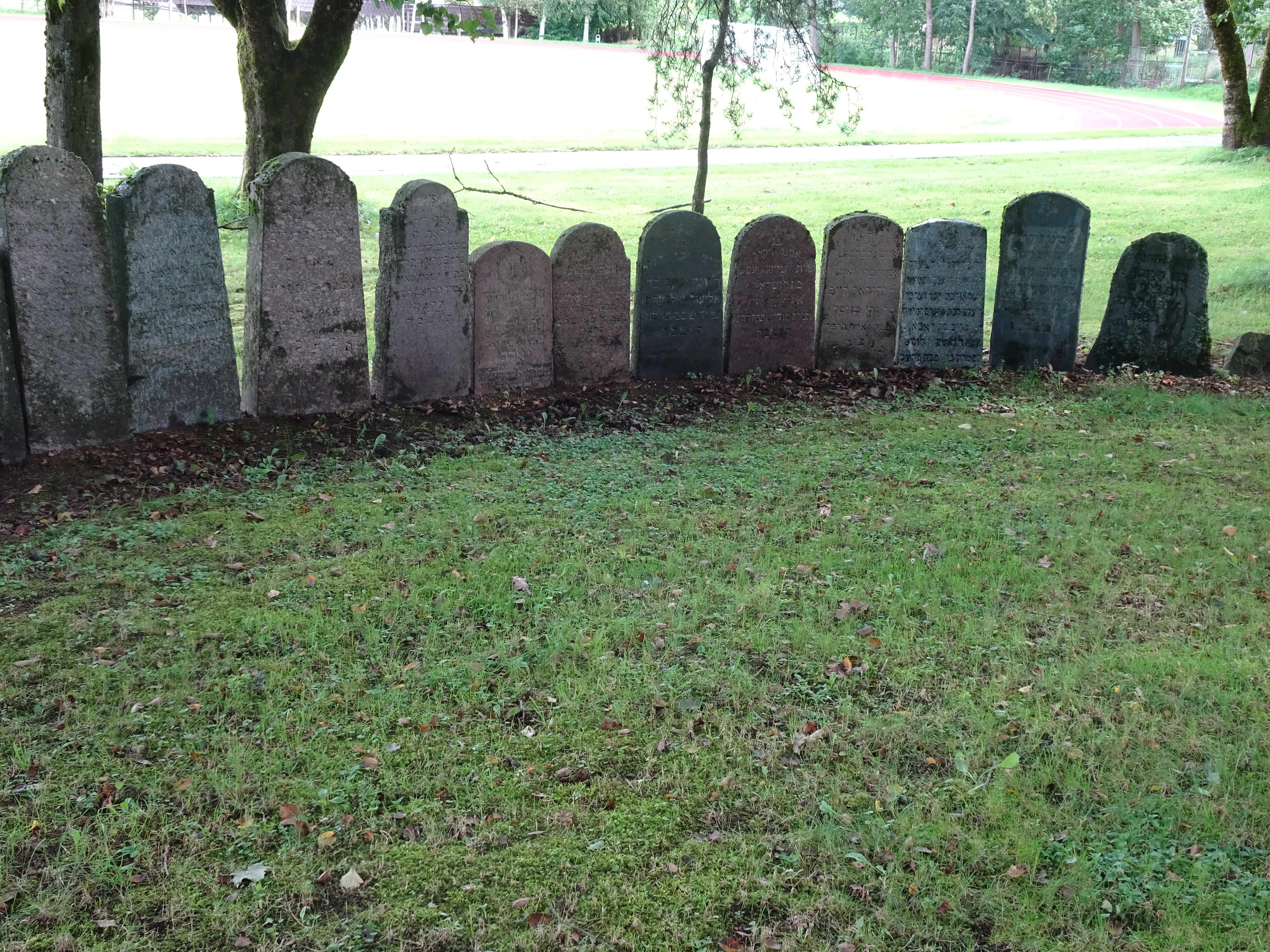
It also has a strange preservation of many gravestones. Behind a school, with a soccer field taking up most of what was probably a large cemetery, are several rows of matzevot, gravestones. They are now stand in curved lines, many of them are still legible.
One surprisingly, has an English inscription under the Hebrew!

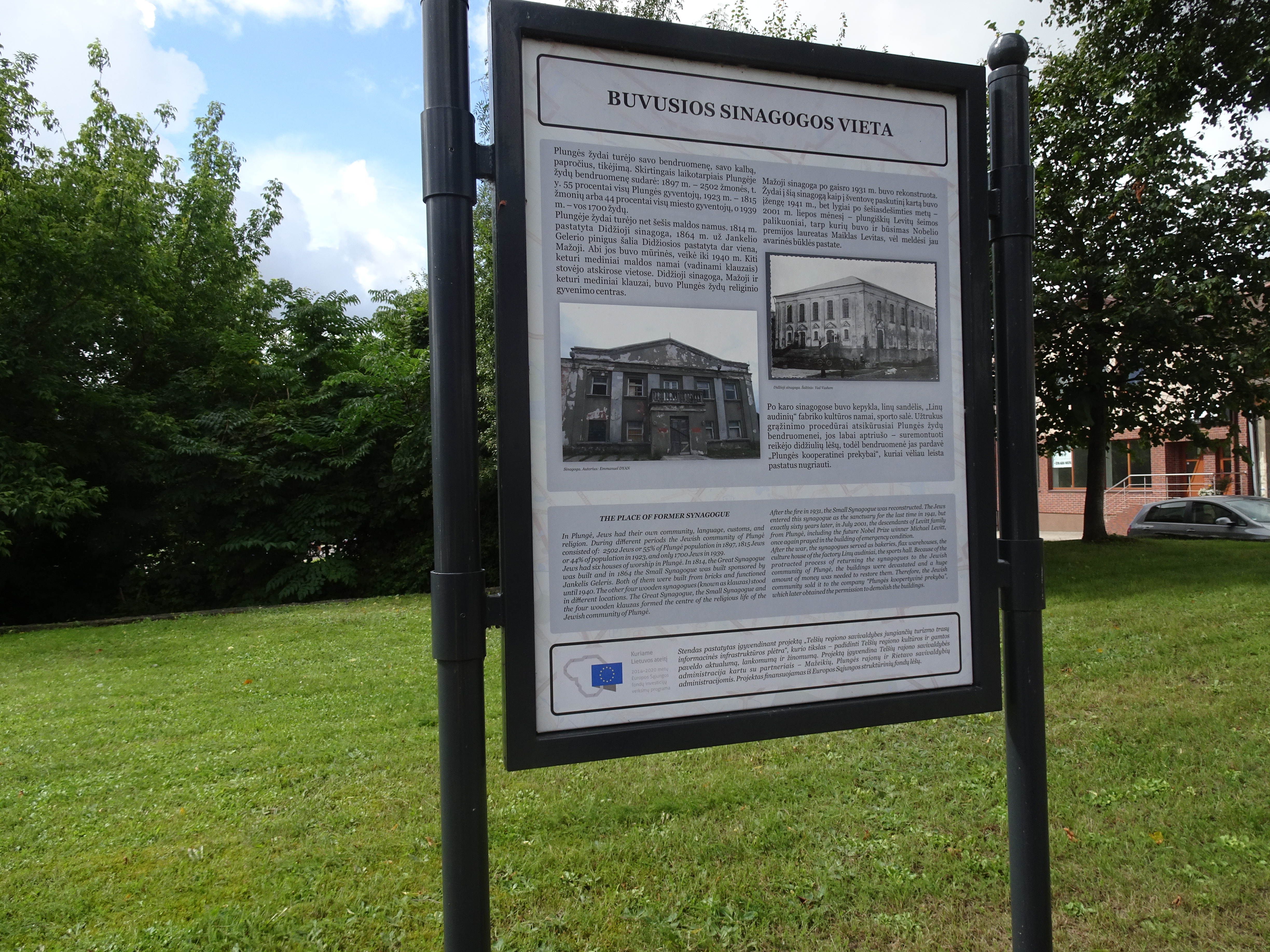
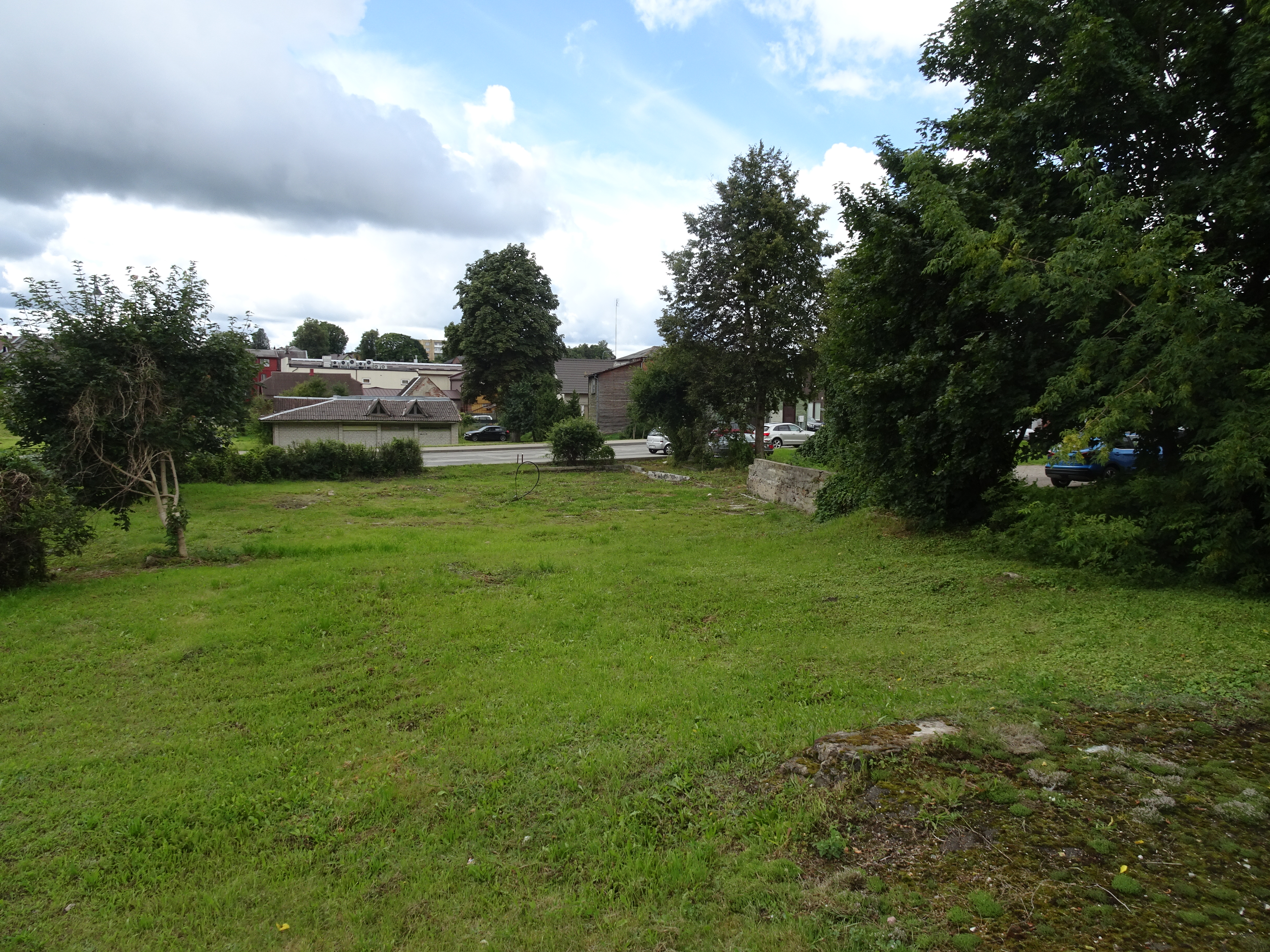
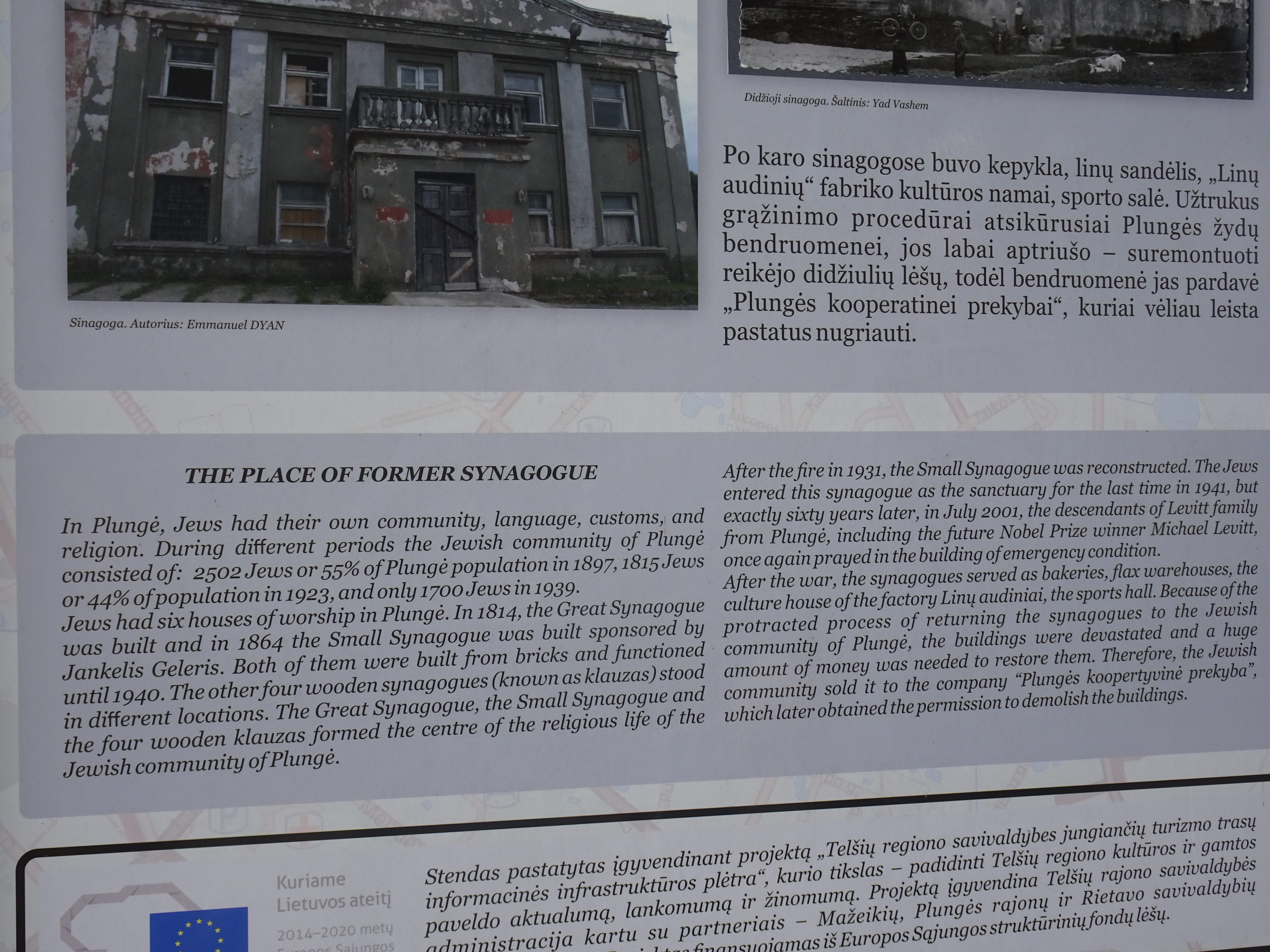
At one time in the central part of the city stood a winter synagogue and a summer synagogue which are both gone and almost invisible except for the remnants of the foundation, the now grassy field where it once stood, and this marker.

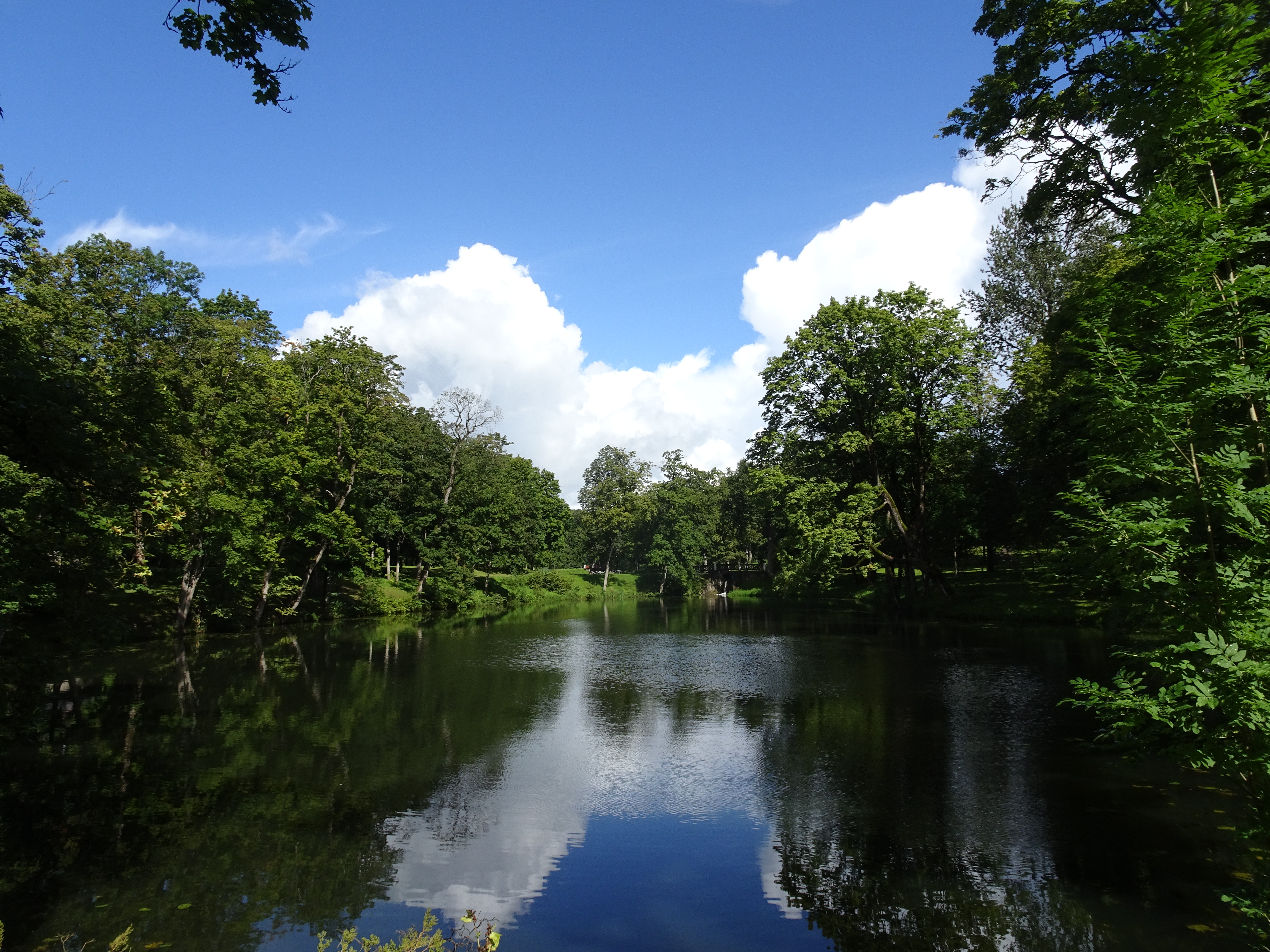
The city has a lovely park at the site of an old mill.
Life does go on, and after destruction is rebuilding. In this city, thankfully, the rebuilding did not elimate the memory of its Jewish population. At least there were commemorative steps taken. My heart aches and I feel the rain internally as tears, and externally as food for the plants that grow in place of people.

I am grateful as I walk in these places to not be alone, and to have Lina and our intrepid photographer, Gabriel, with me.
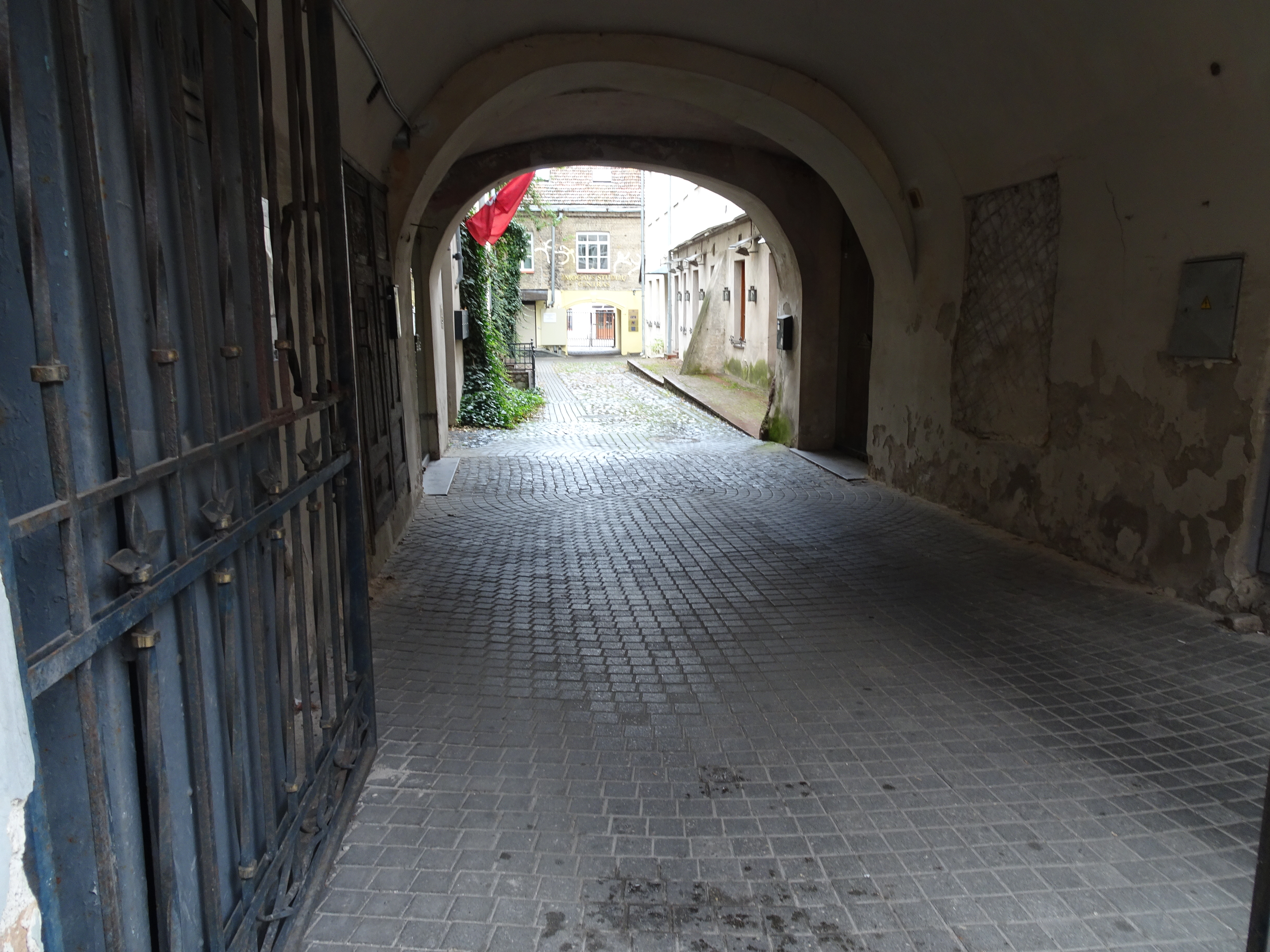
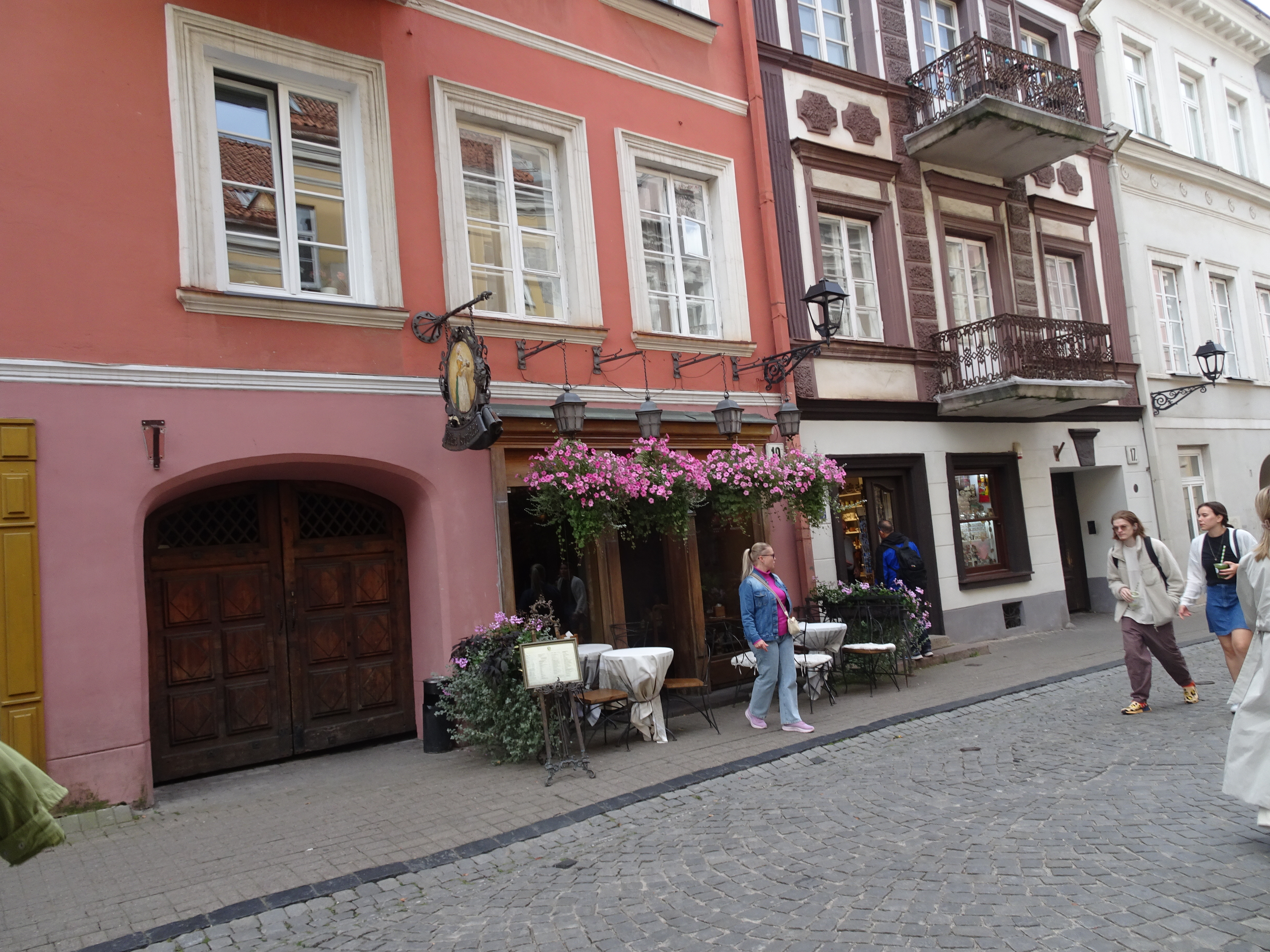
Starting tomorrow, we’ll be back in Vilnius for several days, touring the old part of the city including the Jewish quarter. Perhaps it will rain less. On a humorous note, and something I should be ready for – I never, ever, bring the right clothes no matter how much I bring. This time, I needed to buy a warmer cardigan, a lined raincoat, and a long sleeved shirt. It’s colder and wetter than I ever would have though in the middle of August.





 RelativaTree