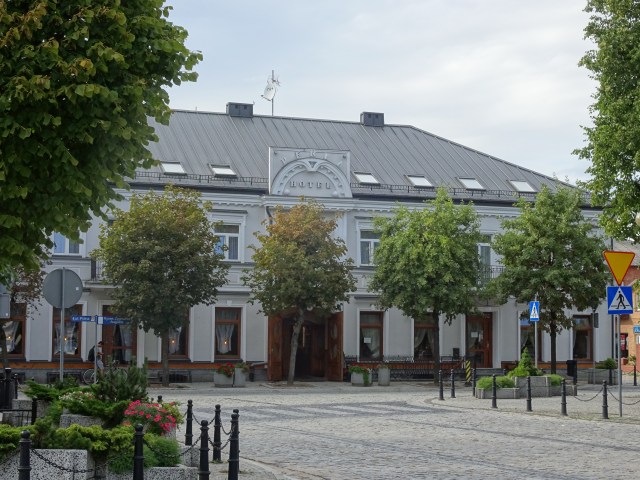
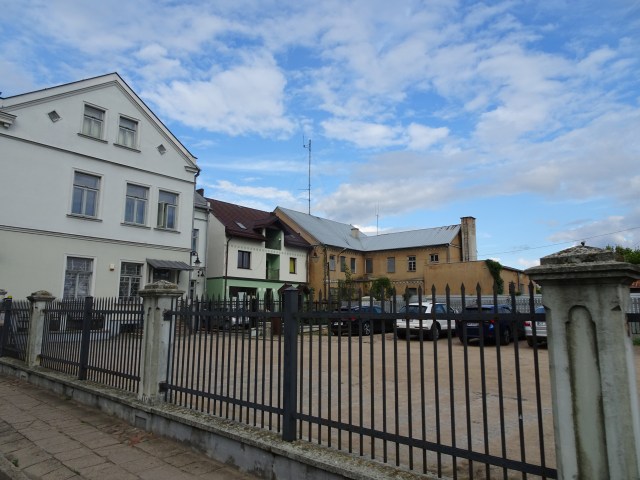
Thurs., 23 Aug: Iasi – cont’d

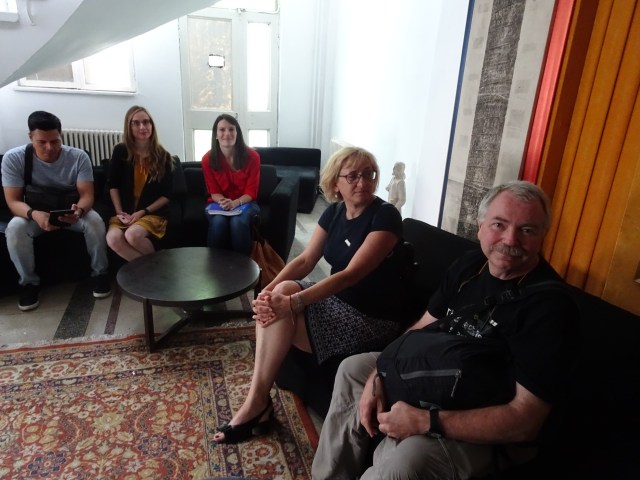
Actually, this visit, as have all of our archival visits to date, was amazing. We arrived at the archives very late – about 90 minutes after the 10-11 AM window was closed.  We were shown into the lobby and asked to wait. We were grateful that we weren’t just told to leave, and sat for just a few minutes and waited.

DSC03251.JPG

A gentleman came out and began speaking to us, telling us about the objects and maps in the lobby. To our delight (and surprise) it was the Director. He was not at all annoyed with us for being late, said that he was in his office all day, so our arrival time was just fine! He also spoke English which meant that Marek had some respite – he has been doing most of the translation for us from Russian or Polish. When we were in Lithuania, the translations fell to Lina, in Ukraine Anna took over, and sometimes Ola gives Marek a rest, but most of the time he is our translator.

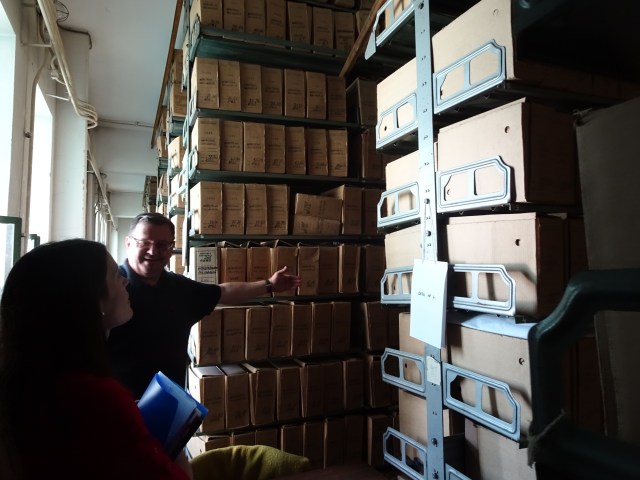
First, we had a tour of the facility. Record preservation and organization for the millions of pages of documents, hundreds of thousands of files, miles and miles of boxes of records is mind boggling.

DSC03254.JPG

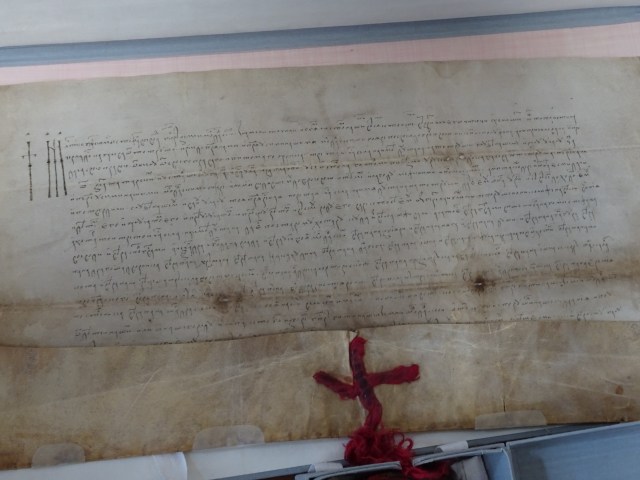
In this archive, we were treated to an amazing glimpse of ancient documents. DSC03255.JPG

We spent the rest of the afternoon combing through records in the reading room, searching for some elusive documents. We were able to make copies of records, and as we have been doing, copied all records which might be pertinent for further examination, translation and analysis upon our return to the US.

DSC03277.JPG

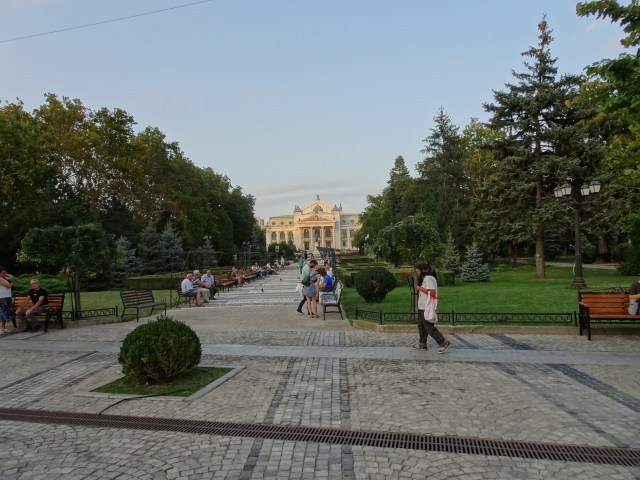
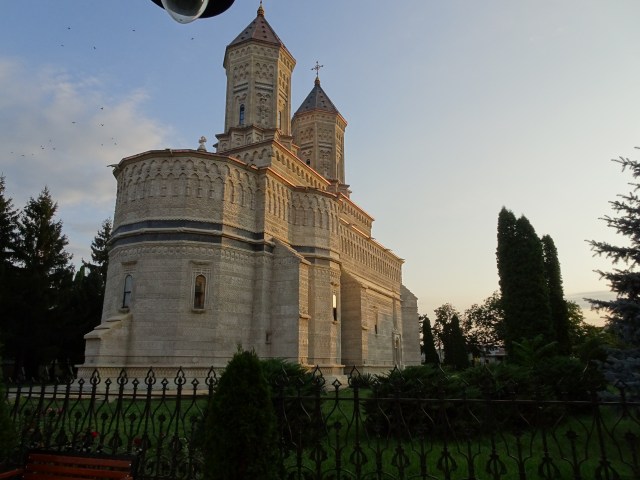
Iasi is a beautiful city with gorgeous churches and architecture. When the archives closed for the day, we took some time to explore before meeting the Director for dinner in a little out of the way magnificent restaurant that we certainly would not have found with out a local’s guidance.

DSC03296.JPGDSC03293.JPG

All in all, another wonderful day. My previous Romanian experience has been laid to rest. I did find out that the Director was born in the same city, Suceava, as my grandfather, of course their births were probably more than half a century apart. A landsman!


Posted in Eastern European Travel, Genealogy | Leave a comment

Thurs., 23 Aug.: Kishinev to Iasi

A day I dreaded – crossing into Romania. My last venture into Romania was not a pleasant one, and even though, technically I wasn’t “in” Romania, since I never left the airport, memories of it filled me with dread. Decades ago, while Nicolae Ceaușescu was in power, I stopped in Romania. The stop was supposed to be brief, and although it was no longer than intended, it felt like it went on forever.

We were traveling to Israel, and as a family, the cost of the plane tickets really added up. Our Israeli friends suggested that we fly Tarom, Air Romania. We did. The savings were substantial, and I suppose if you consider that the memories of that flight have lasted almost 30 years so far, I guess we got our money’s worth. There was about an 18 hour layover, so I figured that we would find a way to get from Bucharest Airport to Suceava in Bukovina where my grandfather was born. As the flight was landing, the pilot (or perhaps a flight attendant) announced that because there was a fuel strike, if anyone intended to try to go into town and had a connecting flight, they shouldn’t plan on going into town, since they might not find a vehicle to bring them back. Obviously that changed our plans, but it was ok.

At least I thought it was ok. To get into the airport we had to go through passport control. That’s normal. What followed was not.  The officials looked at our passports and informed us that we did not have seats on the connecting flight to Israel, regardless of what the tickets we were holding said.  They were going to hold our passports and send us on the next US bound flight three days later.  We couldn’t call the US Embassy because we had no lei and we couldn’t change any money because we had no passports. Finally a flight was leaving for Greece and I went over to one of the passengers with a piece of paper with our names, address and phone number and asked the passenger to call the American Embassy and let them know we were being held against our will.

No sooner had I done that, than a very large female guard approached me, grabbed me by the arm and dragged me to a small office, where she threw down our passports and said “is this what you wanted?” Of course it was and when the plane came in, we got on. For whatever reason we couldn’t change our flights and came back a month later through Romania. When we went through passport control, the official remarked that the last time we went through we had problems and this time we would not!

Now perhaps, my feelings of doom and gloom are clearer. This time, we were going to meet with a Romanian official, and we had an appointment. We were told that we needed to arrive between 10 and 11 AM. So, we started out from Moldova in plenty of time. There should be no traffic at the border crossing, and that was the only place we might encounter a problem. The border crossing from Moldova (non-EU) to Romania (EU) was not very crowded. Unfortunately, there were some huge vans with lots of people in them. They all had to empty the suitcases and cartons that were in their trunks and open the sealed boxes. We got waved on by a guard and found ourselves 2nd in line.

This was good. We could still make our appointment. Oh no, the car in front started emptying out boxes – lots of them. We sat and waited – after all, what else can you do? After an hour, Marek decided to do something. He got out of the van with our passports and approached a guard. We have no idea what transpired, but Marek said he just explained that we had an meeting with the Director of the Archives in Iasi and we were already late. Go figure – they let us through!

We knew at that point that we were going to miss that hour of opportunity, but we were going to give it a shot anyway.

DSC03215.JPG

Thankfully most of the road was well paved, and we drove with no further incident.

We arrived in Iasi, worried that we would never get to see the Director. It was difficult to get an appointment with him. However, we walked in the building and the next thing we knew, we were sitting in his office!

To be continued….

Posted in Eastern European Travel, Genealogy | Leave a comment

Wed., Aug 22: M-P to Kishinev (Chișinău)

There are simply not enough hours in a day, or perhaps we have too much to do each day. Our plans seem reasonable enough, and yet, time just disappears. In Mogilev-Podolsky, we did not have time to go to the cemetery or anything else. Travel just eats up hours, and even for those of us not doing the driving, it’s exhausting.  We had not planned to do anything in M-P except stop there on the way to Moldova.  When I spoke with the Moldovan embassy in the US months ago to find out their advice regarding border crossings, that was where they told us it would be easiest.

We had no idea what to anticipate, and had been unable, in advance to be in touch with the archives in Moldova – this was the only visit for which no appointments in the archives had been made.  The border crossing from Ukraine into Moldova was much smoother and shorter than the previous crossing into Ukraine. In fact, although it took longer than the 20 minutes indicated on-line, compared to the huge lines crossing into Ukraine from Poland the other day, this was a breeze!

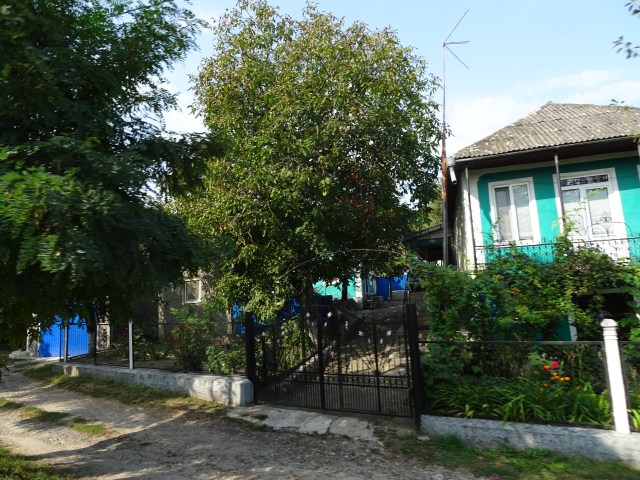
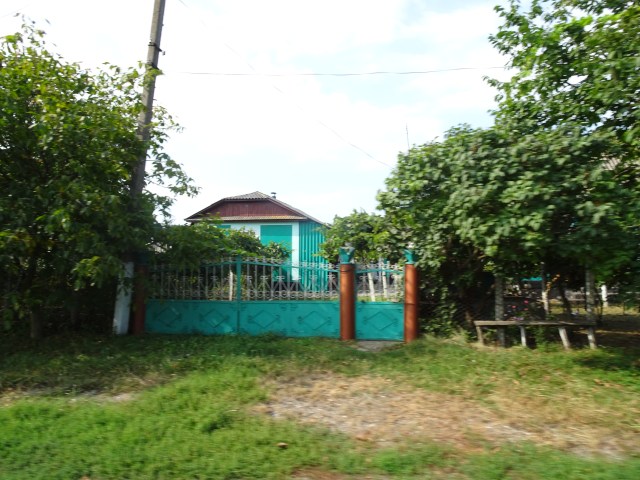
I’ve been struck by the colorful houses we’ve been passing throughout our travels, and this leg of the journey was no exception. When I was just looking back at my photos, I noticed that there were an awful lot of pictures of houses that were almost a turquoise. This color, green, pink and a bright yellow are found everywhere!

DSC03066.JPG

DSC03078.JPG

DSC03094.JPG

The one thing I wish I could get a picture of are the storks. We see their nests and an occasional stork (or two) standing in them.  It’s fascinating.

Bessarabia – such a mysterious sounding, magical name. Also, a very confusing geo-political area, at least for me with alliances changing frequently. This area has been under Moldavian, Romanian, Russian Empire and Ottoman Empire rule.

At the archives, we had a very pleasant surprise.  Although this was the only archive at which we did not have an appointment, the Director of the regional archives was as welcoming as if he had been expecting us!  He spent well over an hour with us.  Marek and Ola conversed with him in Russian, translating as the Director paused. He was very animated, and explained that he was a historian and a professor and loved to teach. He regaled us with story after story about famous people from Kishinev who had settled in France, Israel and the US.  He took a moment to tell me a story in French.  None of us were able to figure out why he was speaking about the Jewish population of the area and the famous Jews who had been from Kishinev. I asked Marek since he had introduced our group in Russian to the Director, but he said that he was as puzzled as I was since he had not said a word about all the Jewish research we had in the area. A delegation showed up to meet with him, who did have a previously scheduled appointment and he left us to the Director of the local archives who showed us around the facility.

DSC03166.JPG

We left the archives feeling totally overwhelmed by the amount of information we had heard in a relatively short period of time – so much to absorb and remember!  Our next meeting was with researchers whose expertise is with genealogical records from Moldova and Romania. One of the amazing things we have as a team at AncestryProGenealogists is a very wide network of researchers all over the world, whose skills we can draw on. Our US based team specializing in Eastern European and Jewish research, with access to repositories all over the US and digital repositories all over the world, has the ability to read and translate records in a dozen (or more languages). Our network of researchers has onsite access to repositories all over the world, and can read (an understand) ancient records in almost every conceivable language. I constantly marvel at the scope of what we can do – it’s so much more than I could accomplish working on my own, and much more efficient.

Our hotel was incredibly pleasant. The woman at the reception desk helped me call the researcher we were meeting with, and also arranged for the dining room to open early the next day since its normal hours began at 7 and we had hoped to leave then.

Dinner was wonderful, and Lindsay especially was charmed by the cats in the dining room and outside.


Posted in Eastern European Travel, Genealogy | Leave a comment

Tues., Aug 21: Khmelnitsky to M-P

In spite of having internet in every hotel we have stayed at, it has not been consistent enough to post to this blog every day, so my postings are sporadic. To my delight though, my phone has a data signal almost all the time while we are traveling so I have been able to text and respond to emails.  Emails on the phone are for me, not the greatest – it’s difficult to see the complete message to which I’m responding, and opening attachments, probably because of the signal is almost impossible. I hope all my emails have been (mostly) comprehensible, although my responses have been pretty short for the most part, since typing on a small screen….

We arrived in Khmelnitsky Monday evening. I really need to start there. We arrived late Monday afternoon, and our wonderful GPS, after guiding us through parking lots and very narrow streets in Kiev, finally got us on our way. Our reservations at the hotel in Khmelnitsky had been made and confirmed months earlier. We arrived at the hotel and they claimed that our reservation was for the following night (it was not – we had confirmations) – when you are traveling and need 5 or 6 rooms each night, you are pretty careful with how you are booking. The hotel found sufficient rooms for us.
To our surprise, each room was completely different from every other room, and I do mean completely. The only thing all the rooms had in common was giant mirrors and chandeliers. The hotel was apparently part of an entertainment complex. The rooms themselves were very entertaining. So much so in fact that after dinner we took a tour of each other’s rooms. My room had a mirrored bar and a fireplace. I wanted to put some photos of this here but for some reason I couldn’t save any to the blog – if they disappear before this gets published, when we get back to the US next week, I will go back and edit and add photos. I noticed on some other days that I  added photos and they disappeared. Some days it feels like we are in a time warp or a Harry Potter story.

Fireplace.JPGbar stool and fireplace - hotel.JPG
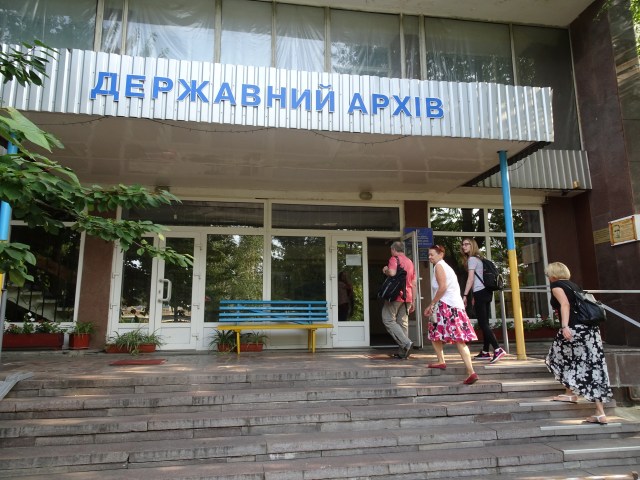
Tuesday morning we set out for the archive. It’s most important to be prepared prior to visiting an archive anywhere, to make an appointment to meet the archivist and the director of the archives, or their second in command, if at all possible. Every one of the archives we have visited and will be visiting was expecting us. Part of the scheduling difficulties we had was getting to cities in plenty of time – some days because of traffic and border crossings, this had been a challenge, but every one of the archives was open and gracious even when we were late. They all understood the issues with traffic, roads and borders.

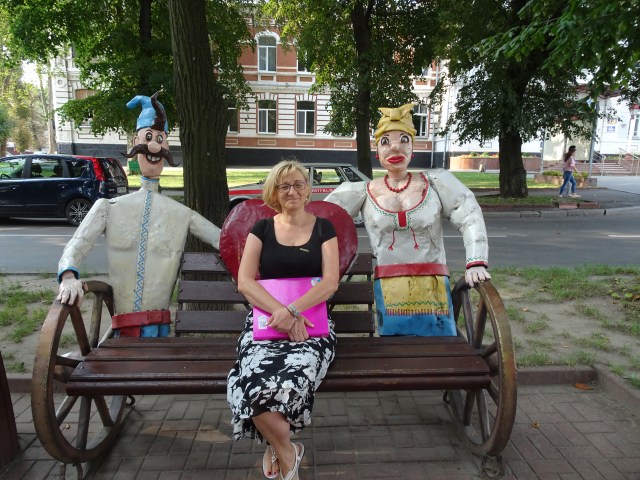
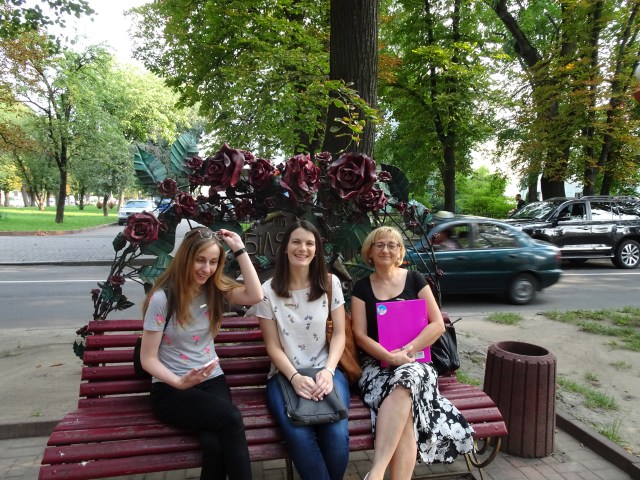
DSC03040.JPGWe walked from the hotel to the archives on a beautiful summer morning. A few minutes into our walk, we encountered the most whimsical park benches!

DSC03042.JPG

After this, we arrived at the archives in a very cheery mood.
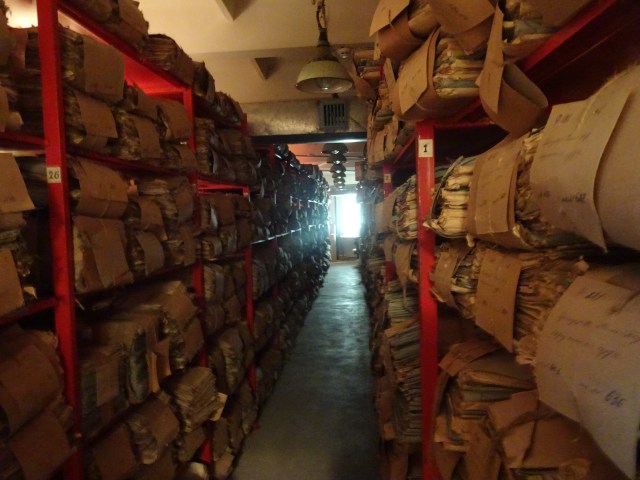
I think that no matter how many different archives we visit I will never cease to be amazed at the size of the holdings, at the fragility of the documents, and the age of them.

DSC03051.JPG

Can you imagine the millions of files, the billions of pages of information stored in these facilities?

DSC03053.JPG
We were privileged to not only be given a tour of the archive, but to be shown nobility books, vital records, and revision lists from the collections. The colors in the books are phenomenal. It’s hard to believe that they are hundreds of years old, that the plant based inks not only survived but their colors are possibly as vibrant and brilliant as they were the day they were written.
We had an opportunity to spend some time doing client research and acquainting ourselves with the methods necessary to do research in the indexes and digital holdings. Each archive has their own specific methodology and although many of the archives have been digitizing their holdings, these are not available online – they are on servers which cannot be accessed off premises. Of course, the Khmelnitsky archives are home to a very special collection of records.
In 2003, a terrible fire decimated the Jewish and civil holdings in the Kamenets-Podolsky archives. For years it was thought that nothing had survived, but more than a third of the documents did and restoration of them is on-going. We got a glimpse of some of the documents. It’s astonishing that so much was saved and they are stored in Khmelnitsky. The Director of the Archives spent quite a long time with us and told us about the restoration of those records as well as about the archive’s on-going efforts to digitize their holdings.
Ella had a bus to catch that left at noon, and we needed to check out of the hotel and get on the road. Marek, Anna and I drove Ella to the bus station. I was sad to see her go back home. We haven’t seen each other except on Skype since 2011. I know we will spend more time together some day, but I don’t know when.  Our fathers were first cousins, but they never met. Ella’s parents and grandparents lived their lives in Ukraine, and never traveled far from home. During the war, her parents and grandparents were in Uzbekistan and Kazakhstan. My dad was stationed overseas during the war, in the Philippines. There was never any opportunity for them to meet. I don’t know if they even knew about each other until we connected with them in the mid-1980’s. My paternal grandmother and Ella’s paternal grandfather were siblings. My grandmother came to the US in 1920. After the war, in spite of receiving letters from Ella’s grandfather, he never received her responses – he was in the Soviet sector. My grandmother died in 1956, and our family in Ukraine never heard from any of the family in the US after the war.

The bus was nothing like I thought it would be – it was a van with no air-conditioning. Think of it – a 6 hour ride on bumpy roads during the heat of the summer with no a/c! The driver was pretty rude, too, and gave Ella an argument about purchasing her ticket on-line – he was hoping to be able to sell seats himself and pocket the money. Since Ella did not have an assigned seat, he made a not too subtle threat that if someone came along and wanted to purchase a seat for cash, even though she had a ticket, he would displace her. Anna and Marek, who were with Ella while this was happening told her firmly that she needed to get a seat and stay in it. Ella emailed me later and said she arrived home after a very uncomfortable trip, but she was safe.
The rest of us had lunch at a nearby pizza place and then got on the road. Our first stop would be to drop Anna off at home – she lives between Khmelnitsky and our destination for the night – Mogilev-Podolsky. Anna encouraged us to take some time to see some sights there, especially the Jewish cemetery which is in wonderful condition. Unfortunately, by the time we arrived in M-P we were exhausted and it was too late to do anything. Until this part of the journey, we thought that the roads were greatly improved from the potholes connected with narrow strips of asphalt that I remembered. I suppose that they are somewhat – the potholes are no longer visible, but the road although paved, felt like a dirt and gravel road.

DSC03063.JPG

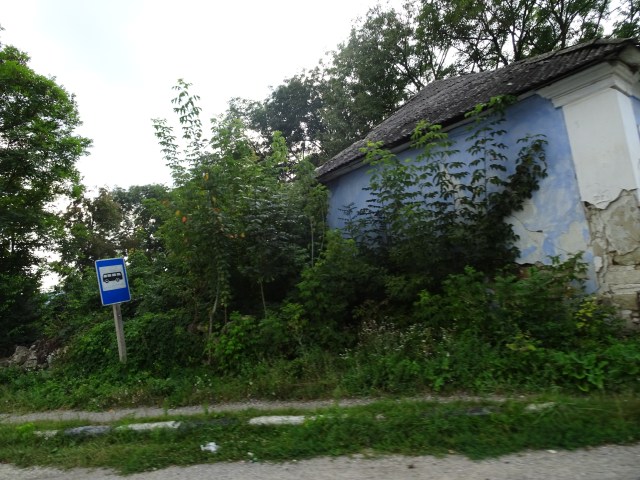
I have yet to be able to take a photo of a stork or a nest. It’s amazing that the pictures I am taking during our long drives are clear at all, since they are being taken from a moving car!  Some of the sights along the way are breathtaking and stand in sharp contrast to other sights.

DSC03064.JPG
Our hotel for the night was interesting – it was in a heavily wooded place, and looked like it might be a fun family-type resort. There was an old historic building and a newer building. Lina and I had rooms in the older building, everyone else had rooms in the newer section. My room lasted just a few minutes. The rooms were all air conditioned. Mine didn’t turn on. It wasn’t plugged in! In fact, there was no where to plug it in. When I went to the front desk to ask about it, with a lot of sighing and frowning, the woman at the desk found an extension cord and came to the room and plugged it in. It still didn’t work. Lina’s room was in beautiful shape. This room had cracked furniture, and as it turned out, also had some uninvited occupants. Needless to say, I wasn’t too pleased with either the lack of cool air or sharing my room. It wound up being changed to the other building.

I was completely exhausted (I suspect we all were) and although I thought the barking dogs next door would keep me awake, they did not.

Posted in Eastern European Travel, Genealogy, Jewish Genealogy | Leave a comment

Mon., 20 Aug: Kiev to Khmelnytskyi

We had a phenomenal time at the Kiev archives.  The archivists were welcoming and gave us a terrific tour.  DSC02956.JPG

We’ve been really fortunate in our visits to various archives. Archivists have been welcoming, eager to speak with us about their holdings, happy to bring us the record books we need to do our research, and permitting us to get copies of records as needed.

Of course, in addition to immersing ourselves in the archives we have also been able to wander the streets to see where our ancestors and those of our clients lived. For the areas in the former Russian Empire, such as Kiev, we often have no indication of street or house number, and when we do have a house number, it is difficult to locate where that residence might have been. There are of course exceptions, but we generally are only left with clues connected to either a church or the Jewish community. When we don’t have much to go on, all we can do is look at neighborhoods with older homes and buildigns that still stand, and take pictures of those to at least set a tone for what the place may have looked like, and find out as much as possible about local history from various types of records, to give context to the ancestor’s lives.DSC02969.JPG

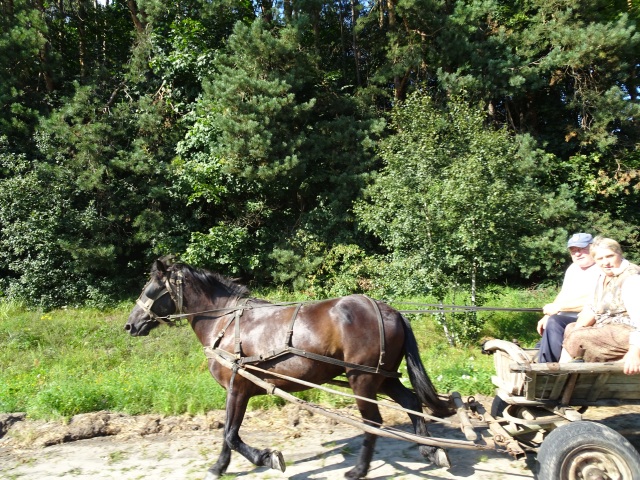
Scenes such as this one with a horse pulled cart are common in today’s Eastern Europe. When I was here 9 years ago, I often saw these on the road with hay and farm products piled high in the cart.  I had no idea whether this would still be the case.  Of course a big city like Kiev has changed considerably over the last 9 years.  There are more shops and restaurants, malls, and the number of people on the streets is astonishing.The city still struggles in terms of ambiance with many building remaining from the Soviet era still dominating.

By late afternoon we were off to Khmelnitsky. I know this town better as Proskurov which was its name prior to 1954. In the annals of Jewish history, Bogdan Khmelnitsky is not a name to be celebrated. He is of course a hero in Ukrainian history since he led a Ukrainian peasant uprising against the Poles. During the course of that uprising in 1648-49, perhaps thousands of Jews were massacred, since they often worked on the estates of Polish nobles, the Jews were linked to the Poles by Khmelnitsky and his followers. I wonder what we will find there.

Posted in Uncategorized | Leave a comment

Sun., 19 Aug: Kovel to Lutsk to Kiev

On the way to Kovel last night, I got a text message from Phyllis Grossman. Phyllis was one of my co-chairs for the IAJGS 2016 conference in Seattle and we became good friends while working on the conference.  She attended this year’s conference in Warsaw, and was one of the Ukraine SIG luncheon speakers.  After the conference she was going to spend some time in her ancestral towns, and she was staying in Lutsk until 20 Aug!  When she first texted, I had no idea if we would have time to see her in Lutsk. As it turned out, as exhausted as we all were  from our travels yesterday, we woke up pretty early, packed the van and were ready to go.  I texted Phyllis to see if we could meet for lunch in Lutsk.  It was Sunday, so we expected to see church goers, but were confused by all the people who were very dressed up and carried baskets of fruits.  It turned out that we were in the middle (or maybe the end) of the apple harvest and this was a day that the harvest was blessed.


Lunch was to be at a 14th century castle! On the way, we passed a sign pointing to where the 17th century synagogue (now a gym) stands.


DSC02905.JPG


If we had more time we would have gone inside the castle, but we knew that we still had a very long drive to get to Kiev after lunch.DSC02908.JPG

Lutsk synagogue.JPG

There are houses still standing which were occupied by the Jewish residents of the once thriving Jewish community.DSC02918.JPG


It is always wonderful to meet up with old friends especially in unexpected places!

We headed off to Kiev where we were to meet up with two Ukrainian researchers – Anna and Ella. Full disclosure – Ella is also my cousin. Ella’s grandfather and my grandmother were siblings, and many years after the Holocaust, Ella and I found each other. Since then (1985) we are in constant touch, now primarily via email.


Although in Vilnius, the kosher restaurant was closed, to my delight, Mendi’s the kosher restaurant in Kiev was open, and we all enjoyed a wonderful dinner there. DSC02945.JPG

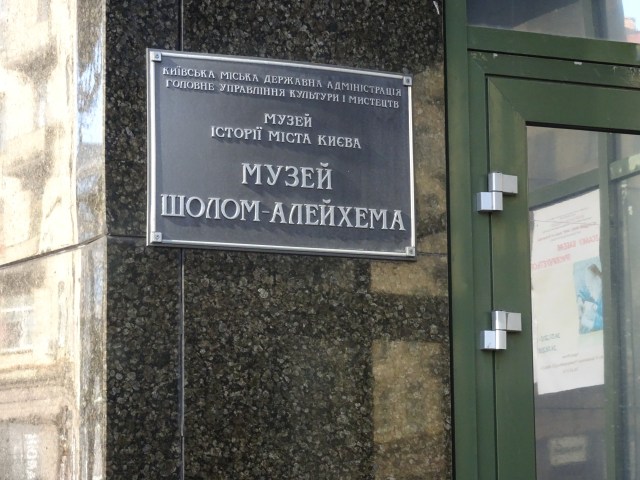
Our walk around Kiev took us past the Sholom Aleichem Museum. In Ukraine, he is a folk hero and everyone learns about him and his stories from a young age. Last time I was in Ukraine, Ella and I saw a showing of Fiddler on the Roof in Ivano-Frankivsk. Seeing it acted out in Ukrainian, in Ukraine was very insightful – especially when I found out afterwards from conversations with the director and producer, that it was considerd to be a universal story and that the pogroms were thought to just be allegorical since “everyone” knows there were no pogroms before WWII.

Really?


Posted in Uncategorized | Leave a comment

Sat., 18 Aug – Waiting for Godot

Today was to be a travel day. The best laid plans as they say.  No, I don’t mean we didn’t travel, because we did. We even got to our destination, with no mishaps, well nothing major or damaging in any real way.

We went walking around Białystok in the morning, after breakfast, since we had a couple of hours before we needed to leave, and before Julia, our Belarus researcher needed to catch a bus back home. Julia had met us in Białystok the previous day.
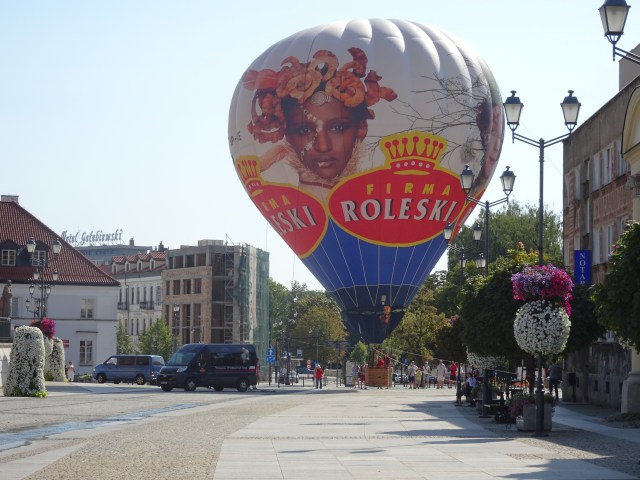
DSC02732.JPG

The big excitement of the morning was the hot air balloon parked on the pedestrian mall, and about to take off. I’ve never seen the process close up – just previously on TV or in movies. The balloon was enormous and it seemed to take forever to get aloft. But fly away it did.

I found a bookstore and purchased a couple of children’s books in Polish as gifts. Of course, neither of the children for whom I purchased them, nor their parents know Polish, but I figure that it’s never to early to start acquiring language skills.

We finished packing and by now the process of packing the van goes very smoothly – each bag has a space and we can do this quickly. We got on the road, knowing that we would only be making a couple of brief stops, lunch would be one of them. I was excited because the way we were driving to cross the border to Ukraine would take us through the fabled town of Chelm. I had grown up with Chelm stories and indulged myself when I worked at synagogues, by reading these stories to the children in the Hebrew schools.DSC02787.JPG
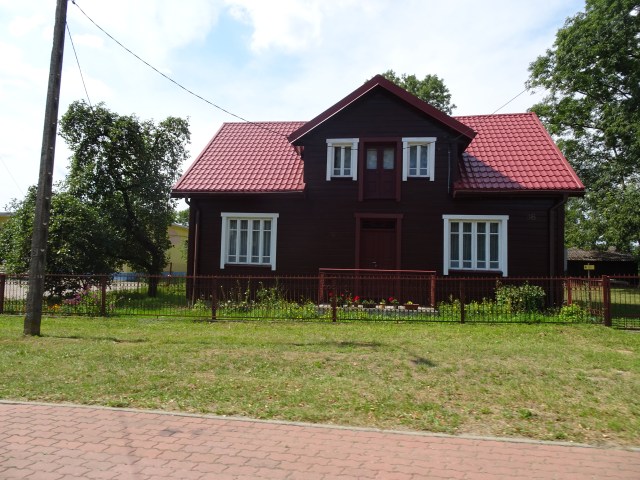
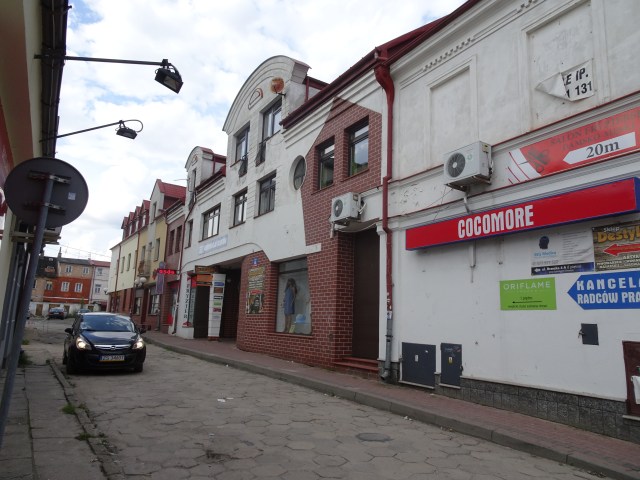
The day was pleasant and the drive was easy. After a couple of hours on the road, we came to a town that was sizable enough for restaurants and shops and we stopped. There were several pizza places on a pedestrian mall, and we randomly chose one. We ordered pizza and salads. The first pizza arrived – a vegie pizza covered with arugala on top of mushrooms and peppers. The second pizza (these were 22cm individual pies) – also vegie but without the arugala. About 10 minutes later a plate with arugala arrived. Every 10 minutes or so another dish arrived. There were 5 of us, so just the arrival of the food took a long time. It was over half an hour after we first ordered that the first dish showed up.  Poor Lina. She ordered the simplest thing – a salad with chicken. It arrived about half an hour after the last of the 4!  It was barely edible. Good thing we stock the van with chocolate bars and cookies.
DSC02825.JPG

We got back in the car. It’s a good thing we didn’t know what the rest of the day had in store for us, otherwise, perhaps we would have just gone back to Białystok!

Our phones were set to google maps for directions and we often had directions in both Polish and English depending on how many phones still had battery time. There were two different directions, one was an hour shorter than the other, so of course, we opted for that. I was slightly bummed because the directions took us near but not through Chelm. There must be a Chelm story just waiting to be told about that.

It turned out that the hour difference had to do with the border crossing, and it probably saved over 5 hours, not just one. We followed the twists and turns of the route and found ourselves facing the longest line of cars and trucks any of us had seen. We found ourselves, however, near the front of the line, so we did what any sensible people would do – we took the first opening and got on the line behind a big truck, and when it started to move, we did too.

So did a Border Guard. She came over to us to find out how we got to the front of the line. Marek tried explaining about the directions from google maps. She in turn explained that the only way we could short cut the trip was with a diplomatic pass or if we had children in the car younger than 3. Marek asked if a pregnant woman fell into the category, and she said sure, but wanted to know which of the 4 women in the car was pregnant. We all laughed, and thankfully she didn’t look too closely – two of us were clearly too old, and the other two were way too thin. She waved us through. We thought “wow, this was easy.” Yeah, right. This was only the first of what would turn to be 5 check points – two on the Polish side and 3 on the Ukraine side.

We had arrived at the first point at 5:30 PM, then our clocks adjusted themselves to 6:30 – Poland and Ukraine are in two different time zones.  By the time we got through the last check point, it was after 9:30 PM. We understand that there was a 15 hour wait for the trucks to get through and that some of the cars would be waiting over 8 hours. Since our trip was supposed to include another entry into Ukraine next week, we started examining our options – after all, we had 3 hours to do this on line, and another 2 hours until we reached our destination for the evening in Kovel.

We finally decided. We would not chance another border crossing into Ukraine. After we leave Iasi, Romania next week, we will drive further east in Romania and stay in Bestritsa, Romania for one night, then travel to Debrecen, Hungary, and drive through Slovakia to get back into Poland.  We frantically scrambled trying to find reservations for the two nights in hotels – we needed 5 rooms each night, which is not the easiest to do, but we prevailed!

We finally got to Kovel, really hungry, checked into our rooms and went, at close to midnight, in search of food. An all night supermarket was a short walk and we bought a huge bag of food for $9!  The exchange rate is incredible.  I decided that ice cream would be perfect and opted for something called black ice which I thought was chocolate. Don’t ever buy something called black ice to eat unless you are attempting to disguise yourself as the walking dead for Halloween. Whatever the ice cream touched turned black. Not a pretty sight.

Tomorrow, onward to Kiev!


Posted in Uncategorized | Leave a comment

Fri., Aug 17 – in Łomża

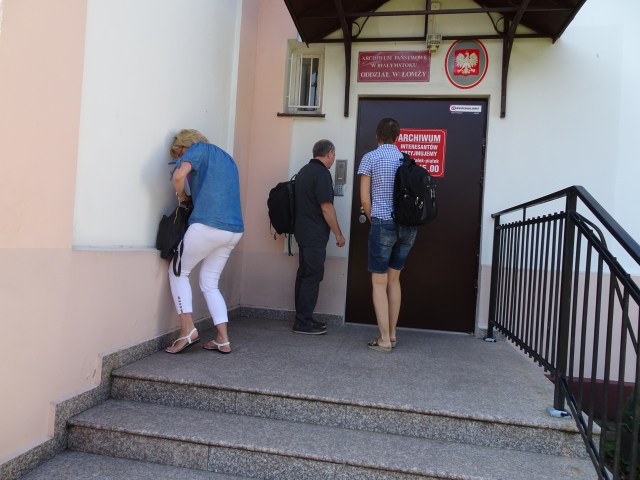
Such a short distance – 80 km from Białystok to Łomża. Driving didn’t seem so short. Actually it was our error. Someone read 30 instead of 80, so the half hour drive to the archives was much longer than half an hour.  The directions were pretty clear, but the archives themselves weren’t on the main street on which we thought we would find them, but off an alley and parking lot!  The inauspicious looking building held a wealth of treasures.

DSC02639.JPG

Our original plan was for some of us to stay doing research in the archives while the rest went off to a church repository.  Instead we all jumped into the records which the archivist kept bringing to us. She, like all the archivists we have met on this trip was wonderful and gracious and eager to help.

DSC02647.JPG

The room we were in was small and we took it over. DSC02640.JPG

As in our previous stops in Warsaw, Kaunas, Vilnius, and Suwałki we quickly became immersed in the task at hand, and the room was quiet except for an occasional gleeful comment when one of us located a name for which we were searching. Hours passed.

The pages were so fragile and yet had lasted so long. The writing, much of which was still very clear after 200 years. Page after page – the books I was looking was arranged by family, and I was amazed to see the same names in different languages – Russian, Polish and Hebrew. I watched the changes that took place as the names were written in the different languages as they morphed from one spelling to another, maintaining the same sounds but could clearly visualize how the sounds changed at a point in time. The Russian Лев when written in Polish became Lew – if the spelling remained the same on arrival in the US, the pronunciation would have now changed!

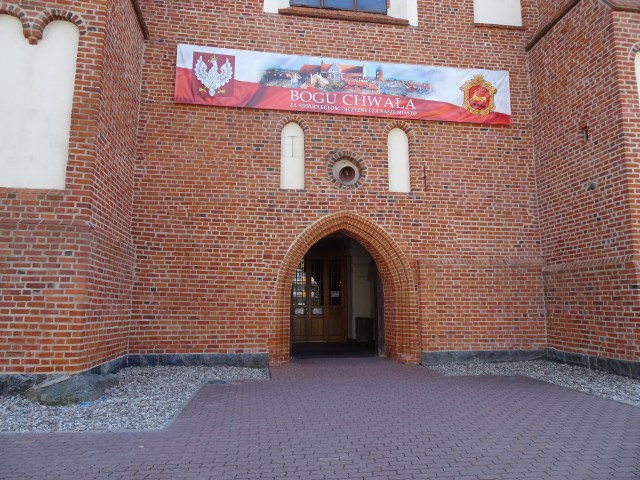
Marek and I left the others in the archives to finish up and walked about 15 minutes to the cathedral where the diocese records would be kept. We briefly met with a priest and a secretary, both of whom were eager to help, and we soon found ourselves digging into beautiful books. The paper was think, hand made and very durable and it was explained that the paper was such that it wouldn’t get ruined when wet. The ink was still dark enough to read, some pages looked like they had been written yesterday.  The handwriting was clear. The records we were looking at were all in Latin, and these were marriage records. Marek gave me clues to look for to find the names – “inter” would be followed by the name of the groom, then his parents, the next clue was “et” – and following which would be the name of the bride.

DSC02664.JPG

The cathedral office closed and we went back to the archives to meet up with the rest of the group and continue on to the next stop: cemeteries and parish churches. The priest at the diocese told Marek that the parish priest had some records we’d be interested in – conscription lists. It was unclear to anyone why the parish priest would have those, but they were of interest to us in locating an ancestral family, so off we went. When we arrived at the church, it was clear that some celebration was about to happen. The priest at first did not admit to having the records, until Marek let him know that the diocese said he did.  Because the celebration (a 50th anniversary) was about to begin, we were asked to return in half an hour. That, we thought, would give us time to find the cemetery in Wincenta, but driving up and down country roads did not yield the results we had hoped for, and then it was time to return to the church.

DSC02708.JPGDSC02719.JPG

I just realized, as I was writing this, that although the photos I have been taking are all of old buildings, we are also passing some wonderful looking new houses. They are just not what I am interested in and I search out these older structures to photograph. Most of my pictures are being taken as we are speeding by in the van. Lindsay, who is sitting behind me, has been great about getting blasted by wind every few minutes as I lower the window to take yet another photo!

We returned to Białystok where there was a very important commemorative exhibit in place from 16 – 19 August – this marked the 75 anniversary of the Białystok ghetto uprising. Our hotel is on a huge pedestrian mall with restaurants and shops. The exhibit was places on one side of the mall by the main pedestrian and vehicular thoroughfare. Across the street was the Białystok archives and the exhibit continued there. I was pleased to see people stopping to read the information about the ghetto and the uprising, and even on boards set asid for that purpose, to sign their names. The name of the exhibit is Białystok Remembers.

We should all remember.


Posted in Uncategorized | Leave a comment

Thurs., Aug 16 – Suwałki

We stayed at a pleasant hotel in Suwałki , The Loft. We arrived just ahead of the rain last night. One of the major challenges of a trip like this is balancing the time the travel itself takes with the limited hours that each archive is open and the directors are available to assist us, and our own desires to track down not necessarily places we can identify as part of the research we are doing, but places that are older and that help us (and our clients) to visualize what the town looked like when the ancestors lived there.  Some days are just not long enough.

DSC01987.JPG

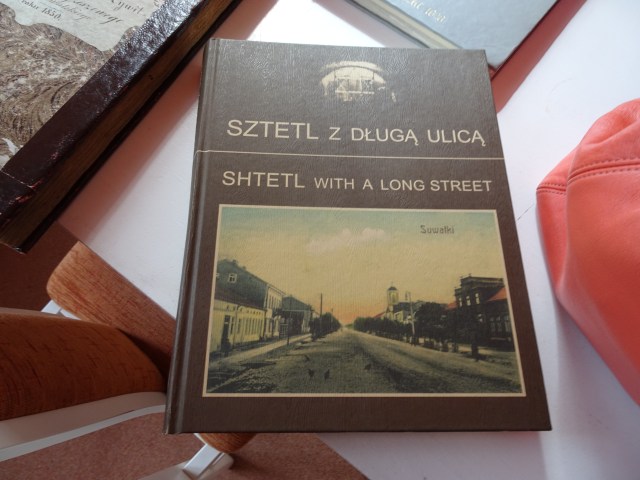
In Suwałki we found it impossible to find a balance. The archives were a real treasure. The Director was on vacation and took the time to come in and spend with us.  He showed us some recent (and exceptional) books about the area. We purchased one as a reference and know that there is one additional one we need to purchase.DSC01989.JPG

Helpful staff members brought out book after book after book (well, you get the idea). Which we spent the day pouring over. On some incredible lists of the Jewish community, we identified the names of people we were researching and kept looking for even more.DSC01993.JPG

Unfortunately the day was just not long enough. Although we had gotten to the archive at 8, by the time it closed, at 3, none of us had taken a break – of course we had neither food nor water with us, and we were exhausted. We hoped to be able to grab lunch (late though it was) before getting on the road to Białystok where we would stay for two nights. This will actually be the last time we stay for more than one night in a city until 24 Aug when we next stay in one place for two nights.

We chose a restaurant randomly (as seems to be the case for most of our meals) and waited about an hour for food to arrive. Finally, exhausted but slightly refreshed we got back on the road for a two hour drive. Arriving in Białystok was not as easy as we thought it would be. Poor google maps has a great deal of difficulty in pronouncing street and city names (usually rendering them less than intelligible), at least in the English version we used most of the time. Even the Polish version, competeing with speech for our attention could not guide us to the right alley way to find our hotel!  We drove around and around in circles before we found the correct road.

What was the day lacking? We didn’t have time to really get around in Suwałki. SOme days are just not long enough.


Posted in Uncategorized | Leave a comment

Wed., Aug 15 Vilnius to Suwalki

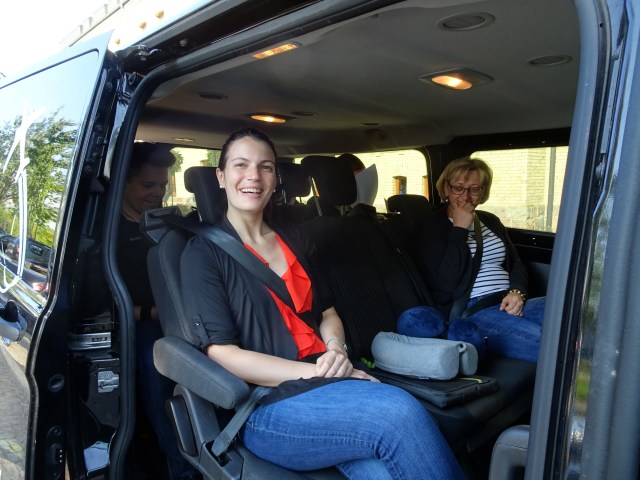
Today we took a longish drive – about 3.5 hours, and thanks to Marek’s careful maneuvering of the Euro-Style van, all went well. The border between Lithuania and Poland didn’t change in the week since we left – no formal border crossing. Our plan was to stop in Augustow as we did last week on our way to Mariampole.  This time we wanted to get some pictures of this beautiful resort town, and it was a great place to stop for a late lunch.

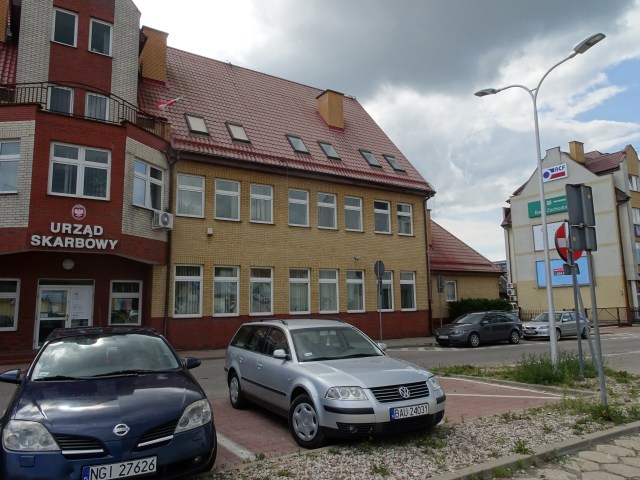
We parked the van and started to wander around, being very mindful of the growing storm clouds above us. We really didn’t want to get soaked again, if we could help it.  The rain did hold off (lucky us)!  The wing on the right side of the building below, the local tax office, is built over one of the synagogues. Although there is no sign of the thriving Jewish community that was once here, it is easy to imagine that any of us with ancestors who lived in nearby Suwalki or Bialystok may have come here for a day of picnicking by the banks of the river, or brought goods to the weekly market, to buy or sell. All the towns had markets but each had a specialization.DSC01955.JPG

We saw what looked like a festive gathering in the park where long ago, the weekly market must have been held. Now it was a flea market. Not that we were particularly in the mood for fleas, but markets like this often provide wonderful insight into culture.As we passed by chuckling at some of the “valuables” on display, something caught my eye and I stopped. I had to blink several times to get my brain to understand what I was looking at.

DSC01958.JPG

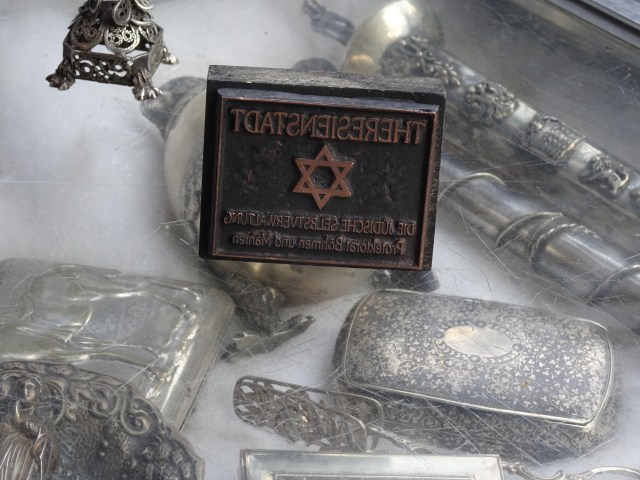
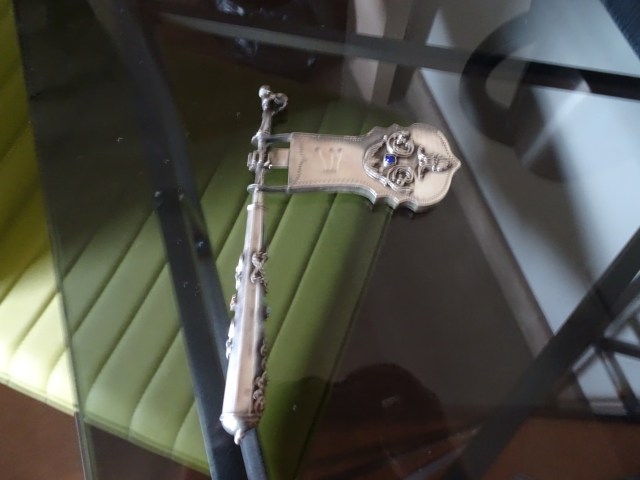
I looked closer at the display and gasped at the treasures that must have come from a Jewish home some where in Poland during the war. The seller who couldn’t have been any older than I am and is probably much younger, said that a while ago he had gotten an item like these and it sold right away so now he looks for them whenever he goes to buy things. I believed him, and wish that I could have bought everything there – redeemed the captives, so to speak, brought them “home” where their value (not financial) would be understood. The seller did understand the value of the silver, and acquiring the collection was beyond my means. I did purchase one item.DSC01986.JPG

It is a beautiful silver grogger crafted in 1873. We will use it on Purim during the megillah reading, and imagine it being used by a family long ago.

After I purchased it, the seller took out some other items which nauseated me, and I left.

DSC01957.JPG

These were armbands from the Warsaw ghetto, and the stack was covering the stars required to be sewn on clothes.

We stayed and took some photos of the area, later on had a late lunch, but my energy and mood are depressed and my heart is sick.

DSC01971.JPGDSC01983.JPGDSC01978.JPG

Posted in Uncategorized | Leave a comment