
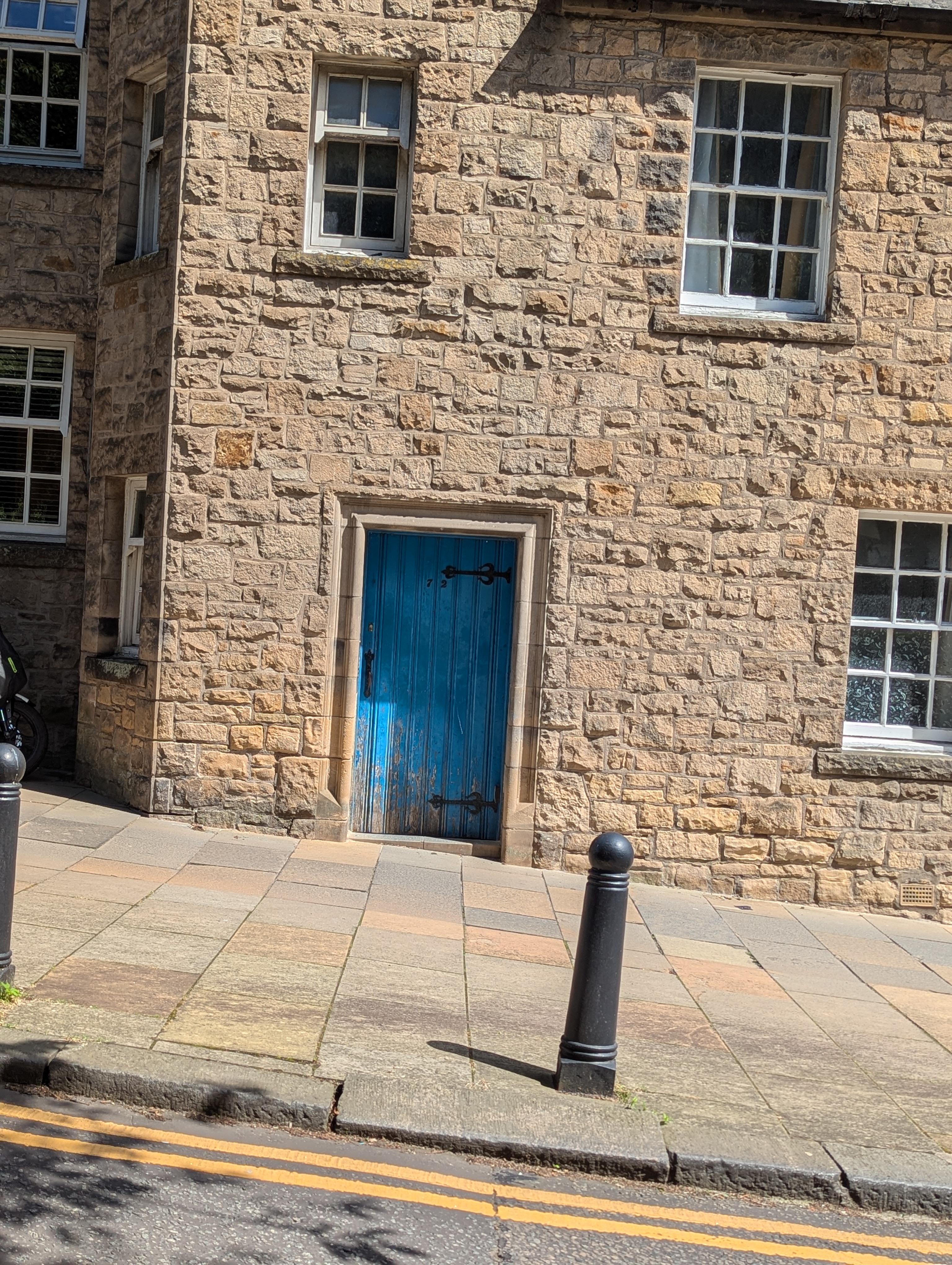
Neither the hills nor the extensive use of stone in streets and buildings surprised me. The stone buildings were interspersed with brick, probably from different eras, and even the ancient appearing stone walls and buildings were not all ancient. Surprisingly, we passed a number of turquoise blue doors – the sort of color more commonly found in the middle east, Greece, and New Mexico (there are probably more places but these are the places I’ve seen them most).
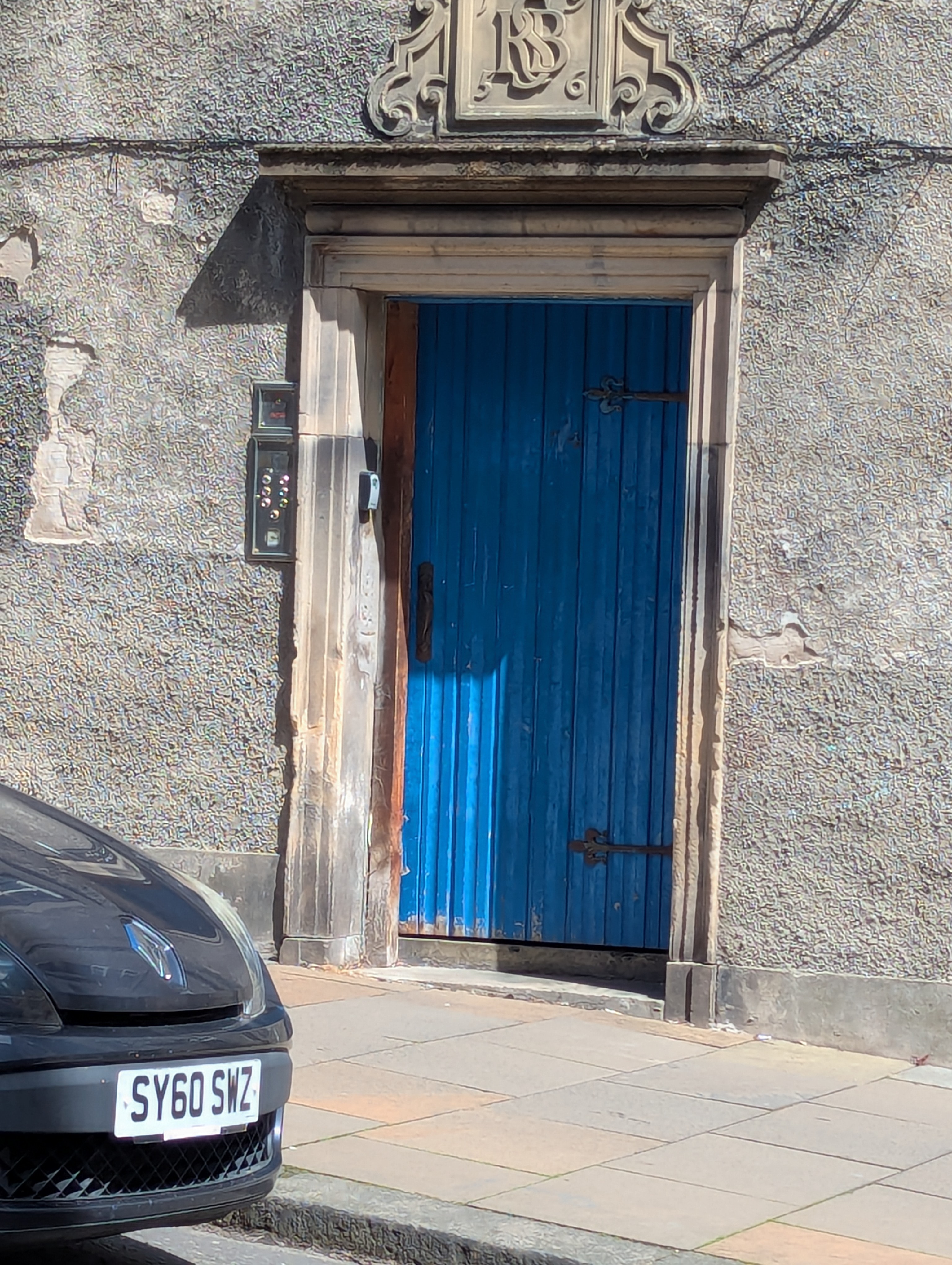
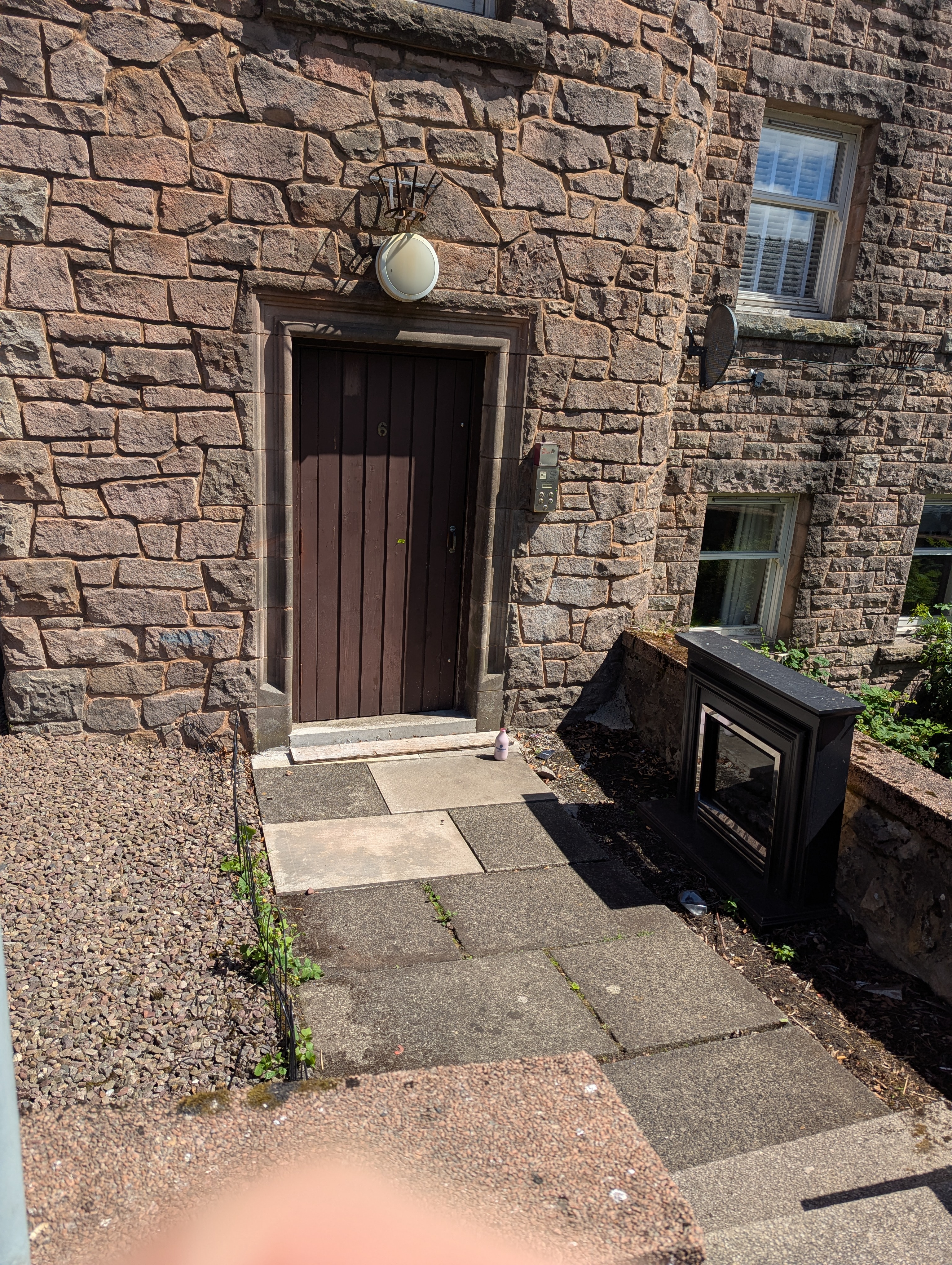
If you look carefully to the right of the door below you will see something that I don’t think is still found anywhere in the U.S. – a milk bottle. Door-to-door milk deliveries were common when I was growing up in Queens County, New York. At some point, the bottles were no longer just left by the door, but put in an insulated metal (I think) box outside the door.
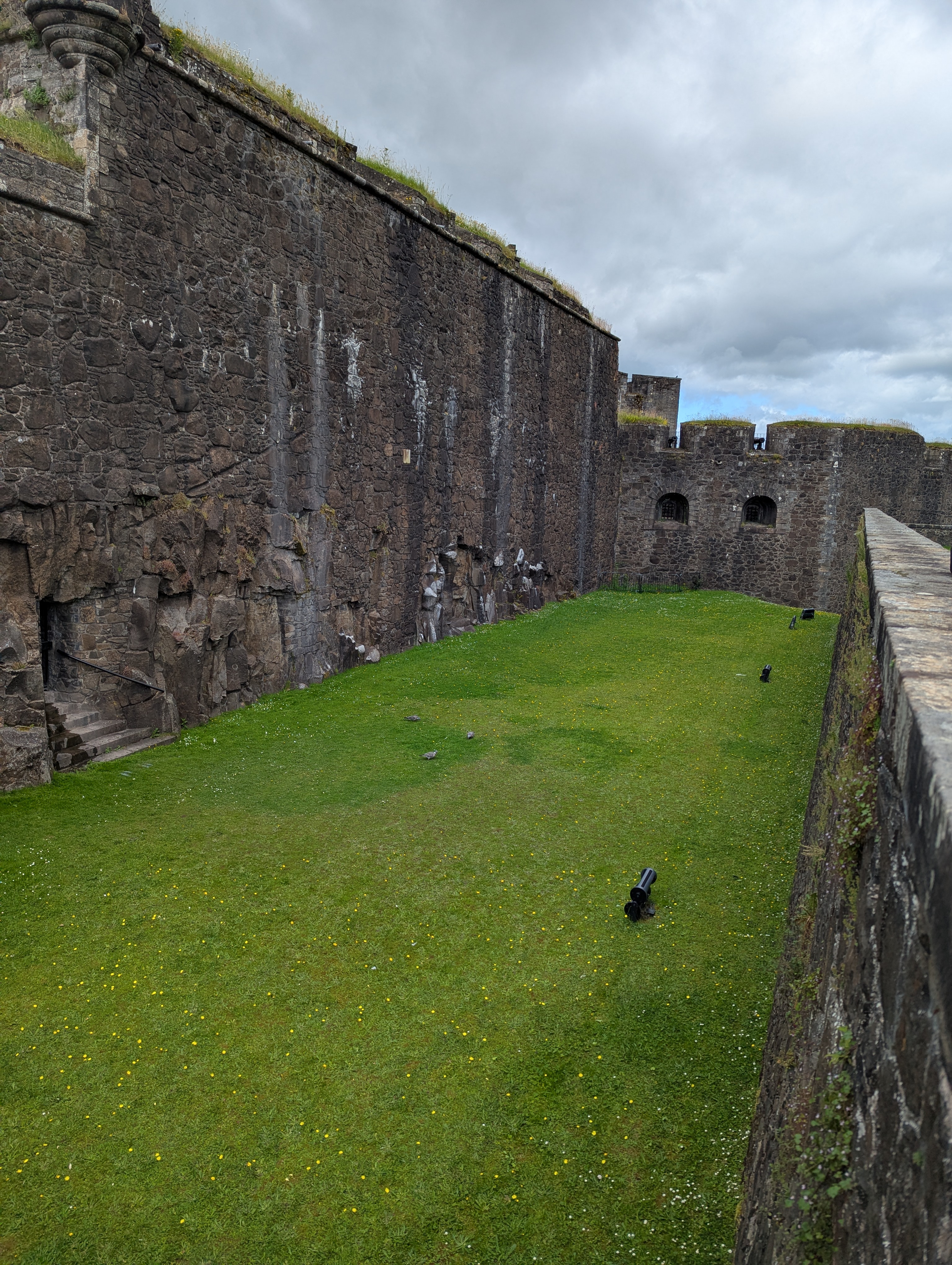
The moat outside the castle walls no longer has water in it, but is a lovely grass-filled space with wild flowers, and birds. Much more benign than when marauding raiders were trying to storm the castle walls.
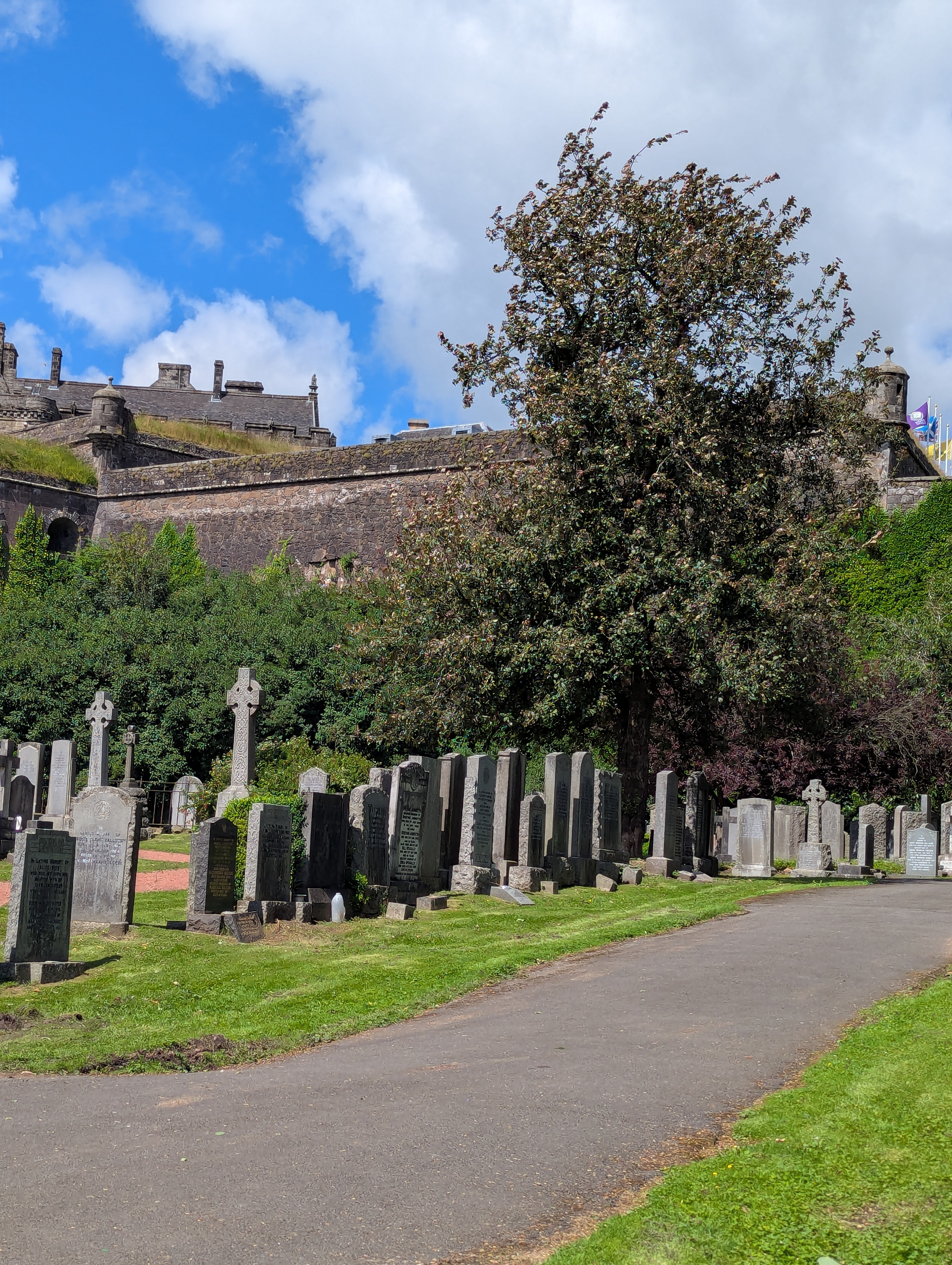
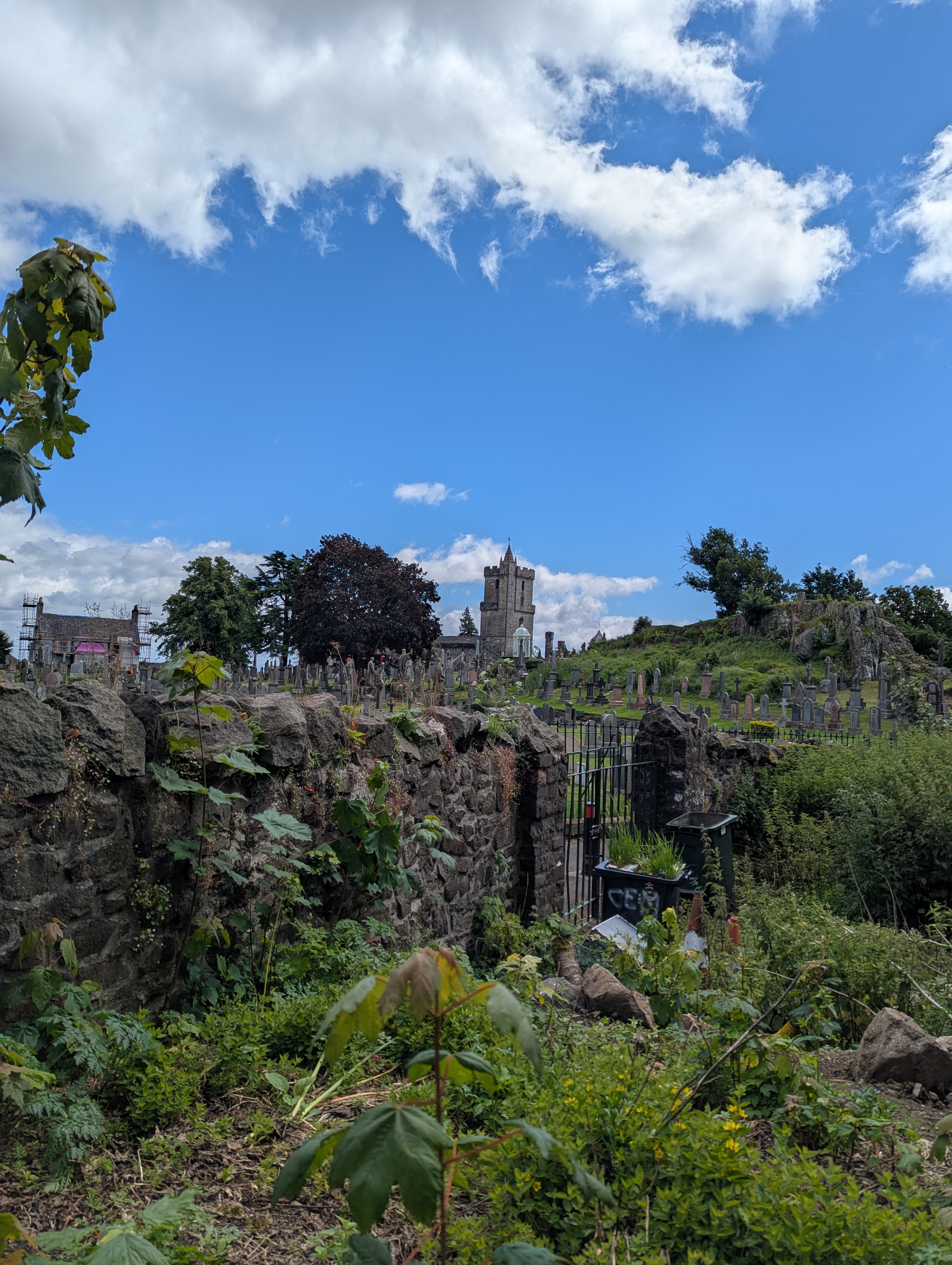
The Church of the Holy Rood, right next to the castle had a huge cemetery still in use. I know there must be some ancient graves there but I was too tired to explore more than just a fraction of the cemetery which stretches as far as the eye can see.
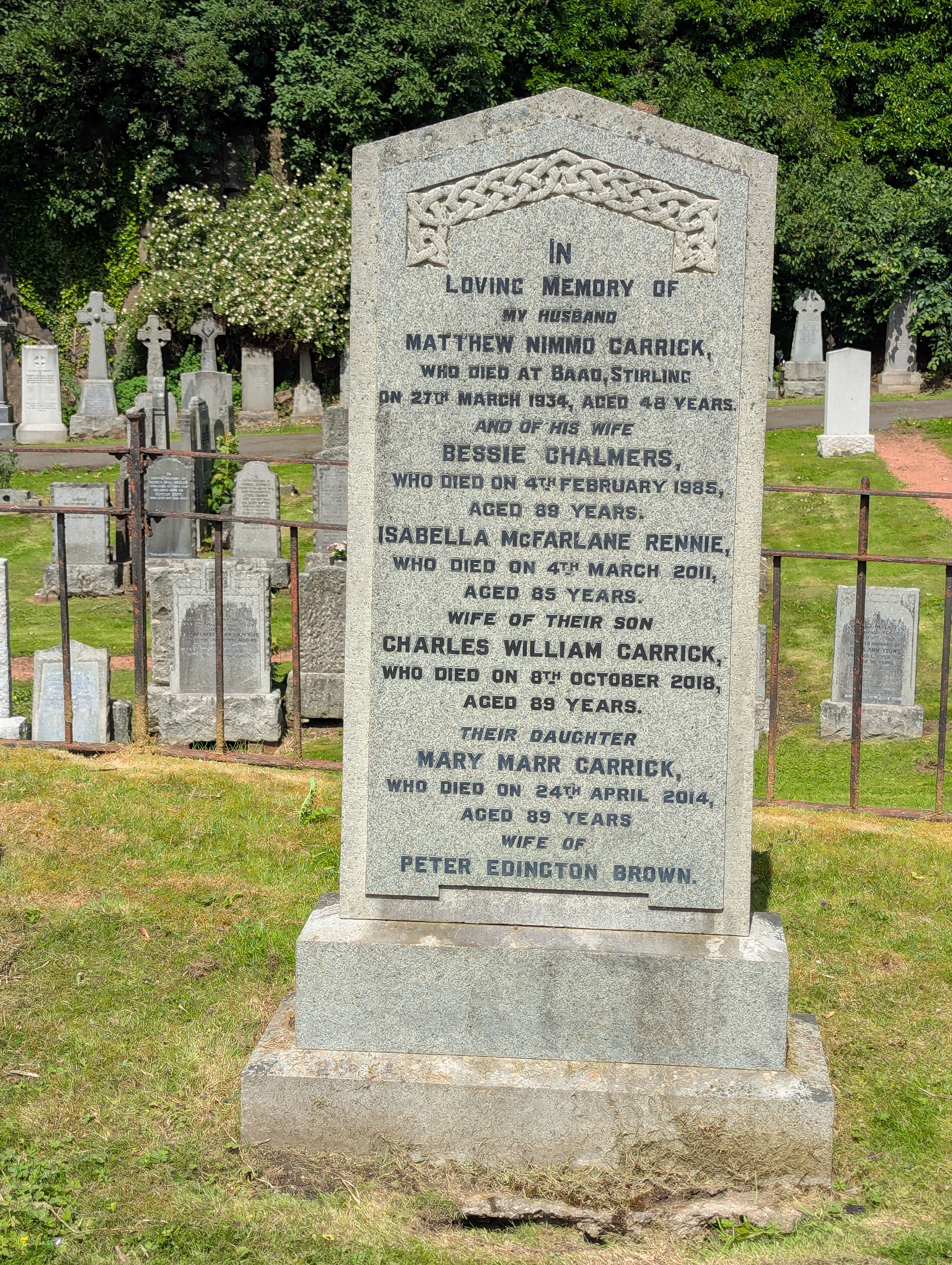
Some of the stones are a genealogists’ dream – several generations with relationships all noted like this one
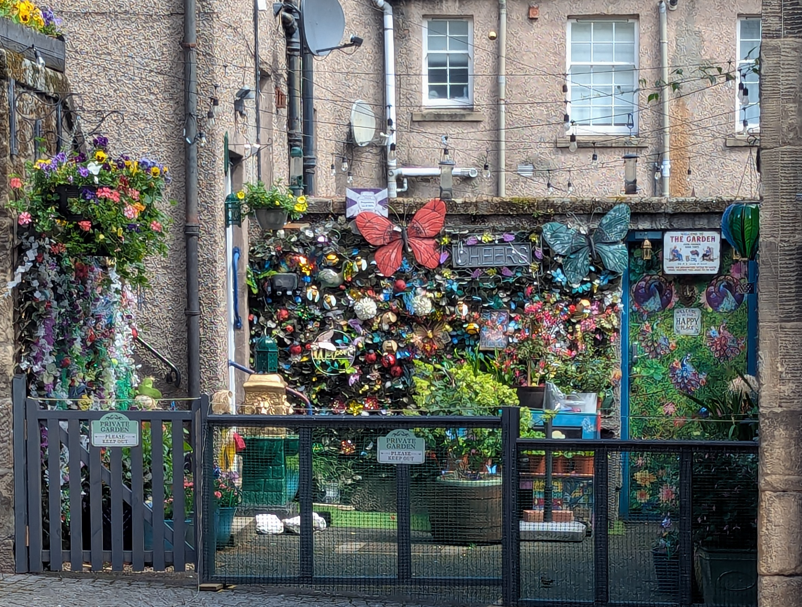
A wonderful garden with lots of imagination was (almost) hidden between buildings
Stirling was lovely and the views dramatic. The history here is incomparable – well that’s not true – there are so many places in Scotland with dramatic views and lots of documented history and legends.
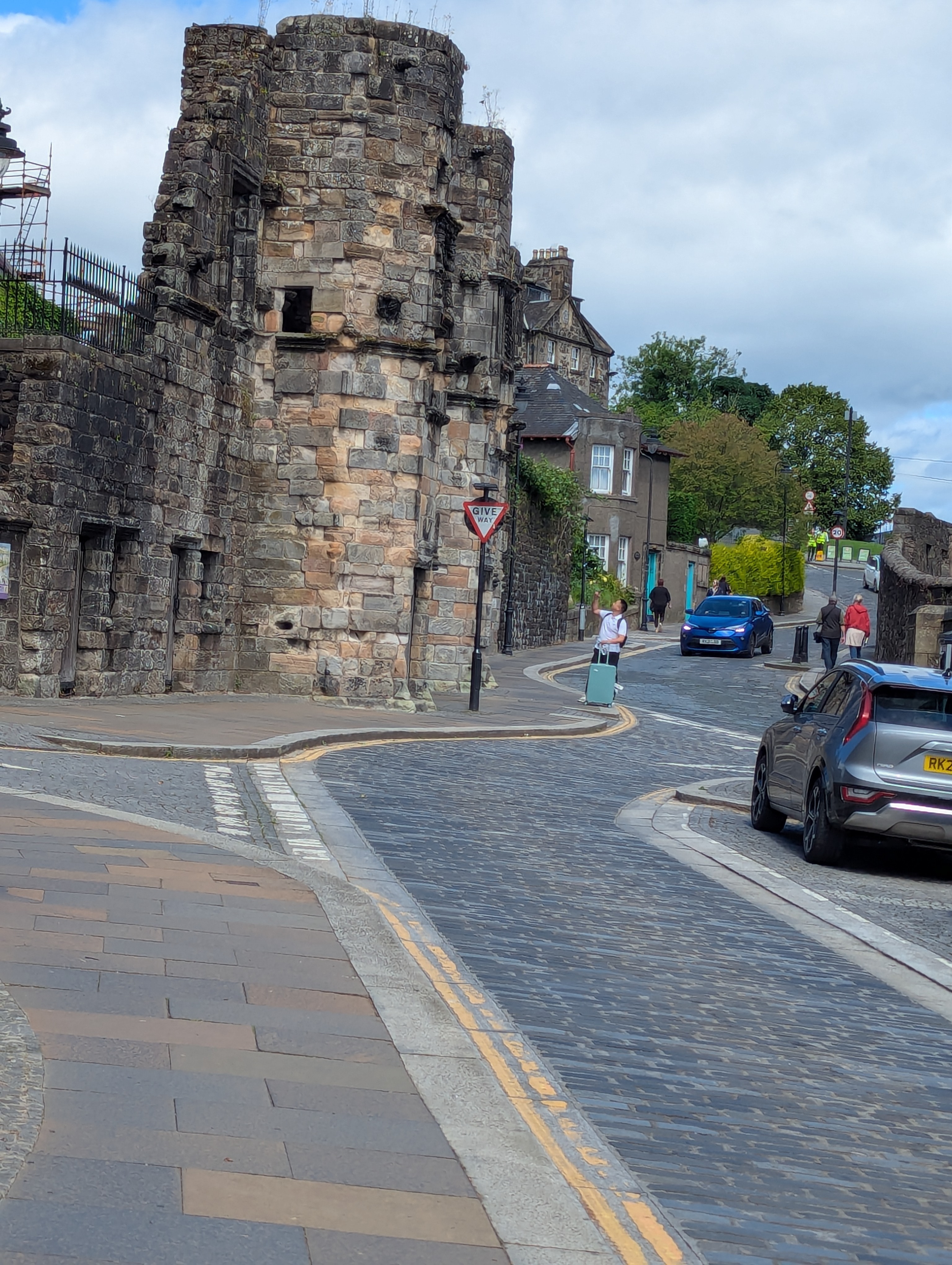
I am so sore at the end of each day’s trekking about. I clearly need to find more hills to walk up (and down) and a lighter way to carry a pack. Tomorrow back to Edinburgh for a second look.
 RelativaTree