
For the last few weeks, with (unusually) lots of free time while I’m in vacation mode, I’ve been reading. Nothing consequential, and in fact I kind of wonder why it is that I’m reading some of these books. Notably a series of books whose author, titles, and main characters I’m definitely not going to mention. These books are all fiction and about a genetic genealogist and her work. I’m not sure what the author is playing at. In several books he uses research in the 1960 and 1970 U.S. census to identify families. The issue with this is that U.S. federal censuses have a 72-year privacy rule, and the 1960 census won’t be accessible until 2032, the 1970 census until 2042. There are also many inconsistencies. The genealogist is taking clients for 5 years in the first book, sounds like 1 or 3 years in the books that follow which build on or refer to information from the earlier book, and other inconsistencies about relationships and activities. The genealogist leaves client material in full view of anyone who comes into her house, so client information is lacking confidentiality. The author focuses in part on reviewing over and over details of the research, analyzing it and re-analyzing it. That is of course as genealogists something we all do repeatedly as new information comes in.
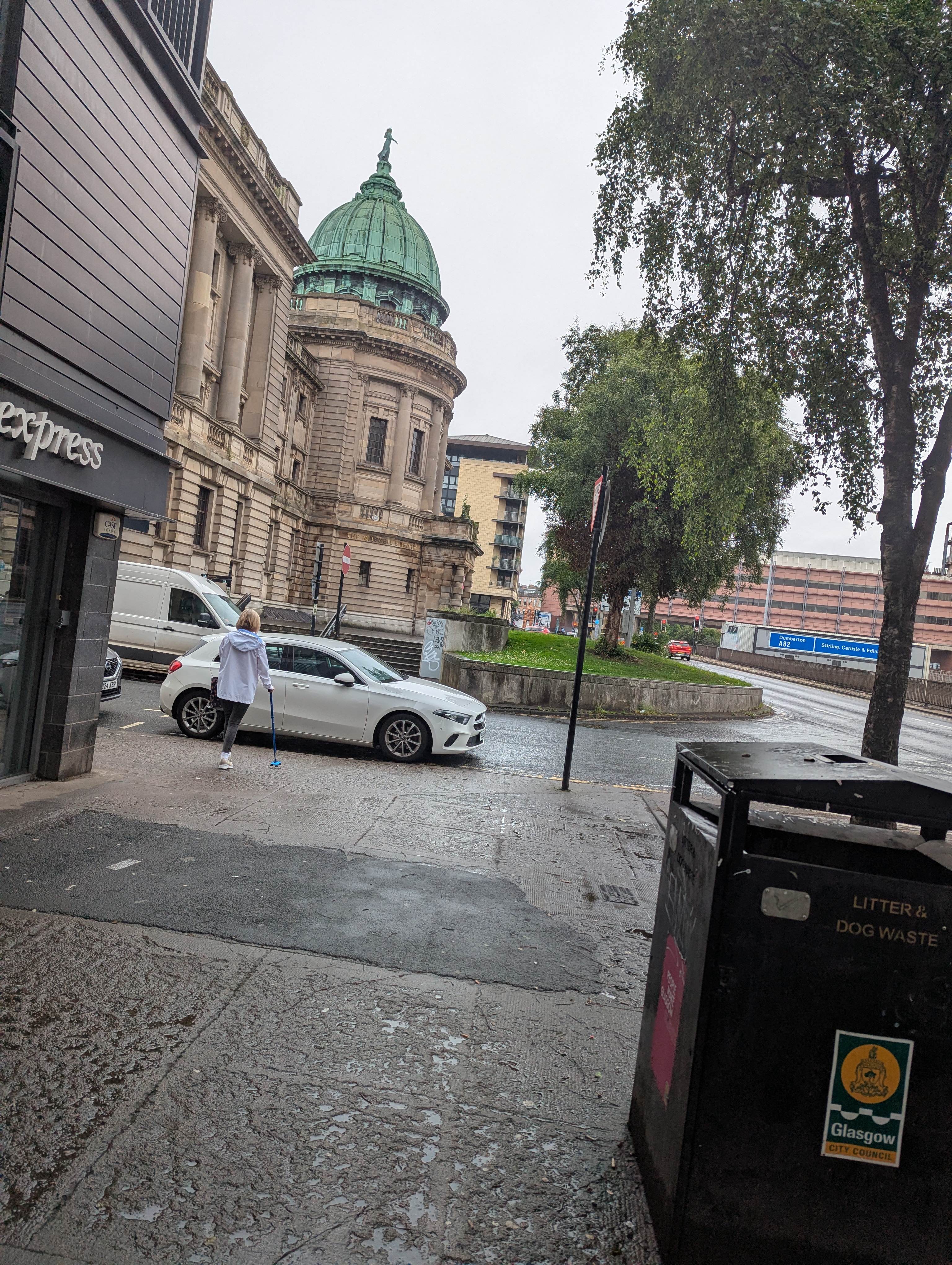
When I arrived in Scotland nearly two weeks ago, I had 3 things I wanted to do – attend a symposium and a conference, wander streets in Glasgow and Edinburgh, and do some family research. I have done all 3. It’s the latter I’m reflecting on my trip to the Mitchell Library, the largest library in Europe. It’s the green-domed building below as I approached it.
I thought I knew what I was looking for in terms of the research, and as in so many other projects, that wasn’t where I went. I thought I was trying to figure out the role of Juda Isak Landsmann at the Angl-American Fountain Pen Company at 92 Union Street in Glasgow, when he arrived in Scotland and why. Of course, the answers weren’t simple. I am grateful to Harvey Kaplan from the Scottish Jewish Archives Centre for helping me learn about Scottish records, recommending a trip to the library, and identifying some records for me. I had found records for Juda Isak from the United States Holocaust Museum a year or so before my trip and had his passport and identification materials, along with a lot of information about the Landsmann family and Juda Isak/s mother’s Winkler family. My research rarely takes me into Scottish records, and I didn’t realize I had materials that weren’t on my Ancestry tree. The tree had dates and some details but 16 years ago when I found Juda Isak’s death record, I didn’t add the record or where the information came from, only the date and where he died. I’ve been going trhough my tree for months in spare time to fill in blanks such as these, but with almost 18,000 people on the tree and other work, I haven’t gotten to it all yet.
I forgot I had a note from a comment Juda Isak’s sister Diana made sometime between 1986 when I was first in contact with her and the family, and her death in 1995, was that Juda Isak and his wife fought in the Spanish Civil War on the side of the loyalists, and went to Scotland after that. Her comment identified approximately when he came to Scotland but I also thought it meant Juda Isak and Bluma arrived after their marriage. Thank you Harvey, for locating their marriage record in Scotland in 1942. Juda’s death and marriage records listed his occupation as a commercial traveler. I also had forgotten a sort of throw away line in a letter he wrote to my grandparents in 1948 saying he had embarked on a new business venture. I remembered it as I was looking at directories beginning with 1938 at the Library.
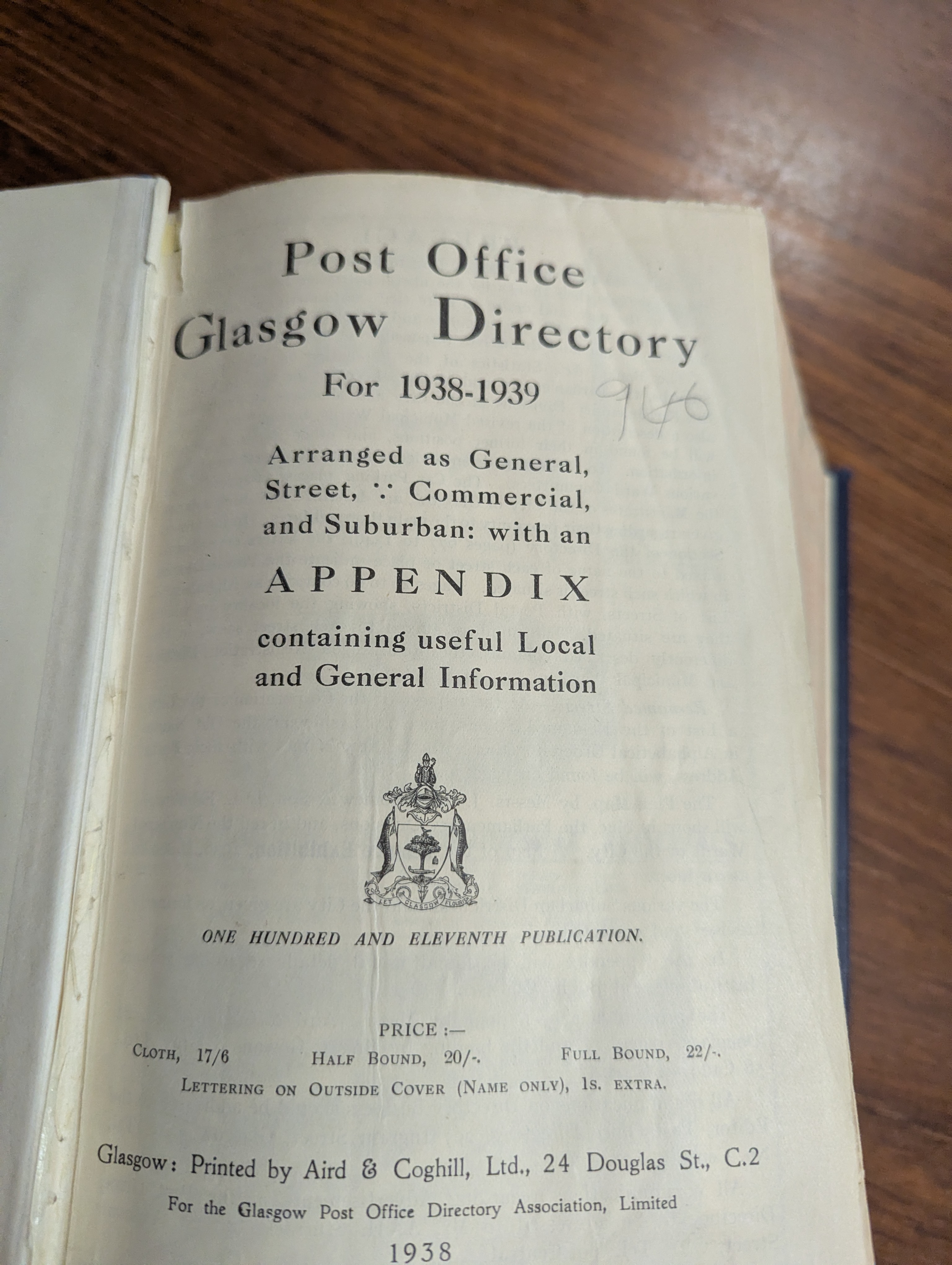
I looked at the Post Office and Kelly Directories up until 1959, the year after Juda died. The 1949 Kelly Directory was the only one listing the Anglo-American Fountain Pen Co. Juda Isak’s address at the time of his death was 335 Victoria Road, and I only found him living at that address for a few years, starting in 1955. Prior to that, he doesn’t appear in any directory – perhaps he and his wife were living with other people.
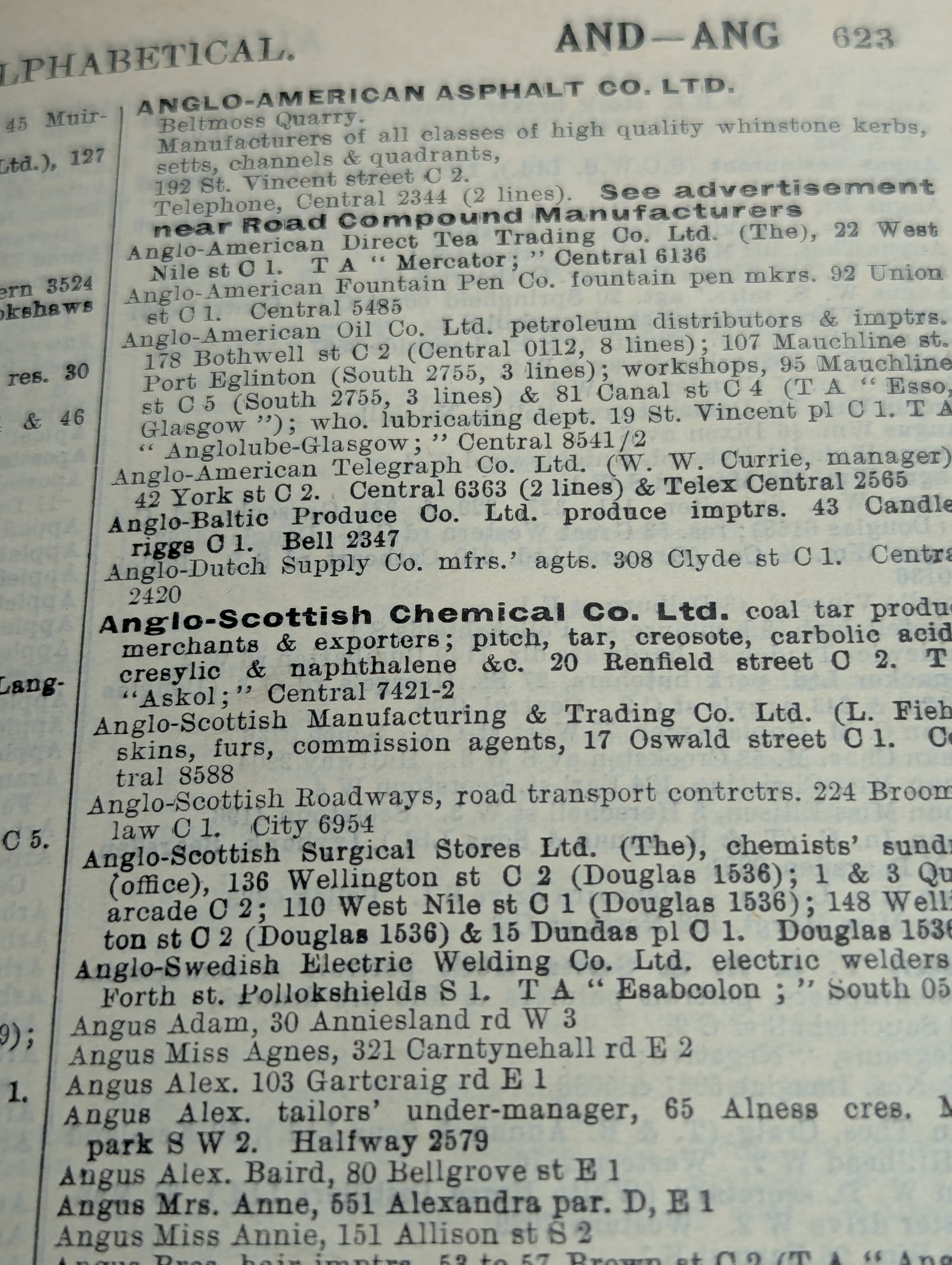
At the time of their 1942 marriage, Juda Isak and Bluma listed their address at 1 Hamilton Park. Their witnesses were B. Spevack and M. Korn living at the same address. I didn’t find M. Korn at that address, but did find B.M. Spevack, and a listing of his occupation.
Bluma appears to have gone to the U.S. in 1949 or at least that’s the year she returned to Scotland. I’m waiting to receive her 1960 naturalization records – she appears in the Electoral registers in Glasgow starting in 1961.
Obviously I need to do more investigating and need to carefully review all my old correspondence with Diana through her granddaughter, my cousin Ella.
It was fitting given the rainy weather that on my walk back to the hotel from the Library, that I pass a pub called The Duke’s Umbrella.
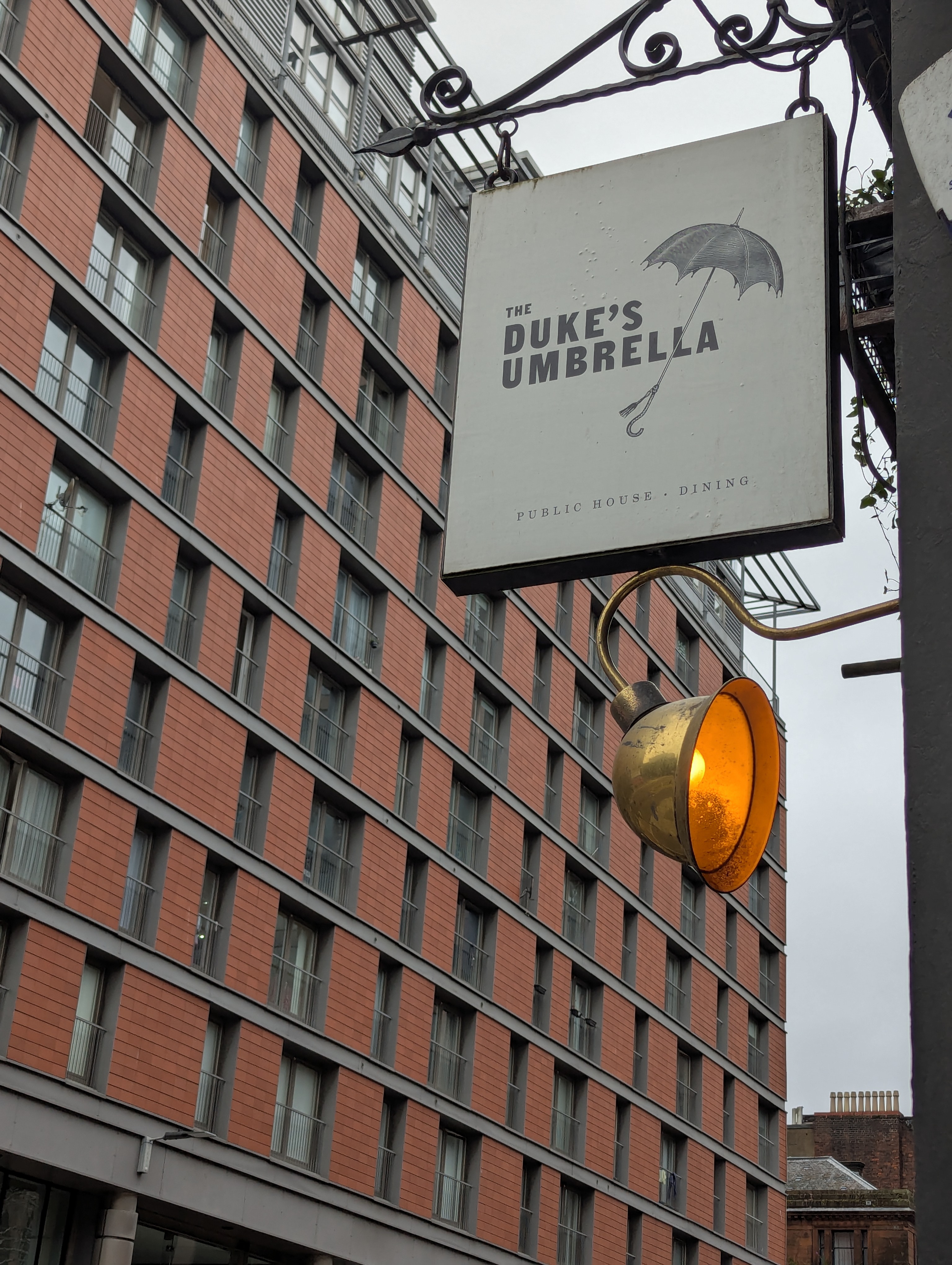
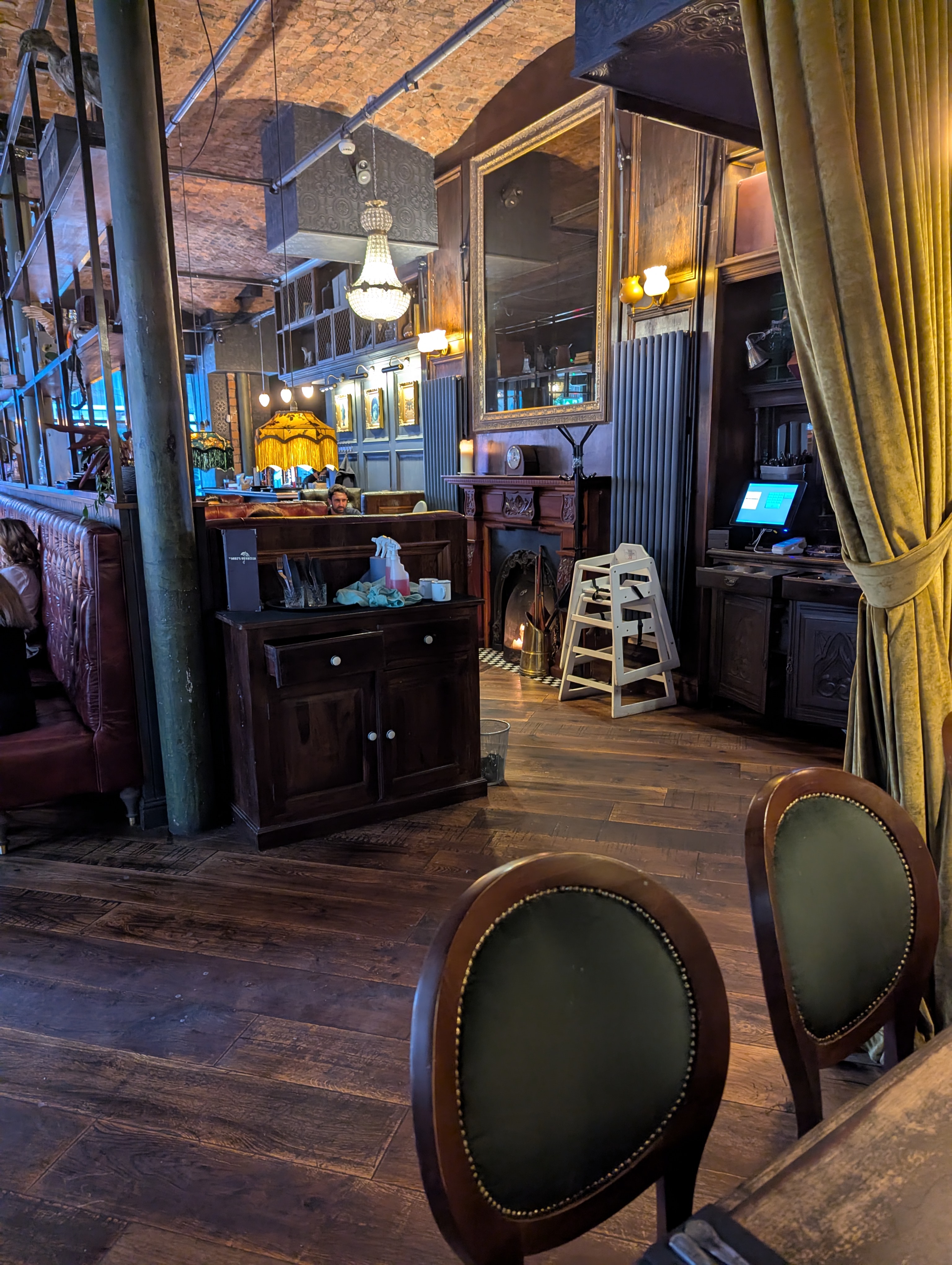
There were plenty of vegetarian options so we stopped by. I have a cilantro allergy (really, an allergy not just a dislike). Cilantro is coriander. Although there are forms of coriander I’m fine with, I was not going to chance it on vacation. It turns out that almost everything on their menu uses a form or coriander, not just as a garnish. I had a small salad and lentil soup accompanied by St. Giles Ale, and followed by an almond orange tart. Perfect!
Tomorrow (Sunday) is our last day here. I’ve really gotten used to vacationing. It grows on you.

