Hunting in Zhytomyr

For many years I have been searching for my Moldavsky family. I know my grandfather, Ber Moldavsky was born in Zhytomyr. When I was on-site researching in the Zhytomyr archives in 2009, I found his birth record. That record identified his parents and his grandfathers. Since it had his parents’ names, and I already knew who they were, I knew I had the correct person.

Ber’s father, Simche, left Europe in 1906 for the United States. Ber was born during his father’s journey. Simche’s wife, Shaina Mintza Farber and her 3 older children had, I speculated, gone to live with her mother in Zhytomyr. They probably stayed there until Shaina Mintza, now with 4 children, left for the US in 1910.

Simche’s passenger manifest gave his last place of residence as “Ozjew”. That was written pretty clearly. For years I thought it must be somewhere near Zhytomyr but didn’t find any place with a similar name where Jews had resided. I also thought that because I found no other records for Simche, that perhaps this Moldavsky family did not reside in Zhytomyr for long. I knew that Shaina Mintza’s family had probably been in that area for several generations and during my research in the archives found records for the Kaminer family and the Farber family, the latter being Shaina Mintza’s birth surname and the former being the surname of a family one of her siblings married into.

Now I have new information, thanks to the dedicated Ukraine SIG volunteer who is translating the Zhytomyr vital records for indexing. I found the 1868 marriage record of Simche’s parents! The additional information I got from that record included his grandfather’s names and his mother’s maiden name. Additionally it did not record that his parents were from outside of Zhytomyr. This means that the family had been in Zhytomyr longer than I thought, and perhaps I just hadn’t look far enough into records when I was researching.

I decided after identifying the 1868 marriage record, to look further in Shoah records to see if any of the family appeared on any lists. I did find many people who were killed, with that surname,  and who had either Pages of Testimony or were on lists collected by Yad Vashem. To my surprise, I think I’ve now identified that mysterious Ozjew!  There is a place called Orgejew that was in Romania during the interwar period and in Bessarabia before WWI – this was really Orgeyev and now is Orhei, Moldova. Orgiejew was the Polish name for it. There were two families named Moldawski living there who were killed during the Shoah with their children who were born in the 1930s. What if Simche, Shaina Mintza and several of his siblings went there?

I don’t have the answer to that question yet – I have to do some research in Romanian and Moldovan records, now. It does mean more work, but I’m excited – after over 30 years of research, there is still more to be found.

Posted in Uncategorized | Leave a comment

Importance of Remembering

I’m not speaking of remembering to write in my blog on at least a weekly basis. That was a rather hopeful 2017 resolution which failed almost immediately.  I’m speaking, rather, of the importance of keeping people and places alive in our memories and documentation so that there will be a place for them in the future.

Once of the tragedies of immigration from Eastern Europe to the United States, at least among Jewish immigrants in the late 19th-20th centuries is a lack of connection or continuity for their descendants. I know that’s a broad stroke, and our families all took with them stories that they might have repeated to their children and grandchildren. Those stories with details of daily life are very important, but they often left out details, like names and specific places. It is the memory of at least the names and perhaps some small details of the lives of those ancestors that I feel compelled to discover.

My paternal grandfather spoke of an older cousin who he called “Julius” who had run away to serve in some army at a distant place. That’s right, he didn’t run away from being conscripted, but rather to join an army. Periodically he came back to where my grandfather and his parents lived, in Suczeawa, and my great-grandmother would roast a leg of lamb. My grandfather neglected to provide a surname for Julius, but did say that he eventually settled in England and became a barrister or solicitor or maybe a member of the House of Commons. My grandfather was born in 1903, so all I really know is that this happened after 1903 and before 1920 when my grandfather came to the US.

My grandfather, Harry Silberman died in 1985. A few years before he died, he asked me if I could find a person who was very important to his mother, Perl. This woman was in Montreal. Her last name was Goldenzweig – he didn’t know her first name.  Back in those days there were few resources readily available to a genealogist with limited funds for on-site research. I looked in the places that were available, and periodically would look some more over the ensuing years. I found people named Goldenzweig in Montreal, primarily in cemeteries and death records, but I had no idea who I was looking for or even why.

When my grandfather died, he left behind boxes and boxes and boxes of old papers and letters. Since his death, I have had most of the letters translated from Polish, Russian, German.  There were several letters in Yiddish and one letter in a language no one was able to identify. I finally found a great Yiddish translator who translated the Yiddish letters, from my great-great grandfather, Moses, Harry’s dad. They are for a future post.

Once the Yiddish letters were translated, I pulled out the unidentifiable letter yet again. I must have looked at it dozens of times over the years.  This time, I realized the letter was in German interspersed with Yiddish.  I could not make out any of the words. A fantastic translator was able to translate the difficult to read German and to my shock, it was from a woman whose surname was Goldenzweig.  Her first name was Bertha, Yiddish, Braina. From that letter, I discovered her identity. She was my great-grandmother Perl’s sister. Perl was Harry’s mom, so this was from his aunt! Harry, based on my conversations with him, had no idea. Further research revealed that she and her husband had left Galicia in about 1901, before my grandfather was born.

Perl arrived in the US in May 1928. Bertha died in Montreal in May 1929. She had no children. Although her husband survived her,it seems that he never communicated with Perl. Whatever the reason, Perl never knew that her sister died.


Posted in Uncategorized | Leave a comment

Name changes in modernity

We often consider the names our ancestors adopted after they arrived in the US, and try to figure out what names they might have used in Europe. There are myriad reasons for a person changing her name(s). One of my relatives I think went about a name change very creatively.

My aunt Ethel who died in 2004 just short of her 101st birthday was an amazing woman. She nursed her mother through her last illness, and then did the same a few short years later for her husband. For fifty years she lived alone. She worked in a large department store in New York for many of those years.

Aunt Ethel had an amazing memory. She arrived in the United States as a 7 year old. Yet, when I asked her if she knew what ship she arrived on and when, she told me without hesitation. When I went looking for the ship manifest experts (this was pre-mega-databases on-line) told me the ship she names did not sail in that year and didn’t go into service until 10 years later.  My aunt was right, though, when I found her passenger list, it was on the ship she named and on the date she claimed to have arrived.

One day I was asking her about her husbands’ family, about whom I knew very little.  Since genealogists abhor data vacuums, I wanted to know. I told her that I couldn’t find the Needleman family anywhere.  She told me something that amazed those relatives who had known her far longer than I did. She said that her husband’s name wasn’t Needleman, it was Nudleman, but, aunt Ethel said, “what kind of name is that, so I told him it had to be changed!”

Silly me, I thought she meant that it was changed when they got married in 1928. Then I found the 1930 census under the name Nudleman, and other documents later than that all of which said Nudleman! I finally found out how she took care of it!  Sometime between 1930 and 1940 the shift was made by changing the “u” to “ee”. In 1940 the name that Ben, Ethel’s husband, gave to the enumerator was Needleman. Ethel took care of the rest – she took their marriage certificate and penciled in ee over the u! Their original marriage record was of course, untouched. Now, admittedly, the difference between the appearance between the two names isn’t great, but they sure do sound differently!

Posted in Uncategorized | Leave a comment

Starting 2017 with resolve!

The 2016 IAJGS Seattle conference is but a fond memory, and now it’s time to get to those things which took a back seat to conference planning.

For the last six weeks I have been attending to tasks that I have threatened to start, but in moments of sanity (or laziness) have avoided. Our garage had become a warren of cardboard boxes, mostly empty because you can absolutely never tell when you will need one – so I tasked myself with tackling them all, getting shelves in the garage and getting organized. As of this morning, that is completed.

I am still in the midst of re-organizing a closet in our study. I think the last time anything was taken out of that closet was over a decade ago.  Although the stacks of things (lots of empty boxes) have not fallen down or even threatened to, they did need to be taken apart.  We have filled the car with trash to take to the dump twice (in addition to filling to overflow our garbage and recycling bins twice).

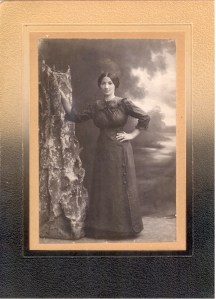
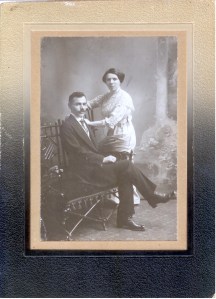
In the midst of all of this, time had to be taken to scan photos which should have been scanned years ago.  There are probably hundreds if not thousands that need to be done. Most, thankfully, had some identifying labels but some had no label.  Others had labels,but aside from the names of the people in the photos, I don’t know anything about them. I wish I did.  My great-grandfather was Simche Moldawsky. The woman alone was his sister, Malke. The couple were his brother and sister-in-law – Moshe and Sura. I know my grandfather was born in Zhitomir, Russia – I have his birth record. I know that his mother’s family was from there, but that his father’s family was probably from a distant place. I have no idea where.  Ah, so back to the 2017 resolve – this year I pledge (and I hope I can do it) to write a blog post at least once a week, and discuss the brick walls I encounter,. some of my successes and some tips I pick up along the way!

moldawsky-malke-sister-of-simchemoldawsky-moshe-and-sure


HAPPY 2017 to all!

Posted in Uncategorized | Leave a comment

My news

I have been quiet for the last several weeks making adjustments and shifting gears.  I am very proud to announce that I have joined the team at AncestryProGenealogists as a Senior Research Manager.  Although my bio and photo are not yet on the website, you can reach me there, or continue to reach me at RelativaTree.

I am really excited to be working with such a great team of researchers and to have so many additional resources available to me.  I continue to work with all types of research problems/questions/challenges in the United States and overseas and my specialty will continue to be Jewish research.

Speaking of Jewish research, the IAJGS annual conference will be held August 7-12, 2016 in  Seattle and I am the Lead Co-Chair.  If you’ve never been to Seattle, now is a great time to make plans to visit and see all the resources for genealogical research.  If you have been to Seattle before, now would be a great time to visit it again – there have been lots of new genealogical resources since your last visit!

Posted in Uncategorized | Leave a comment

Conferences

Genealogy conferences are very different from other conferences.  At other conferences, most based on affinity groups, the common interest, professional or hobbies is what brings people together.  Although that common interest is certainly an attraction at genealogy conferences, the connections between people literally go deeper.

Yesterday, at the IAJGS conference in Jerusalem, amidst all the wonderful discussions about methodologies, techniques, tools and resources, there was another thread that was consistent.

This other conversation was about familial connections and finding relatives among the conference attendees.  Sure, at other conferences there might be conversations among attendees seeing who knows whom in the city in which you live.  This though is very different.  The conversation is extremely personal – it generally begins with the question “where is your family from” and progresses very quickly to comparing surnames to see if there is a family connection in that town.

Some attendees come to the conference knowing that there is going to be someone in attendance with whom you have already established a familial connection, but who you may never have met before.  At one earlier IAJGS conference in France, I finally met a cousin with whom I had been corresponding for years, without ever meeting in the U.S.  At the IAJGS conference in Boston a year later, I was able to meet two other cousins.

There is a strange tie between people with whom you share a common ancestor.  Having a place, the conference, where the chance of meeting a previously unidentified relative or one with whom you have been in contact but never met, gives the conference an undercurrent of excitement.

I feel very privileged to be the next IAJGS conference lead co-chair.  That conference will be in Seattle, Washington August 7-12, 2016.  Hope to see you there.

Posted in Uncategorized | Leave a comment

Review and Refresh

Presentations at IAJGS are wonderful.  Today, I went to 3 sessions all of which looked at records that I am very familiar with.

So why, you might ask did I do that?  The presenters in each case were all experts in the types of records they were discussing.  As in so much else in life, reviewing things with which you are already familiar serves a purpose – it gives you a fresh perspective.  For the most part, today’s discussions focused on vital records.  And no, a birth record is not a birth record.

In other words, all birth records are not the same.  In different years and in different places birth records look different.  I spend a fair amount of time in the New York City Municipal Archives, and even New York City birth records have changed through time.  Eastern Europe has changed borders many, many times.  The area we call Ukraine today not too long ago had much different borders and those borders were not stable for extended periods of time.  Different political entities had different rules about the data on birth records.

What did today’s discussions give me a fresh perspective on?  They reminded me that I need to really examine the comments section on the records (and not just birth but other vital records) and get those comments translated, not just rely on my own understanding.  They also reminded me to look closely at the birth places of the parents of the new born.

Some of the comments can open the door to new areas of research, and that information, along with the birth places of the parents can often give us the tip of the iceberg in what might become a very interesting family story.

Posted in Uncategorized | Leave a comment

Exploring Archives and Local Resources

I am very excited to be off to the IAJGS conference in Jerusalem.  One of the wonderful things about genealogy conferences is getting to explore local archives and resources.  Although many archival resources are on-line today, there is no substitute for walking into an archive and having the archivist take you on a tour through the facility, describe what kinds of data are maintained there, how new data is acquired and how you, as a researcher can access the acquisitions.

In just a few days I’ll be meeting with the director of the Central Archives for the History of the Jewish People (CAHJP).  I have done long-distance research and correspondence with the CAHJP for several years and have met the director in person, but not on the premises of the CAHJP before.  I do know that the holdings there are quite extensive and much is still not digitized.

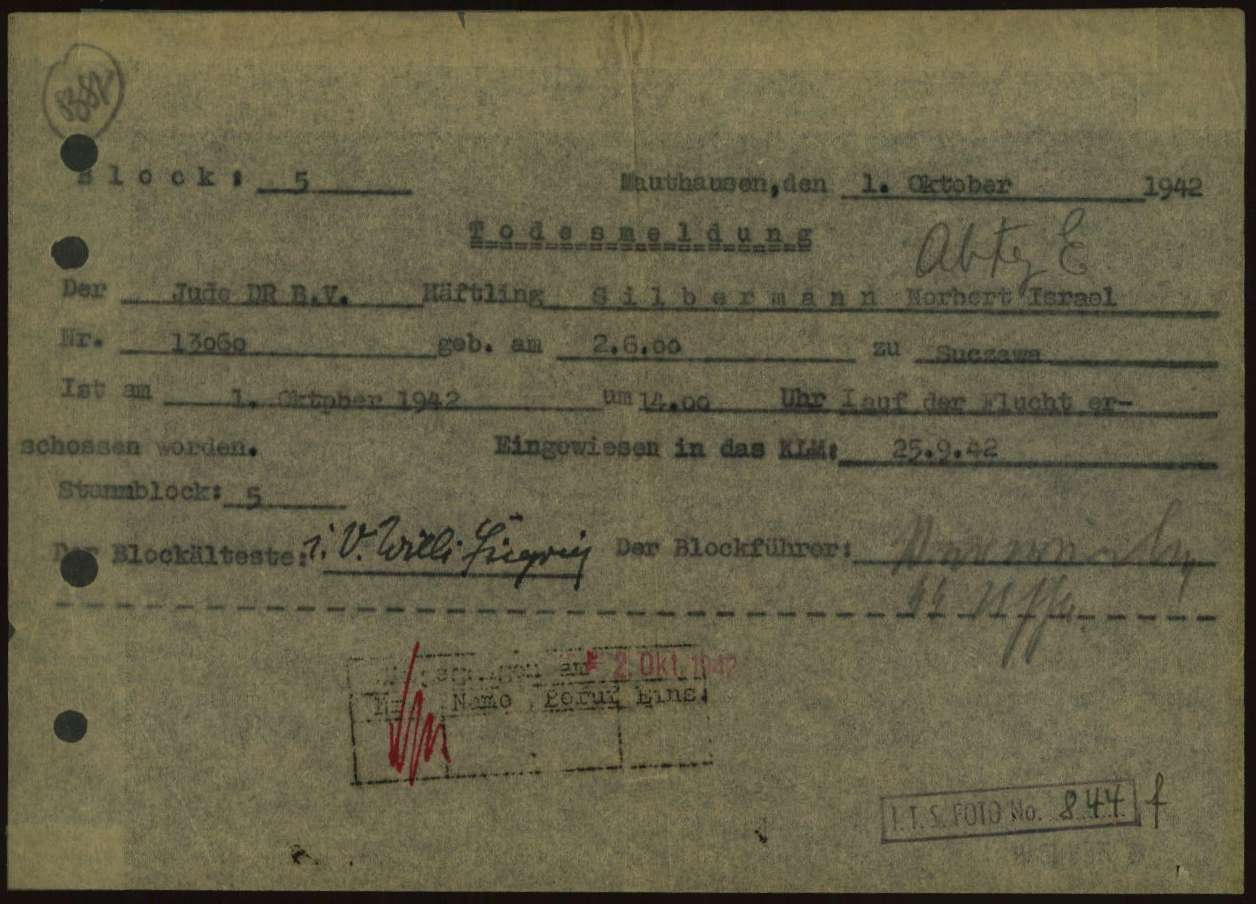
The first time I was able to look at archival material in an archive outside of the United States was about 20 years ago.  At the time I was researching someone who had died in the Holocaust, and had virtually no documentation about him, only some family stories that Norbert Silberman, my grandfather’s brother, had died in Mauthausen Concentration Camp.

The archive in which I spent a day researching was at Yad Vashem.  That day, I struggled with microfiche after microfiche, looking at the names of survivors and at those who had been murdered.  These were Red Cross records and records from the camps.  When I finally found the record of his interment and death I was overwhelmed by emotion.  Reading a transcription would just not have been the same.1761722_0_1

Other documents that I have found in archives since that long ago trip to Yad Vashem have certainly not been as dramatic but the experience of being in an archive is always amazing.

Sometimes, as was the case in Ukraine, the materials are neither digitized nor on microfilm – instead, you handle the original documents, some of them hundreds of years old.  When researching those archives, I was very taken by the paper, some of which was handmade, the handwriting on documents, and the thrill of handling the originals.

A trip to an archive is always an experience that has the potential to open up doors.

Posted in Uncategorized | Leave a comment

Names are NOT generally unique!

Sure we are all unique individuals.  Even identical twins are unique individuals.  So why would we think someone’s name we are researching is going to be a unique experience?

The best way to illustrate or explain what I mean is by describing an experience dealing with two people on my family tree.  The combination of the two names is probably a unique combination (but maybe not) but what they did with their names is certainly not unique.

Esther Leah Millontzik married Samuel Czidovetsky.  When they came to the United States they changed their surname to Goldberg and they became Esther and Samuel Goldberg.  Someone I do not know had an Esther and Samuel Goldberg in their family tree and decided that their Esther and Samuel were the same as mine.  He sent me an inquiry and asked if he could join my tree so he could see all the rest of the information I had and incorporate my data into his.  By way of proof he sent me his Samuel and Esther’s parents names.

My Samuel’s parents were Harry and Hannah (Chaim and Chana) and Esther’s parents were Harris and Rose (Tzvi Hersh and Ruchel).  The names this other person sent me did not match at all.  I was sure of the names I had – my mother knew Harris and Rose and a cousin knew Chaim and Chana.  Not knew through stories, but knew as in had met and spent time with these people.

My email back to the inquirer said that I didn’t think that his Samuel and Esther Goldberg were a match to mine.  I commented that mine had left Europe under the surname Czidovetsky and changed their name in the US and I also gave him the names of their children.  He responded that I had to be wrong about the surname change and the names of Esther’s and Samuel’s parents AND that I must have their children’s names wrong.

A long conversation ensued at the end of which the person admitted that he was not looking at the same person.

The moral of the story?  When you are trying to match people, look at more data than their names.  Look at dates for birth and death, places they lived, names of their children, reconcile differences in the things you think you know with the new data.  AND, most importantly, don’t be afraid of admitting you are not looking at the right records, and move on.  DO NOT try to force a match by insisting it must be right because the names are.  Any idea just how many Samuel Goldbergs are in the United States?

Posted in Uncategorized | Leave a comment

The Importance of Using Tools

I know I’m fortunate in that I have access to lots of databases through subscriptions, databases that I’ve purchased or for which I’ve made contributions to obtain,  and also because of a lot of volunteer work which I do.  I just wanted to get that out of the way.

One of the databases I have from a European city, came with an index.  That’s right, someone made a handwritten index of all the vital records over a 75 year period listing the page and record number for births, marriages and deaths.  I have pored over that index countless time, finding lots of birth, marriage and death records, which included the deaths of my great-great-grandparents, and my great-grandfather; and the births of my grandfather and many of his siblings.

A lot of these records have now been translated, transcribed and indexed and are searchable through the JewishGen databases.  On the heels of the excitement of finding my great-grandmother’s sister in Montreal, I decided to give the digitized index, which for this city is pretty new, a look.

Amazing stuff.  The original index is organized by the name of the person who was born, married, divorced or died.  It is not indexed or cross-referenced by any other names which might appear in a record.  Major reason to consult on-line resources IN ADDITION TO, definitely not instead of, original documents.

Today I found some pretty interesting stuff.  One of my great-grandmothers’ sisters was divorced after the birth of her first child, remarried and had 3 more children.  Her ex-husband also remarried and had several children with his new wife.  Then, in May 1891, he left Europe for Montreal.  I don’t know if he returned, or if he stayed in Canada.  Still researching that.  That’s of interest because I now know that another sister of my great-grandmother’s went to Montreal.

All of this caused me, once again, to go back and examine documents I haven’t reviewed in a long time.  In 1956, one of my great-grandmother’s nephews in Israel wrote to my grandparents in New York, referring to his two children who were still in Romania!

Obviously, there is more work to be done!

Posted in Uncategorized | Leave a comment